Get all your news in one place.
100's of premium titles.
One app.
Start reading
The Economic Times
The Economic Times

Why are Poland and Ukraine at odds about their history?

Despite Poland being a firm ally of Ukraine in its ​war with Russia, the two nations are ​in dispute over Kyiv's renaming of an army unit after a nationalist force that massacred ​Poles during World War Two.

Here's how their rival interpretations of history have soured relations:
UKRAINIAN INSURGENT ARMY

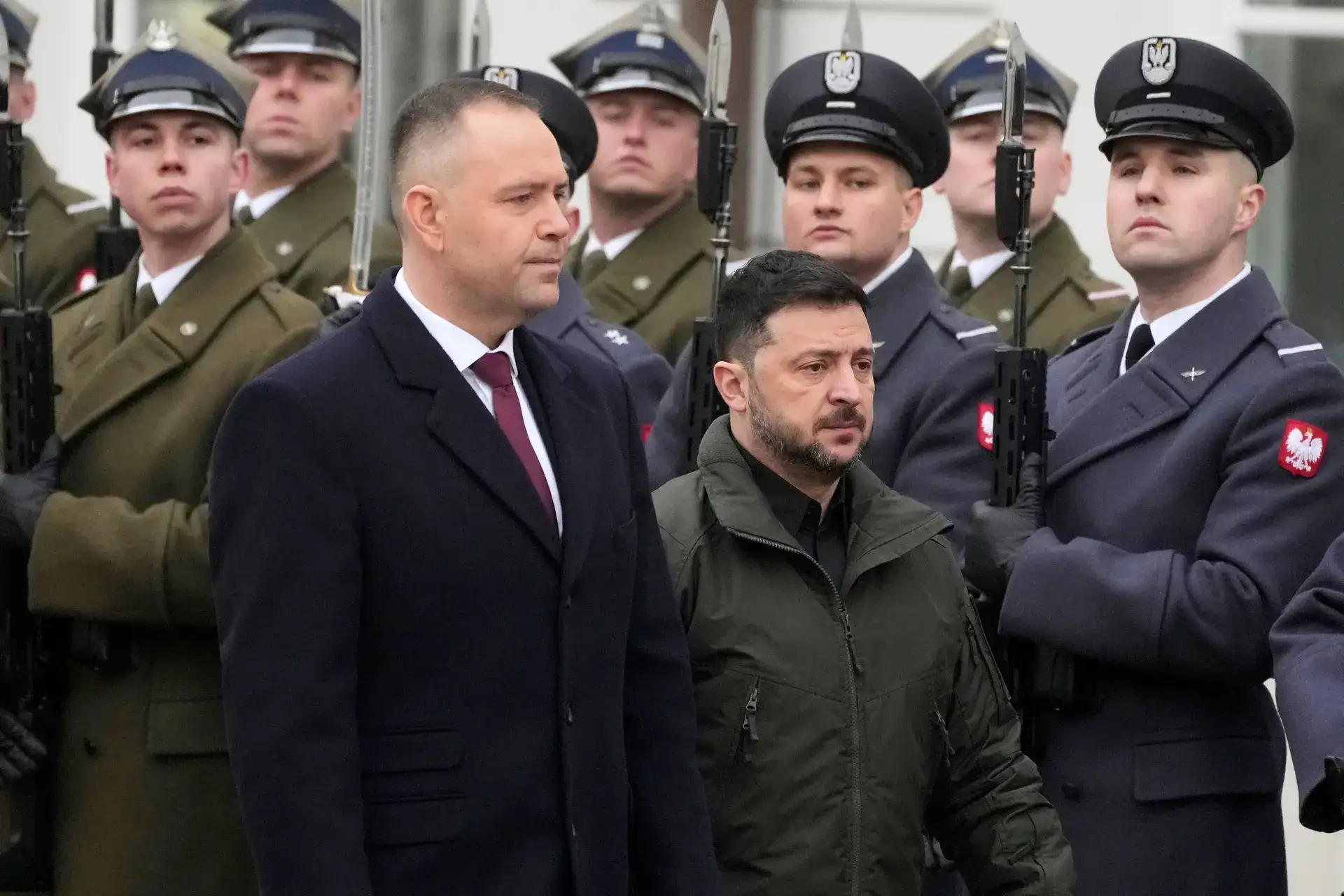
Polish President Karol Nawrocki stripped Ukrainian President Volodymyr Zelenskiy of the country's top honour on Friday, after Zelenskiy signed a decree recognising a Ukrainian combat unit's contribution to the ‌fight against Russia ⁠by naming ⁠it after the Ukrainian Insurgent Army (UPA), angering many in Poland.

During and after World War Two, when Ukraine belonged to the Soviet Union, the UPA fought ​against the Red Army, for a time allying itself with the Nazi German invaders, to seek Ukrainian independence.

Ukraine says the naming ​of the unit carries no "anti-Polish intent" and was chosen by soldiers who wanted to commemorate others who had fought against Moscow.

But the UPA was also involved in the Volhynia massacres carried out by Ukrainian nationalists from 1943 to ​1945, in which Warsaw says around 100,000 ethnic Poles were killed. Thousands of ⁠Ukrainians also ‌died in reprisal killings.

Polish historians view the massacres as a genocide intended to prevent a ​post-war Polish state ​claiming sovereignty over Ukrainian-majority areas that had been part of Poland between the two world ⁠wars.

Kyiv rejects the term, saying that thousands of Ukrainians were also killed ​in what was a complex conflict.

The events have been a bone of ​contention for decades, even as Poland has strongly backed Ukraine in its fight against Russia's invasion, taking in almost a million refugees and supplying weapons.

In 1947, within the new borders established after World War Two, Poland forcibly relocated some 140,000 ethnic Ukrainians and people identifying as members of the small Lemko ethnic group from southeastern Poland to territories it had regained from Germany. The aim was to cut support for underground UPA groups in Poland, but the Ukrainian ‌side considers it a crime of ethnic cleansing.

DEMANDS FOR EXHUMATIONS IN UKRAINE

Successive Polish governments have, with limited success, demanded access to the sites in western Ukraine that were once part of ​Poland where UPA ​massacres took place.

But last year ⁠Poland began exhuming the remains of Poles killed in the former Polish village of Puzhnyky. Last week, Kyiv also gave permission for more exhumations in Volhynia's Liuboml district.

NATIONALIST PRESIDENT NAWROCKI

Nawrocki, a conservative nationalist historian inspired by U.S. President Donald ​Trump, has repeatedly accused Kyiv of stalling on requests for exhumations and urged it to denounce the Volhynia massacre as genocide.

Nawrocki has tapped into weariness with the large number of Ukrainians in Poland and, during his campaign, vowed not to ratify any Ukrainian accession to NATO to avoid provoking Russia, departing from previous Polish policy and angering Kyiv.

Critics have accused Nawrocki of promoting an approach to history teaching that whitewashes difficult parts of Poland's past.

Sign up to read this article
Read news from 100's of titles, curated specifically for you.
Already a member? Sign in here
Related Stories
Top stories on inkl right now
One subscription that gives you access to news from hundreds of sites
Already a member? Sign in here
Our Picks
Fourteen days free
Download the app
One app. One membership.
100+ trusted global sources.