Get all your news in one place.
100's of premium titles.
One app.
Start reading
The Economic Times
The Economic Times
Trending Desk

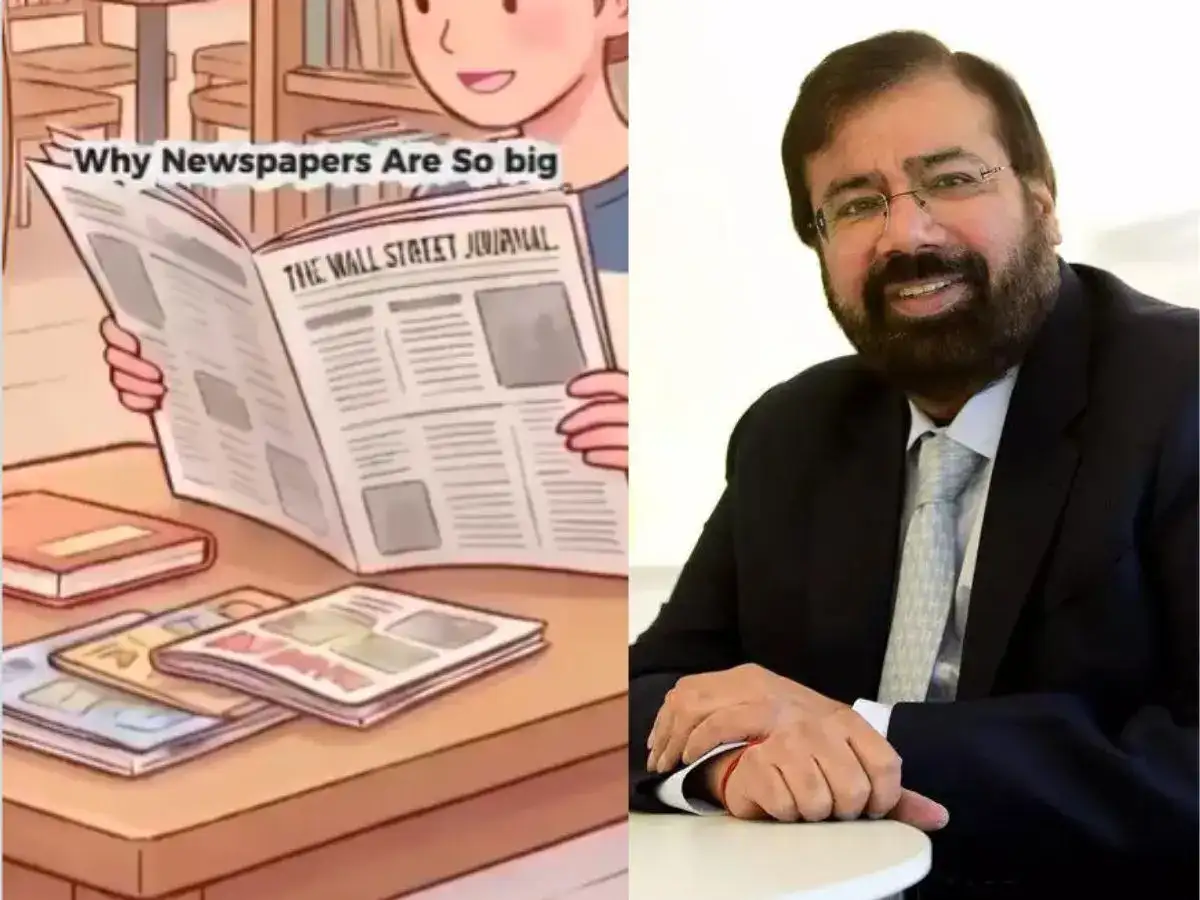
Why are newspapers so big? Industrialist Harsh Goenka shares a surprising 300-year-old secret you may not know

Ever wondered why newspapers are still printed on those large, hard-to-fold sheets despite the age of smartphones and tablets? The answer has little to do with journalism and everything to do with a centuries-old rule. A fascinating piece of newspaper history recently resurfaced after industrialist Harsh Goenka shared an animated explainer on social media. The video revealed that the oversized newspaper format familiar to readers around the world can be traced back to a British tax law introduced more than 300 years ago.

A tax rule that changed newspapers forever

The story begins in Britain in 1712, when the government imposed a stamp duty on newspapers. Publishers were taxed according to the number of pages they printed rather than the size of the paper itself. To reduce costs, newspaper owners came up with a simple solution. Instead of printing more pages, they increased the size of each page. Larger sheets meant they could pack more articles, adverts and information into fewer pages for less tax.

Also Read: How an IITian-turned ‘guru’ built a following through YouTube and exploited women through Gandhava marriages in Mathura

What began as a clever cost-cutting measure quickly became standard practice across the newspaper industry.

Why newspapers stayed large even after the tax disappeared

The stamp tax was eventually abolished in 1855, but by then the broadsheet format was deeply embedded in the publishing business.

Printing presses were designed for larger sheets, distribution systems were built around them and readers had grown accustomed to the format. Switching to smaller sizes would have meant a significant investment, so most newspapers continued with the larger design.

As the British publishing model went global, many newspapers in countries such as India took on the same format.

The legacy continues in India

Even today many of the leading Indian newspapers are still in the traditional broadsheet style. The large pages allow for space for in-depth reports, impressive headlines, photographs and editorial cartoons.

For many readers the format is associated with credibility and serious journalism. Holding a large newspaper over morning tea remains a daily ritual in countless homes and offices across the country.

Harsh Goenka's post ignites curiosity online

Goenka's social media post ignited a flurry of comments from users who were surprised to find out that the size of newspapers was determined by an old tax policy.

Also Read: “One sick leave might cost you ₹1,000”: Job seeker’s HR conversation goes viral, sparking debate on leave policies

Many users commented on how historical regulations often have long-lasting effects. Others drew parallels between the newspaper story and other remnants of colonial-era rules that continue to impact daily life centuries later.

One user joked that newspapers could be one of the most enduring examples of "British legacy" still present in everyday routines.

Sign up to read this article
Read news from 100's of titles, curated specifically for you.
Already a member? Sign in here
Related Stories
Top stories on inkl right now
Our Picks
Fourteen days free
Download the app
One app. One membership.
100+ trusted global sources.