
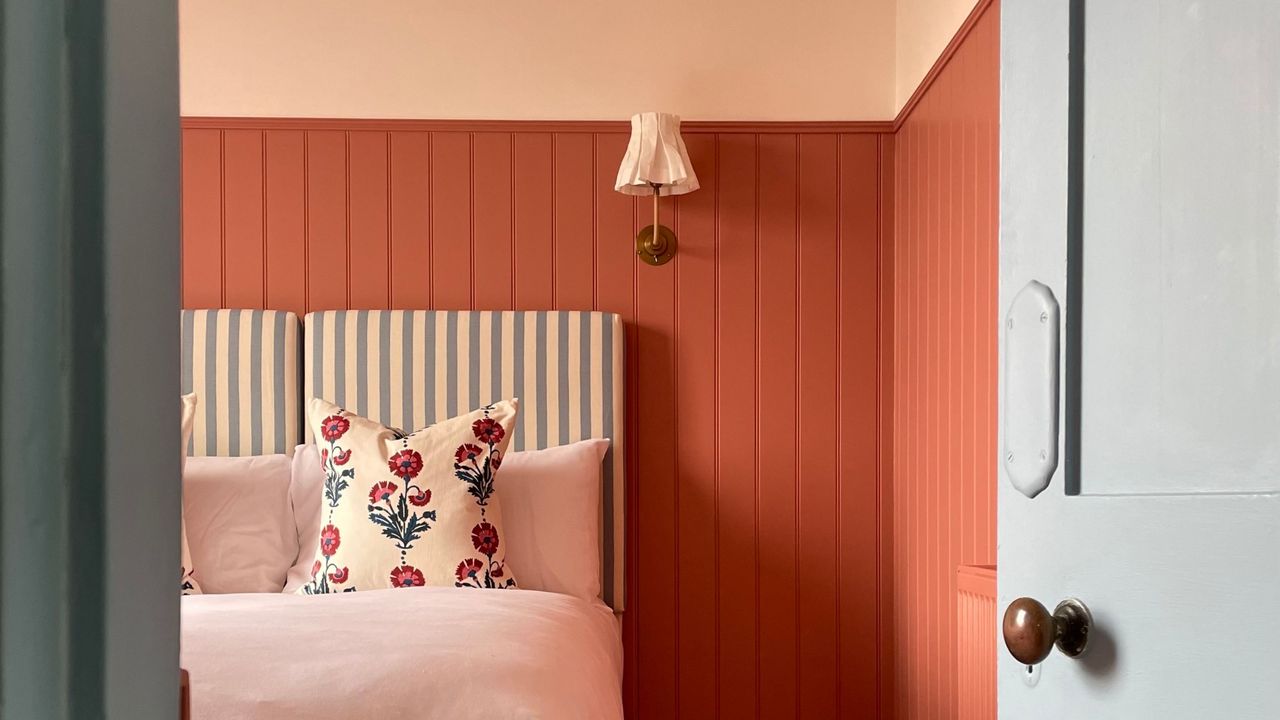
Sometimes we crave change so much that we stray too far from the classic design choices that have continuously elevated our homes. Today, I'm talking specifically about how the hate for a simple, white ceiling has gone on too long. A white ceiling is timeless, understated, and can make a room feel more expansive. And I'm not saying all change is bad; a thoughtful color drench with color on the ceiling can be really chic. However, change doesn't have to be so drastic to be effective — and the 'cloud capping' technique proves that.
So let's break this down. Do paint trends need to evolve? Yes. Should white ceilings be avoided at all costs? No. How does the 'cloud capping' paint technique meld these ideas? Color expert Tash Bradley, the director of design at Lick who coined this idea, explains to me, "Cloud Capping is all about creating a beautifully cohesive room while allowing the ceiling to become a soft, lighter element above the space." You carry one color across the walls, woodwork, and doors, then finish the ceiling in a complementary white (but one with the same undertones as the color on the walls).

In a way, you're still embracing the contemporary color-drenched aesthetic, but the lighter ceiling taps back into classic design trends for a refreshed, breathable, and timeless space. If you've been struggling to find that happy medium between a white ceiling and something a little more fun, this could be your solution. Here's everything you need to know about 'cloud capping'.
What Is Cloud Capping?
Color trends are by and large swinging toward characterful hues and away from safe neutrals. But there's a reason we defaulted to white ceilings for so long. The 'cloud capping' painting technique offers a way to experiment with all-over color without feeling like you must have a deep, cocooning space. By finishing the ceiling in a complementary white, "you achieve all the flow and impact of color without the space feeling enclosed," explains Tash Bradley.
Trust me, the irony of me telling you that white ceilings are back in fashion is not lost on me. However, it's more that we're becoming much more considered in how we decorate with white in our homes. "Rather than automatically reaching for a brilliant white ceiling, people are paying closer attention to undertones and choosing softer, complementary whites that work with the wider scheme," says Tash. An off-white still gives you that sense of lightness overhead, but feels warmer and more connected to the colors around it.
It's basically the opposite of an idea like color capping, where the goal is to bring the color lower for a moody, enveloping space.
In that way, cloud capping reflects a wider shift towards being more thoughtful about how we decorate our homes as a whole. "We've become much more confident with decorating with color in recent years, with techniques like color drenching really being embraced, but we're also recognizing the ceiling as the fifth wall rather than treating it as an afterthought," adds Tash. It's about considering how every surface works together to create a cohesive scheme.
At the same time, there's a real desire for interiors that feel timeless and have longevity. Cloud capping strikes that balance beautifully. You still get a space that feels full of color and personality, while the softer white overhead brings lightness and a more classic finish. "It's a great option for rooms that might not lend themselves to full color drenching, or for anyone who wants a considered use of color without taking it across every surface," says Tash.
How and Where to Try Cloud Capping
Cloud capping can work beautifully in almost any room, but Tash particularly recommends it in "bedrooms, living rooms, and main bathrooms where you want to create that soft, cocooning feeling without bringing a deeper color overhead." It can also be really effective as a paint trick in smaller rooms or spaces with lower ceilings, as the lighter shade above can help to visually lift the ceiling while still allowing you to embrace plenty of color across the rest of the room.
The most important thing is choosing a ceiling color that feels connected to the rest of your scheme. "Look closely at the undertones in your wall color and choose a white that matches them, a warm white with a warm color, for example, rather than a brilliant white, which can create too much contrast and interrupt the flow of the room," explains Tash.
The secret to successful cloud capping is choosing a white that feels like a natural extension of the wall color, rather than a stark contrast. "When the ceiling color is visually connected to the walls, the eye moves effortlessly around the room, creating a beautifully harmonious finish that's full of color yet still light and balanced," says Tash.

White 03 has warm, earthy undertones that make it great with yellow-leaning earth tones.

Green 05 is similar in undertone. "These shades work beautifully together to create a space that feels calm, grounded, and inviting," says Tash.

White 06 carries a subtle pink warmth that gently echoes darker pink shades, which is why Tash says Pink 13 paired with White 06 is another favorite.

"The result of these two colors styled together is a soft, elegant scheme that feels cocooning without becoming overly sweet," says Tash.

For something bolder, "I love White 05 with Teal 01," says Tash. White 05 has subtle blue-green undertones that match the mutedness of Teal 01.

The lighter ceiling beautifully balances the richness of this teal, "allowing the space to feel full of color while remaining airy and uplifting," says Tash.
Tash recommends testing your colors together in the space before committing. "Particularly on the ceiling where the light will hit the color differently," she adds. You want the two shades to feel connected, while still having enough difference for that lighter 'cap' to have an impact.
So, if you want to paint your ceiling white, don't let anyone tell you that you can't. Rather, challenge yourself to explore the nuances of hue, tint, tone, and shade for a more cohesive palette that feels right for 2026.
For more inspiration like this, be sure to subscribe to the Livingetc newsletter.