Get all your news in one place.
100's of premium titles.
One app.
Start reading
International Business Times UK
Francis Miñoza

Why Alien Civilisations Would Struggle to Detect Our Planet Using Current Planet-Hunting Methods

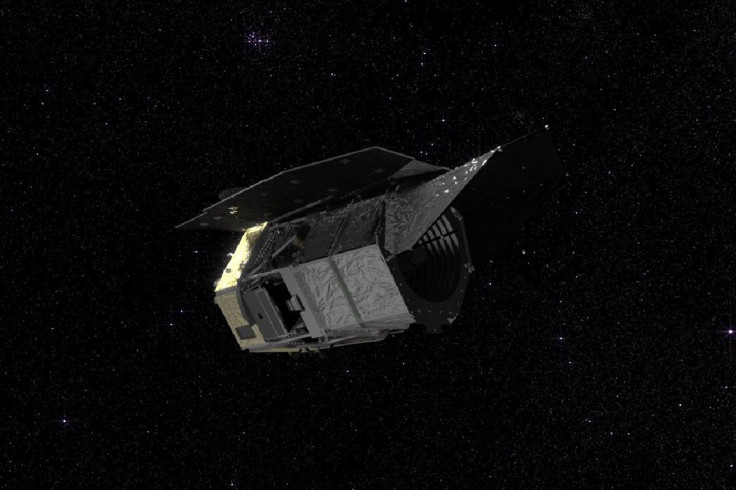
Why can't we detect an Earth-like planet around a Sun-like star, and would alien civilisations searching for us face the exact same obstacle? (Credit: By NASA - Nancy Grace Roman Space Telescope Illustrations, Public Domain/Wikimedia Commons)

Astronomers do not yet have a reliable, routine way to detect and confirm an Earth-size, Earth-mass planet in an Earth-like orbit around a Sun-like star using current planet-hunting methods.

The challenge is not that such a detection is physically impossible, but that the planet's faint signal must be separated from stellar activity, instrumental noise and the overwhelming brightness of its star.

That is the assessment reflected in an answer published by reports, in which MIT astrophysicist Sara Seager responded to a reader question from Michael O'Mara of Melbourne, Australia, about whether extraterrestrial observers using planet-hunting methods comparable with ours could detect Earth.

Planet-Hunting Methods Face a Sensitivity Problem

The search for a true Earth twin has been one of astronomy's long-running ambitions. NASA's Kepler space telescope, which operated for nearly a decade, was the first mission specifically designed to find Earth-size planets in the habitable zones of their stars.

In principle, Kepler had the photometric precision needed to detect the tiny dip in starlight caused by an Earth-size planet crossing in front of a Sun-like star.

Confirming an Earth-Sun analogue required more than detecting a single faint dip. Astronomers needed to observe multiple transits, each roughly a year apart, while also accounting for stellar variability and instrumental or systematic effects.

Sun-like stars proved more variable than some early estimates had assumed, adding noise that made the already faint transit signal difficult to distinguish from changes in the star itself.

Ground-based radial-velocity instruments have also approached the instrumental precision needed to detect an Earth analogue. The European Southern Observatory says Earth induces a velocity amplitude of about 9 centimetres per second on the Sun, a signal comparable to the precision targeted by instruments such as ESPRESSO.

But instrumental precision does not automatically translate into a routine detection. Stellar activity, including starspots and surface granulation, can produce signals comparable to or larger than the wobble caused by an Earth-mass planet. The planetary signal may be present in the data, yet extracting it reliably from the stellar noise remains extremely difficult.

NASA's Nancy Grace Roman Space Telescope may help address part of this challenge. Launched on 30 August 2026, Roman will use gravitational microlensing as the primary technique for its Galactic Bulge Time-Domain Survey, while also carrying out other investigations, including transit observations and a coronagraph technology demonstration.

Microlensing exploits chance alignments between foreground and background stars. When a foreground star passes close to the line of sight to a more distant background star, its gravity bends and magnifies the background light. A planet orbiting the foreground star can produce a smaller, temporary deviation in the resulting light curve.

Roman will survey a dense field of stars toward the Galactic bulge, near the centre of the Milky Way. Microlensing is sensitive, in principle, to Earth-mass planets at orbital distances comparable with Earth's, provided a suitable alignment occurs. The relevant planetary deviations can last only hours or days, making high-cadence observations crucial.

The method is powerful but does not work like a conventional telescope pointed at a known Sun-Earth system. Researchers must wait for the geometry of a foreground star, its planet and a more distant background star to align favourably. The event is transient, and once the alignment has passed, it cannot simply be repeated on demand.

It is also worth clarifying what does not explain Earth's difficulty of detection. Giant exoplanets do not necessarily hide an Earth-sized planet from every observation.

Rather, Earth's different detectable signatures are intrinsically small: its radius produces only a tiny transit, its mass produces a very small radial-velocity signal, and its reflected light is extraordinarily faint beside the Sun's glare.

Why an Earth-Like Planet Remains So Hard to Find

That distinction matters for how the public understands the search for other worlds. The problem is not simply that larger planets are more conspicuous. It is that an Earth analogue produces exceptionally weak signals, while the star itself is vastly brighter and can exhibit its own variability.

For an extraterrestrial civilisation using instruments and detection methods comparable with those available to us, the same physical limitations would apply when trying to identify Earth around the Sun.

That does not mean a more advanced civilisation could not detect Earth with substantially more capable technology. It means that current methods have not yet demonstrated a reliable, routine way to make that detection.

Roman's primary mission is planned to last five years. Its Galactic Bulge Time-Domain Survey is expected to be spread across six observing seasons, with about 15 months allocated to the survey. The observations should help fill an important gap left by transit surveys by probing planets at wider orbital separations.

Using current methods, reliably identifying an Earth analogue around a Sun-like star remains beyond our demonstrated capabilities. That limitation would also apply to hypothetical observers elsewhere who were restricted to planet-hunting technology comparable with ours.

Sign up to read this article
Read news from 100's of titles, curated specifically for you.
Already a member? Sign in here
Related Stories
Top stories on inkl right now
One subscription that gives you access to news from hundreds of sites
Already a member? Sign in here
Our Picks
Fourteen days free
Download the app
One app. One membership.
100+ trusted global sources.