Get all your news in one place.
100's of premium titles.
One app.
Start reading
The Economic Times
The Economic Times

Who is Michael Kremer, the Nobel laureate set to become World Bank’s next chief economist?

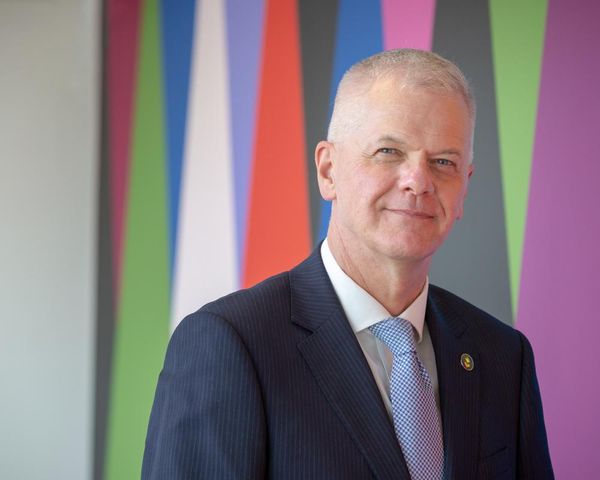
The World Bank on Wednesday named Nobel laureate and University of Chicago professor Michael Kremer as its next chief economist, succeeding Indermit Gill, who retired last month.

Kremer, 61, won the Nobel Prize in Economic Sciences in 2019 jointly with Esther Duflo and Abhijit Banerjee for their experimental approach to alleviating global poverty.
He will take charge on October 1, shortly before the annual meetings of the World Bank and International Monetary Fund in Bangkok, Thailand. He is the first economist to join the World Bank as chief economist with a Nobel Prize already in hand; former chief economists Joseph Stiglitz and Paul Romer received the Nobel after their tenures at the bank.

Also read: World Bank names Nobel laureate Michael Kremer as next chief economist

Who is Michael Kremer?

Born on November 12, 1964, in New York, Kremer is an economist known for applying experimental methods to development problems, particularly in areas such as education, healthcare, agriculture and access to finance. He earned his doctorate in economics from Harvard University in 1992 and then worked at the Massachusetts Institute of Technology.

He then become a Harvard professor in 1999.

Kremer is currently a University Professor in Economics at the University of Chicago, where he also directs the Development Innovation Lab (DIL). The lab develops and scales innovations in areas including agriculture, education, water treatment, road safety and microfinance, with the stated potential to reach more than 100 million people in low- and middle-income countries.

Over the years, Kremer has worked on breaking down the broad challenge of global poverty into smaller, testable questions and using field experiments to determine which interventions work.

Kremer's Nobel Prize

The Nobel Committee recognised Kremer, Duflo and Banerjee in 2019 for introducing an experimental approach that transformed development economics. Since the mid-1990s, the economists have used field experiments to test interventions aimed at improving educational outcomes and child health, among other areas.

The scientific approach has also involved testing programmes in real-world settings before examining whether they can be expanded. This allowed Kremer and his collaborators to connect academic research with programmes affecting millions of people.

From vaccines to deworming programmes

One of Kremer's notable contributions has been his work on Advance Market Commitments, a mechanism in which donors commit funding to encourage pharmaceutical companies to develop and produce vaccines for low-income countries.

According to ADB Food Systems, Kremer helped design an Advance Market Commitment for a pneumococcal vaccine. The initiative resulted in three approved vaccines being rolled out across 60 countries, with an estimated 700,000 lives saved.

His research on deworming among schoolchildren also had implications for education and public health policy. The research examined whether treating children for parasitic worm infections could improve school attendance.

The findings helped inform large-scale deworming programmes, with governments in Africa and South Asia providing about 2 billion treatments since 2014, according to the World Bank.

His work has also extended to water safety.

ADB Food Systems mentioned that Kremer's water-related work reaches about 9 million people through Evidence Action, while his broader research portfolio includes agriculture, education and finance.

Technology and development

Kremer has also focused on how technology can address development challenges. At the University of Chicago, his Development Innovation Lab works on scaling innovations across several sectors in developing economies.

He is also a co-founder of Precision Development, which uses digital technology to provide smallholder farmers with information intended to improve productivity and incomes. His work includes AI-based agricultural weather forecasting and the Human-Centered Weather Forecasts initiative.

Kremer has also been involved in the Development Innovation Ventures (DIV), a fund administered by the US Agency for International Development that he co-founded in 2010. The fund was later shut down after Donald Trump returned to the White House in 2025.

His research has therefore combined experimental economics with an emphasis on taking successful interventions beyond pilot projects and into large-scale programmes.

What are Kremer's views on global development landscape?

Kremer's appointment as the next World Bank chief economist comes as the organisation faces a crucial development landscape marked by financing pressures and the need to generate jobs and improve living standards in developing economies.

In a 2024 keynote at a World Bank event titled "The Great Incoherence: Growth and Human Development in an Era of Stagnation", Kremer called for reforms to help countries meet ambitious development goals. He highlighted funding innovative pilot projects and creating incentives for research into new technologies as key themes.

The emphasis on innovation and scaling is also reflected in his work at the University of Chicago. In announcing his appointment, World Bank President Ajay Banga said Kremer had spent his career identifying what works in development and proving it at scale.

Kremer, in a statement, said the World Bank has significant research capacity to develop and test innovative solutions to development problems, as well as the operational reach to scale them up. He also pointed to new technologies as an opportunity to boost growth amid the major challenges facing the global economy.

His career combines academic economics, field experimentation and policy implementation, experience that will now move to the World Bank, where he is set to become chief economist from October 1.

Sign up to read this article
Read news from 100's of titles, curated specifically for you.
Already a member? Sign in here
Related Stories
Top stories on inkl right now
One subscription that gives you access to news from hundreds of sites
Already a member? Sign in here
Our Picks
Fourteen days free
Download the app
One app. One membership.
100+ trusted global sources.