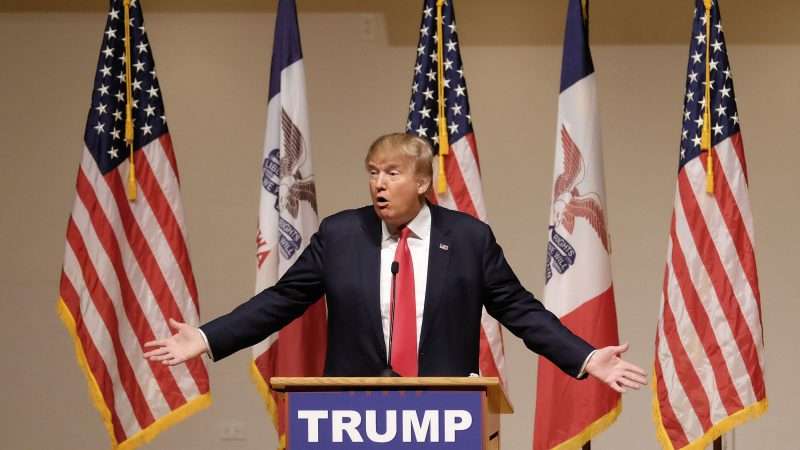
On Thursday, Maine joined Colorado in concluding that Donald Trump is disqualified from running for president because he "engaged in insurrection" by inciting the January 6, 2021, riot at the U.S. Capitol. Both of those decisions raise the question of what counts as an "insurrection" under Section 3 of the 14th Amendment and what it means to "engage in" one. The conjunction of Trump's ballot exclusion in Maine, which is based on a decision by the state's top election official, with his disqualification in Colorado, which is based on a ruling by that state's Supreme Court, highlights two more issues: Who decides whether a candidate is covered by Section 3, and what standard of proof should apply?
Section 3, which originally was aimed at preventing former Confederates from returning to public office after the Civil War, says "no person shall…hold any office, civil or military, under the United States…who, having previously taken an oath…as an officer of the United States…to support the Constitution of the United States, shall have engaged in insurrection or rebellion against the same, or given aid and comfort to the enemies thereof." In its December 19 decision applying that provision, the Colorado Supreme Court partly upheld and partly overturned a ruling by Denver District Court Judge Sarah B. Wallace.