More than 100 years after suffragists wore white in their quest for women to win the right to vote, their dress code is still a pointed styling tactic in the halls of the United States Congress.
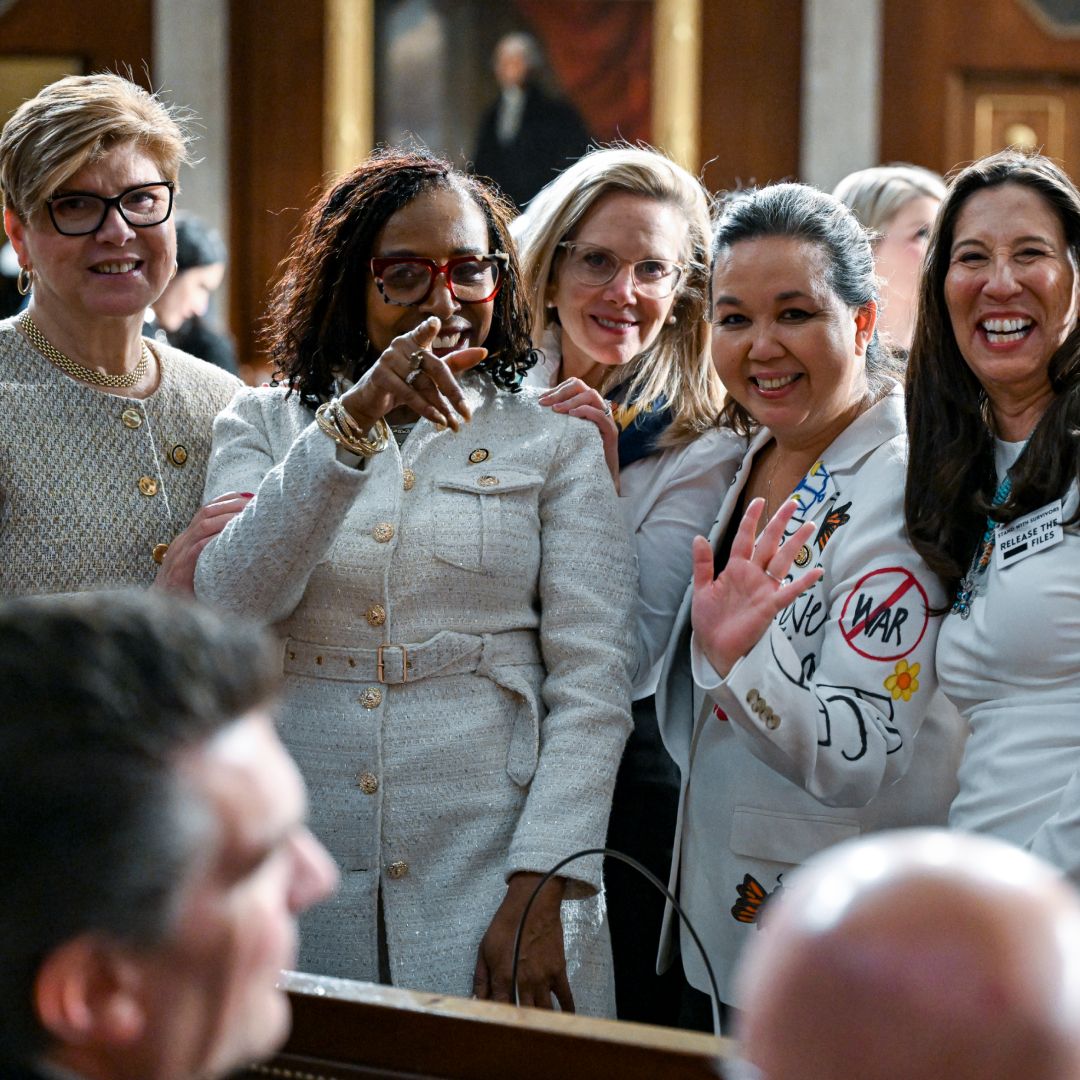
Members of the Democratic Women's Caucus coordinated in white suits at President Donald Trump's State of the Union address on February 24. Their goal, Rep. Teresa Leger Fernández (D-NM) told CBS News, was "to honor that fight that women have always had and to signal we are still in the fight." They chose the shade used by the suffragists in reference to new legislation seen as a threat to women's right to vote: the SAVE America Act, a bill making voter registration more difficult for married women and LGBTQ+ people.



Referencing the suffragists' legacy has been a popular form of fashion protest during both Trump administrations. Congresswomen first dressed in white suits for President Trump's 2017 address to a joint session of Congress. They've followed the same dress code for nearly every State of the Union since, with a few exceptions. Last year, Congresswomen faced another Trump address in pink suits, in a show of opposition.
"The suffragists marched, protested and starved themselves so that they could get the right to vote in 1920," Leger Fernández said to CBS News. "Here we are in 2026 and Republicans are trying to limit women's ability to vote. So we're going to be wearing white to honor the suffragists[.]"
Inside President Trump's nearly three-hour speech—the longest State of the Union ever presented—protest participants including Congresswomen Nancy Pelosi (D-CA), Nellie Pou (D-NJ), Yvette Clarke (D-NY), and Jill Tokuda (D-HI). Some lawmakers who skipped the official address still wore white in solidarity to a counter "People's State of the Union" event outside on the National Mall.


White suits weren't the only way Democratic Congresswomen deployed their clothing as a form of dissent. Several lawmakers also wore white "Release the Files" pins—a reference to the trove of Justice Department files detailing abuses by sexual predator Jeffrey Epstein that were set to be shared with the public in December. (A new NPR report claims the Justice Dept. has withheld several files related to President Trump, a known associate of Epstein's.) Some of Epstein's victims were invited to attend Tuesday night's address alongside lawmakers, to protest the government's handling of the case.

President Trump said "our nation is back" at the start of his State of the Union address; the protestors in attendance, and at other recent events, would disagree. At New York Fashion Week, "ICE OUT" pins opposing the administration's violence against immigrants were worn by prominent designers, influencers, and editors.
The sentiment goes beyond insider events to the American public: A recent CNN poll found that the President's approval rating among U.S. women has declined another nine percentage points since January.