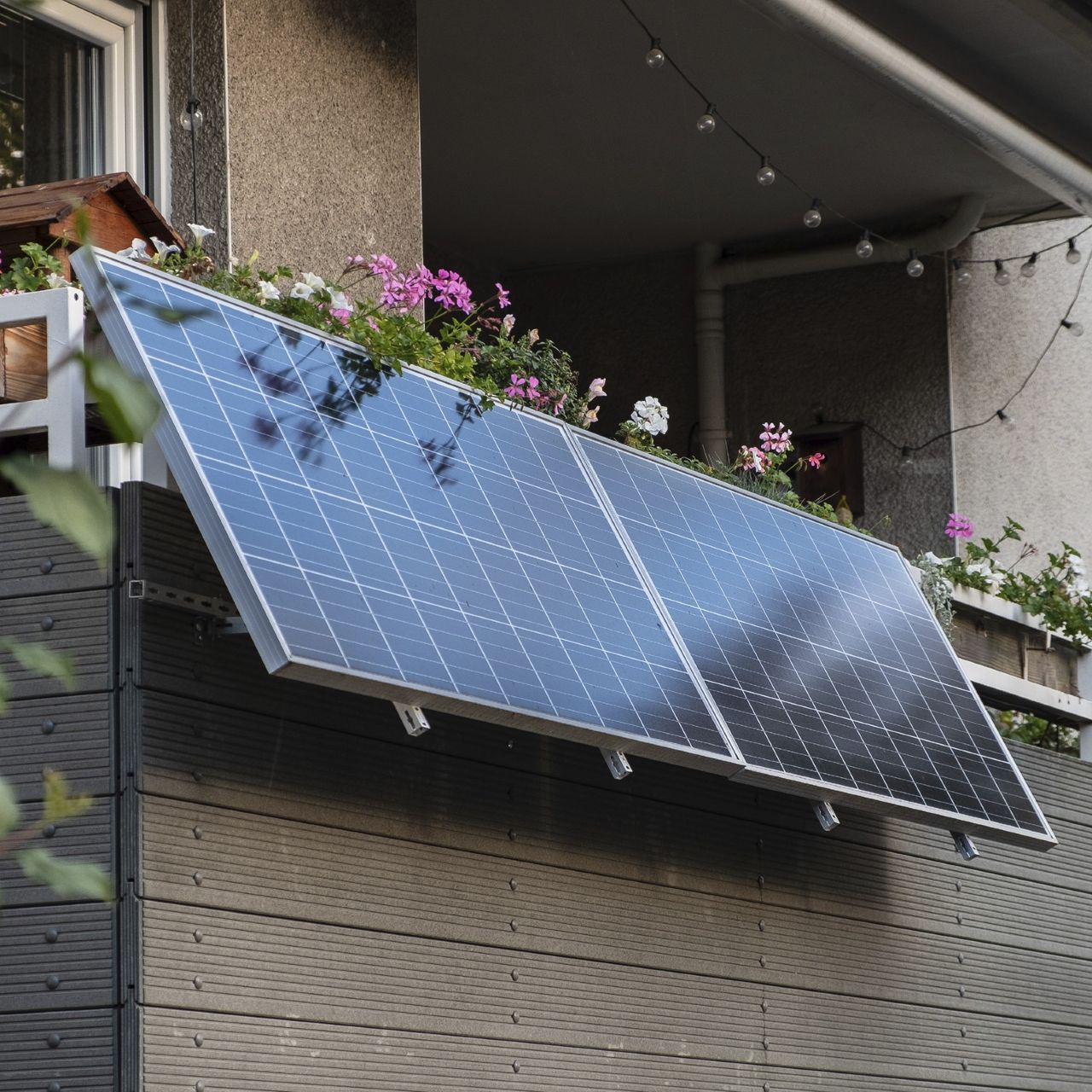
Plug-in solar panels could be available to buy in the UK soon after the 27 August 2026, when updated legislation comes into effect.
Back in March, the Government announced that plug-in solar panels would be available 'within months', offering households across the UK a chance to offset their energy bills by generating their own electricity at home. Panels like this are already widely used across parts of Europe, and are both renter friendly and considerably more affordable than rooftop solar installations.

But in order for plug-in solar panels to legally sold in the UK, certain regulations around plugs and sockets needed to be updated to allow power generating tech, like plug-in solar panels, to be self-installed and used safely. The government consulted with industry professionals on proposed changes, saying that it wanted to move 'at pace' to bring plug-in solar panels to UK homes.
Those legislative amendments have now been laid before Parliament and are due to come into force on Thursday 27 August 2026, and we expect retailers, like Lidl, Amazon, Currys and B&Q, to make their plug-in solar panels offerings available to buy on or soon after that date.
'We are working closely with government and suppliers to understand and help shape the guidance, ensuring any products we offer are safe, compliant and straightforward to install,' says Graham Bell, CEO of B&Q. 'We look forward to making plug-in solar available to our customers as soon as possible.'
There is also hope that these legislative changes are just the beginning, and will open the door for even more affordable and easy to install technology to become available to those in the UK.
Until now, generating your own electricity has largely been limited to homeowners with the right roof and the budget for a full solar installation. Plug-in solar changes that.
'The Government's announcement is a really important step towards making solar energy available to far more people across the UK,' says Aaron James Darvill, Strategic Sales Director at Anker SOLIX. 'Until now, generating your own electricity has largely been limited to homeowners with the right roof and the budget for a full solar installation. Plug-in solar changes that. It gives renters, people living in flats and households without suitable roofs a simpler and more affordable way to get started.'
'While this is a major milestone, battery storage will be the next important step. Plug-in solar generates the most electricity during the day, but most households use the most energy in the evening. Without battery storage, consumers can't store surplus energy to use when they need it most, limiting the savings and flexibility the technology can deliver.
'Across Europe, we’ve seen that people rarely buy their final solar energy system on day one. They start small, see the benefits for themselves and then add more panels or battery storage as their needs grow. We expect the UK to follow a similar path, with battery storage playing an increasingly important role in helping households maximise the value of the energy they generate and reduce their reliance on the grid. We're also encouraged that a regulatory framework for plug-in battery storage is expected to follow, helping ensure these systems can be adopted safely and with confidence.'
If you are keen to embrace plug-in solar panels, make sure you understand how they differ to rooftop solar panels so you make the right choice for your home.