
Get all your news in one place.
100’s of premium titles.
One app.
Start reading
Homes & Gardens
Homes & Gardens
Gabriella Dyson

When should you store cosmetics in the refrigerator? Our experts have the answer

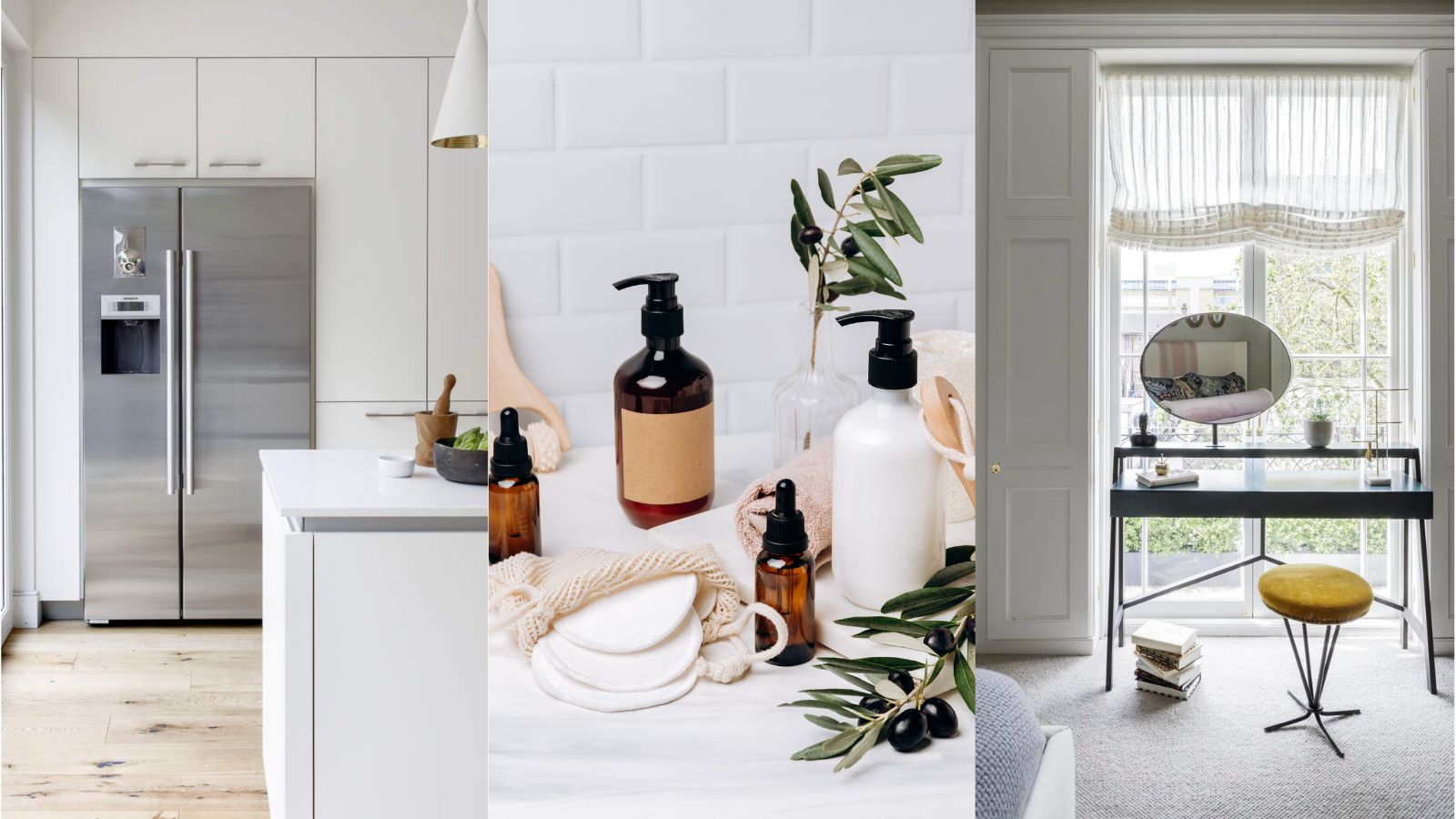
Split image header featuring a fridge, a skincare collection and a makeup vanity setup.

If TikTok beauty influencers are anything to go by, we should all be clearing out a shelf in our refrigerators to store our ever-expanding collection of beauty and skincare products. But how true is the claim that our makeup and cosmetics should be kept at cool temperatures? 

From expensive creams and tonics to concealers and balms, it's hard enough knowing how to organize our cosmetics correctly, let alone how to store them in order to prolong their lifespan and retain their quality. 

That's why we consulted professional MAUs and clinicians to get the lowdown on which makeup and skincare items need to be stored in the fridge and which can remain firm fixtures on our bedroom and bathroom vanities

Should you store cosmetics in the refrigerator?

Is it time to invest in a mini fridge for your makeup room or vanity? The answer depends on the specific products in your collection. There's no one-size-fits-all rule here, so keep reading to discover what does and doesn't require a spot in your refrigerator

Cosmetics that should be stored in the fridge

(Image credit: John Lewis)

'Many skincare products do well in the refrigerator,' says Megan Steinberg, Master Cosmetologist at Alter'D Salon and Spa. 'Chief among them is eye cream. Applying cold eye cream can assist with depuffing the undereye area, and in hot, humid months, it just plain feels good. Also, any clean skincare items that don’t have the preservatives to help extend their shelf life will do great in the fridge because it helps keep the product fresher for longer.'

'Some cosmetics like liquid foundations, cream blushes, gel eyeliners, and any products in jars can be stored in the refrigerator to help them last longer,' adds Laura Pucker, Beauty Blogger at Pucker Up Beauty. 'The cool environment keeps formulas fresher for six months or more. Just make sure you let them come to room temperature before using, so they glide on smoothly.'

Along with the soothing quality of chilled face cream, there's a scientific reason behind storing skincare products in the fridge. Refrigeration can help preserve the potency of certain ingredients, especially those that are natural or organic, which may not contain strong preservatives. Cold temperatures slow down the degradation process of these ingredients, ensuring they stay effective for longer.

Some skincare formulations, such as vitamin C serums and retinoids, are sensitive to light and heat. Storing these products in a cool, dark place like a fridge can prevent them from becoming ineffective due to oxidation or breakdown. The cooler environment can also inhibit the growth of bacteria and other microbes in your products, especially those applied with fingers or directly from the container to the skin.

'If you're lucky enough to have a dedicated beauty fridge, you may also want to store some of your more natural/organic bath products in it to extend their shelf life,' adds Cheryl Fork, Founder of clean body care brand FORK & MELON. 'Nail polish can benefit from refrigeration as well as it slows the separation process.'

Cosmetics you don't need to store in the fridge

(Image credit: Future/Claudia Dulak)

'If a specific storage temperature is not labeled, products should be kept at room temperature,' advises Valerie Aparovich, certified cosmetologist-aesthetician and Science Team Lead at OnSkin . 'You should also avoid placing them in humid surroundings and prevent their exposure to direct sunlight, as these are adverse factors disrupting the chemical and physical features of cosmetics. The lids should be closed tightly as prolonged exposure to air humidity can accelerate the breakdown and degradation of cosmetic products.' 

Products that require you to unscrew the top to use should be ideally taken with a spatula or with clean hands only to avoid dirt and bacteria from trapping in the jar.

'Aside from eye creams and some skin products, I don’t store the majority of my products in the fridge,' says Megan Steinberg, Master Cosmetologist. 'I find that cooling a product down too much can affect its ability to blend, set, and wear like expected.'

Professional MUA Azesha Ramcharan agrees: 'I don’t think it’s really necessary to store cosmetics in the fridge unless they don’t have any preservatives at all among the ingredients. Most cosmetics have a preservative system in place as part of the formula.'

How can you tell if cosmetics are expired?

(Image credit: Ina Rinderknecht)

'The expected expiration date of cosmetics will depend on whether the product is sealed or opened,' explains Valerie Aparovich, certified cosmetologist-aesthetician. 'Therefore, the manufacturer indicates two types of expiration dates – BEFORE and AFTER you try the product.' 

Usually, a cosmetic product’s shelf life before opening is between 2-3 years if the item has been stored according to standards (placed into an airtight jar, bottle, or tube, experienced no physical deformation, and has not been exposed to heat, frost, high humidity, or UV light).

'To determine how long your product is safe to use after you unseal it, look out for the PAO printed either on the packaging or the container itself,' says Azesha Ramcharan. 'PAO stands for 'period after opening'. The symbol looks like a little jar with an open lid and has a number of months, such as 6M, 9M, 12M. This number lets you know that after the designated time period, it’s best to replace the formula.'

'In most cases, if you comply with the instructions and store your cosmetics properly, the items should retain their quality,' Valerie continues. 'Nevertheless, sometimes cosmetic products can go out of date despite doing everything by the book. This can happen due to poor ingredient formulation, low-quality preservatives, or production mistakes.'

These are the signs cosmetics have expired or degraded:

  • It may start to smell moldy or musty. Any change to the odor of the product could be indicative of decay or expiration. 
  • If the product becomes too liquid or, vice versa, thickens compared to its former state, there’s a high chance it’s no longer suitable for use.
  • The same goes for the color – if the substance in the jar becomes visibly darker or lighter, the product might have broken down and is no longer what it was designed to be.

In addition to learning how to store and organize your makeup correctly, it's important to regularly clean and sanitize makeup brushes and sponges to prevent bacteria from developing. You wouldn't use expired cleaning products to clean your bathroom, so be just as vigilant with your skin.

Sign up to read this article
Read news from 100’s of titles, curated specifically for you.
Already a member? Sign in here
Related Stories
Top stories on inkl right now
One subscription that gives you access to news from hundreds of sites
Already a member? Sign in here
Our Picks
Fourteen days free
Download the app
One app. One membership.
100+ trusted global sources.