January brings torrential rain to south-east Asia – more than 250mm fell in just two days in Singapore last year. This is because of the monsoon, a pattern of wind and rainfall, the name of which stems from the Arabic word for “season”.
The monsoon is sometimes described in terms of a sea breeze, in which the wind reverses direction in the morning and evening as the relative temperature of land and sea change, blowing out to sea at first and then inland as the land cools.

Meteorologists prefer to describe the monsoon in terms of the seasonal movement of the intertropical convergence zone (ITCZ), the area where north and south winds collide. Sailors knew the ITCZ as the doldrums, where no wind blew.
Vast quantities of water evaporate from the warm tropical oceans. The seasonal monsoon wind carries warm moist air over the land, where it rises and condenses into towering cumulonimbus storm clouds that dump the water as rain.
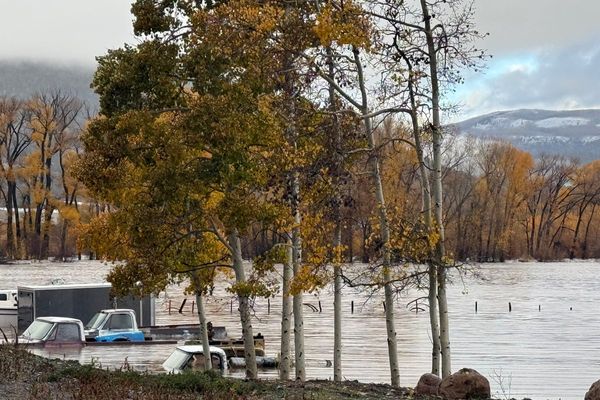
When the ITCZ remains stationary, an area receives a series of heavy storms. These are vital to agriculture, with the monsoon bringing up to 80% of the annual rainfall, but also extremely destructive, sometimes causing widespread flooding.
Without wet and dry monsoon seasons, Europe has more evenly distributed rainfall: dull wet winters rather than epic thunderstorms.
• This article was amended on 3 January 2026. An earlier version of the main image caption incorrectly placed Padang in Sri Lanka, rather than Indonesia.