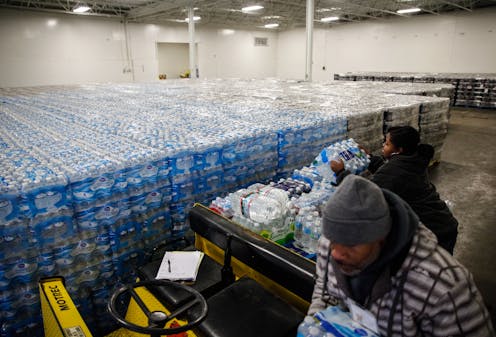
A massive intrusion of salt water into the Mississippi River has left the tap water in several Louisiana communities unsafe to drink and could threaten the New Orleans metropolitan area. The most visible emergency response is the provision of bottled water, with authorities distributing huge quantities of single-serving plastic water bottles to residents.
These pallets of water are an increasingly familiar sight in the U.S. They have become the default response not only to natural disasters but to a series of human-made emergencies – from the crises of unsafe tap water in Flint, Michigan, and Jackson, Mississippi, to contaminated groundwater in towns in California’s Central Valley. What these places also have in common is that their residents are disproportionately low-income and nonwhite.