
Each Monday I pick out the northern hemisphere’s celestial highlights (mid-northern latitudes) for the week ahead, but be sure to check my main feed for more in-depth articles on stargazing, astronomy, eclipses and more.
What To Watch For In The Night Sky This Week: March 21-28, 2022
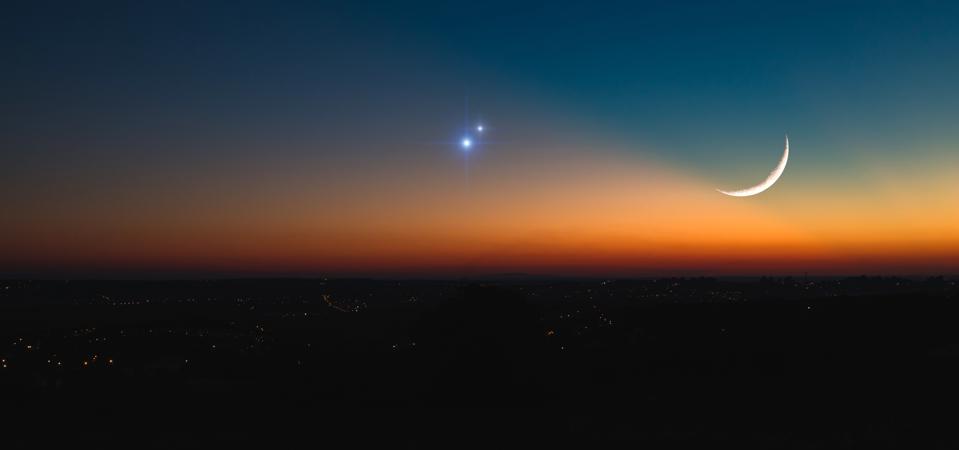
Coming up this weekend is the entrancing sight of three planets tangling together while a crescent Moon glides past. However, before we get there we’ve got properly dark, moonless nights that are perfect for grabbing your last look at some of the brightest stars and constellations of winter—all in the southern sky—before they disappear from the evening sky for six months.
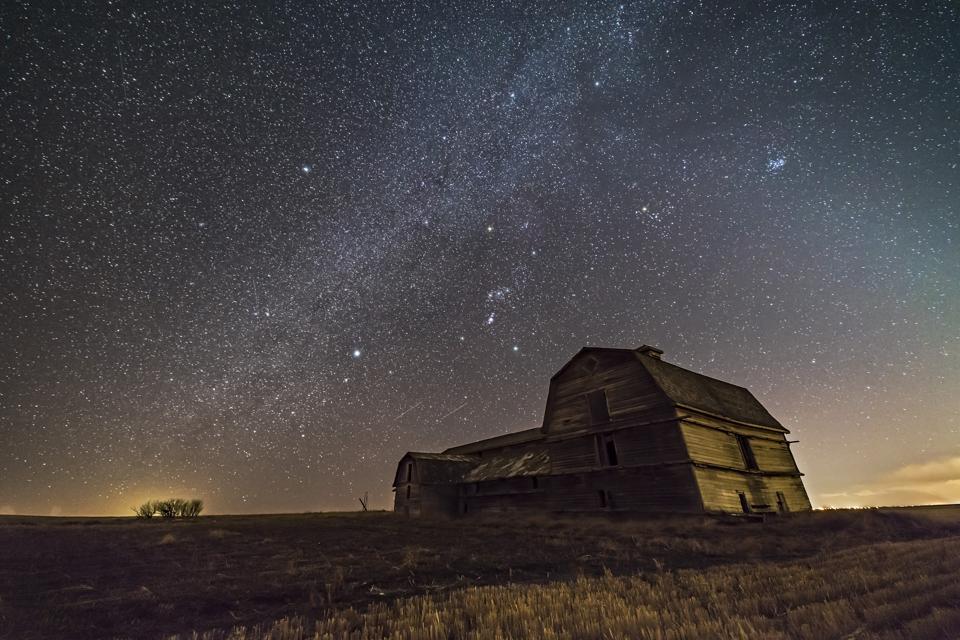
Monday, March 21, 2022: the jewels of the winter night sky
Look at the image above. It’s of the southern sky as taken from the northern hemisphere at this time of year. See that bright “smudge” top-right? That’s the Pleiades, a cluster of stars 440 light-years distant that’s also called the “Seven Sisters.” Just above the house is the famous Belt of Orion. Draw a line from the Pleiades to Orion’s Belt and keep going and you’ll come to Sirius, the brightest star in the northern sky. It’s a mere 8.6 light-years distant.
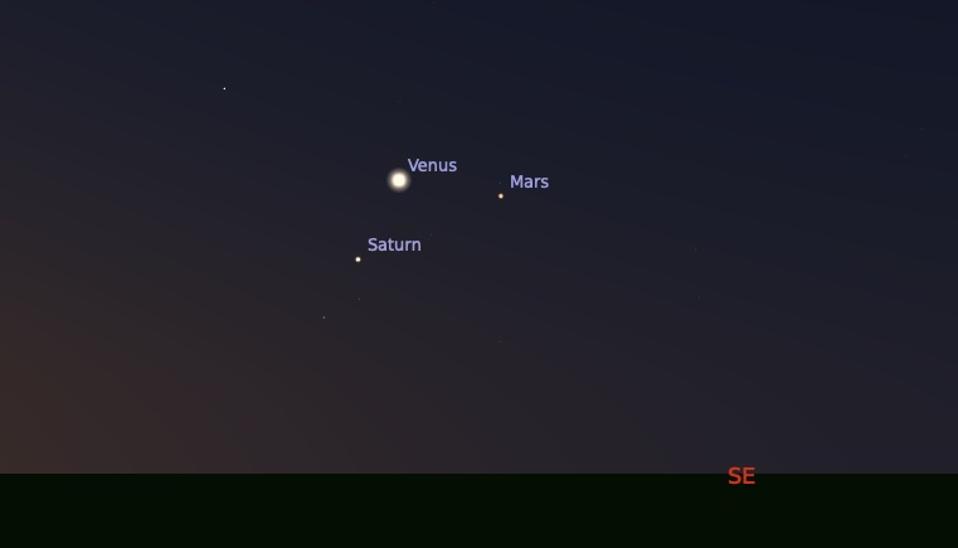
Friday, March 25, 2022: A planetary triangle and a Last Quarter Moon
Tonight is Last Quarter Moon, when the Moon is half-lit and rising after midnight. If you’re up early then look to the southeast and you’ll see it high in the south as Venus, Mars and Saturn shine in the southeast.
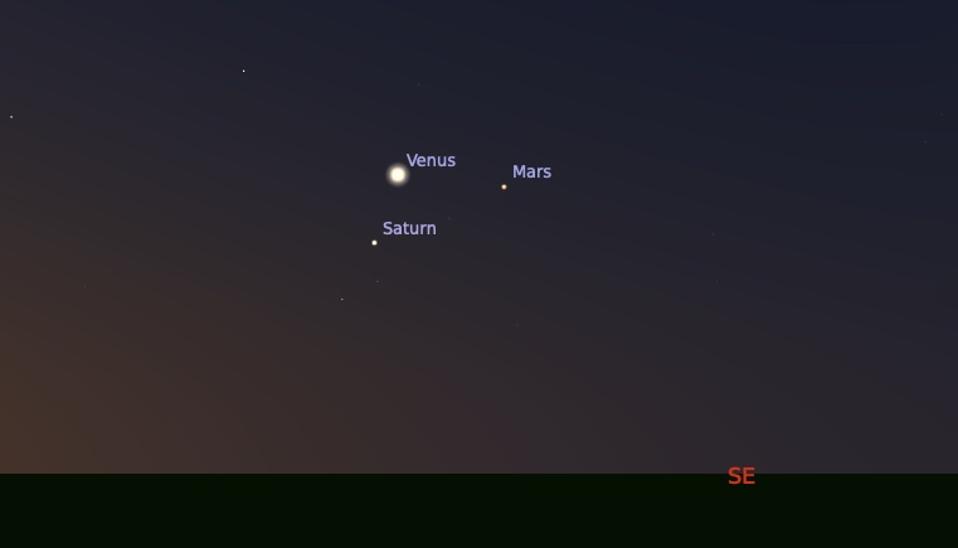
Saturday, March 26, 2022: A planetary triangle and a crescent Moon
Although the crescent Moon will be someway to the south—to the right-hand side, as you look east—the sight of it close to a tightening triangle of planets will be worth seeing.
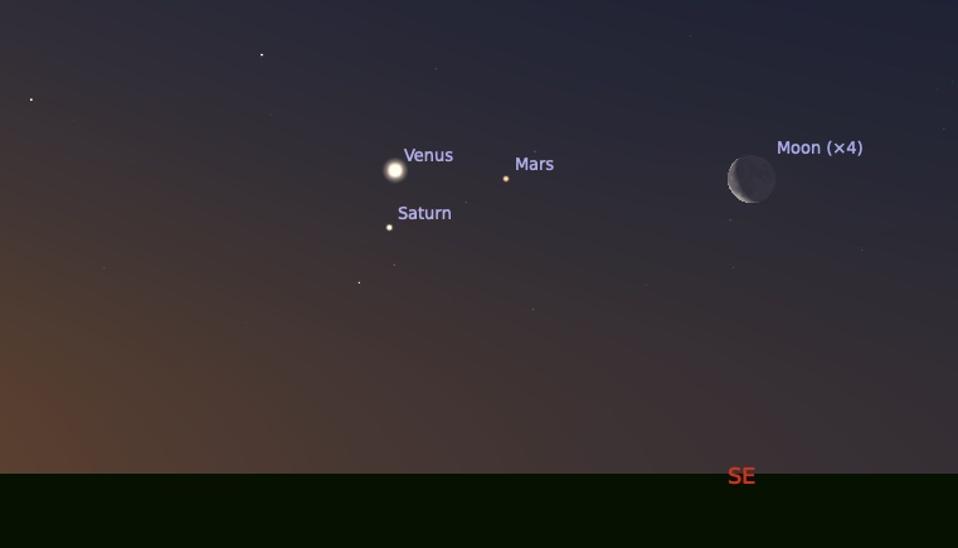
Sunday, March 27, 2022: A planetary triangle and a crescent Moon
Pre-dawn in the southeastern sky today gives you the best sight of the week of the planetary triangle, with a 36% waning crescent Moon creeping closer. However, you’ll have to come back tomorrow—Monday, March 28, 2022—for the full majesty of all four Solar System objects in a super-tight grouping.
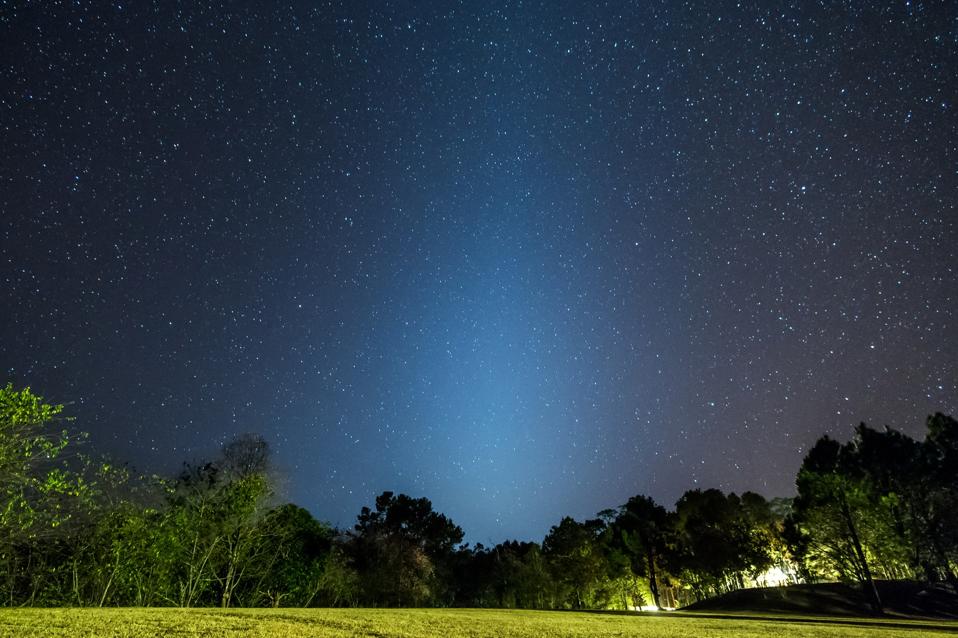
Object of the week: zodiacal light
With no bright Moon to contend with and the celestial mechanics just right at this time of year it’s the perfect week to look for zodiacal light. You do have to be somewhere very (very) dark, but if that’s possible then look to the west just after sunset and you’ll see a cone-like glow growing. That’s sunlight reflecting off the dust in the plane of the Solar System.
Wishing you clear skies and wide eyes.