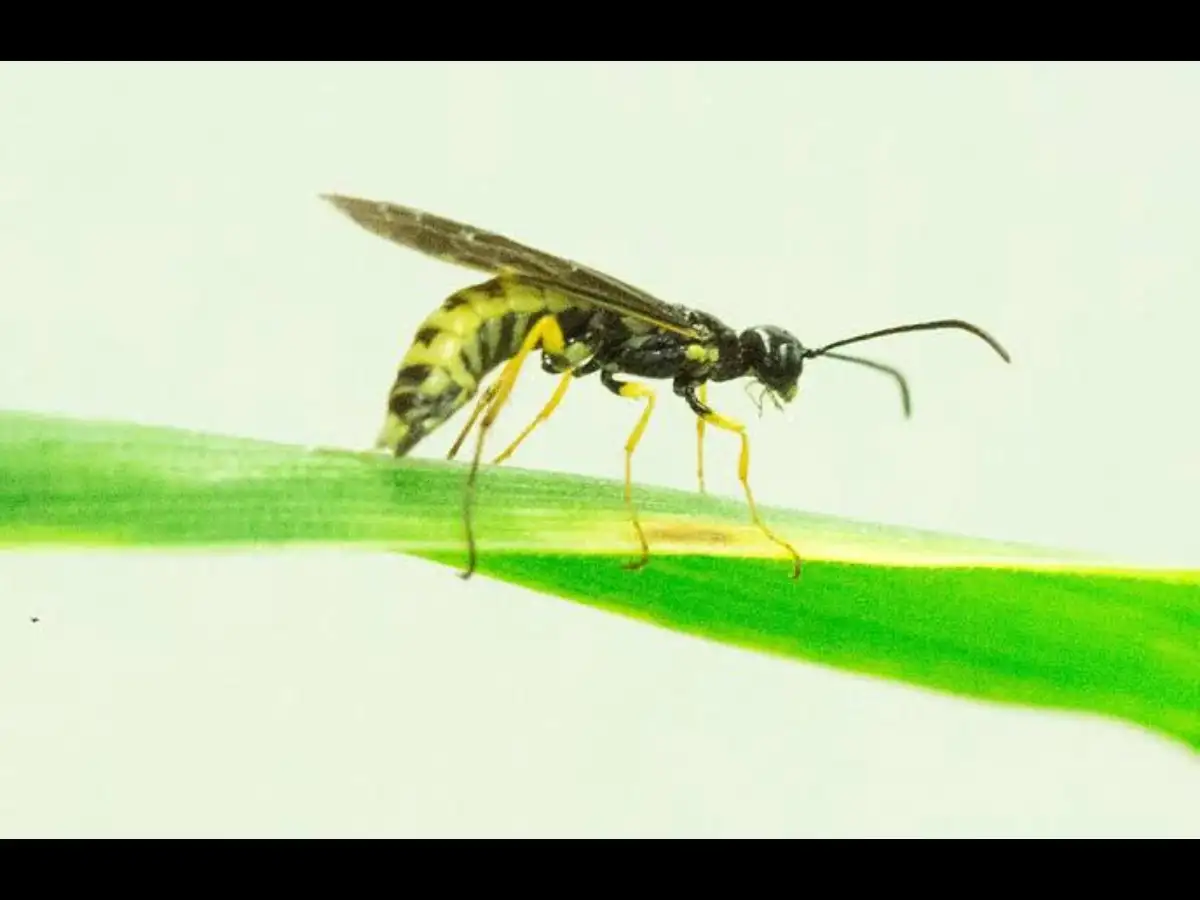
For wheat farmers in parts of the Great Plains, one of their most damaging pests may have met an unlikely enemy: another insect. The wheat stem sawfly, Cephus cinctus, is a major pest of wheat, with the US Department of Agriculture’s Agricultural Research Service (ARS) estimating that it costs wheat growers about $350 million every year. With limited means of control, the pest has expanded its range and caused major damage to dryland winter wheat crops in Colorado and Nebraska.
Now, Agricultural Research Service (ARS) researchers and their university colleagues have tested a simple way to move the sawfly’s natural enemies into areas where farmers need them most. In a 2025 study published in Arthropod Management Tests, researchers evaluated whether baled wheat straw could be used to transport and release Bracon parasitoids, insects that naturally attack wheat stem sawflies, into infested wheat-growing areas.