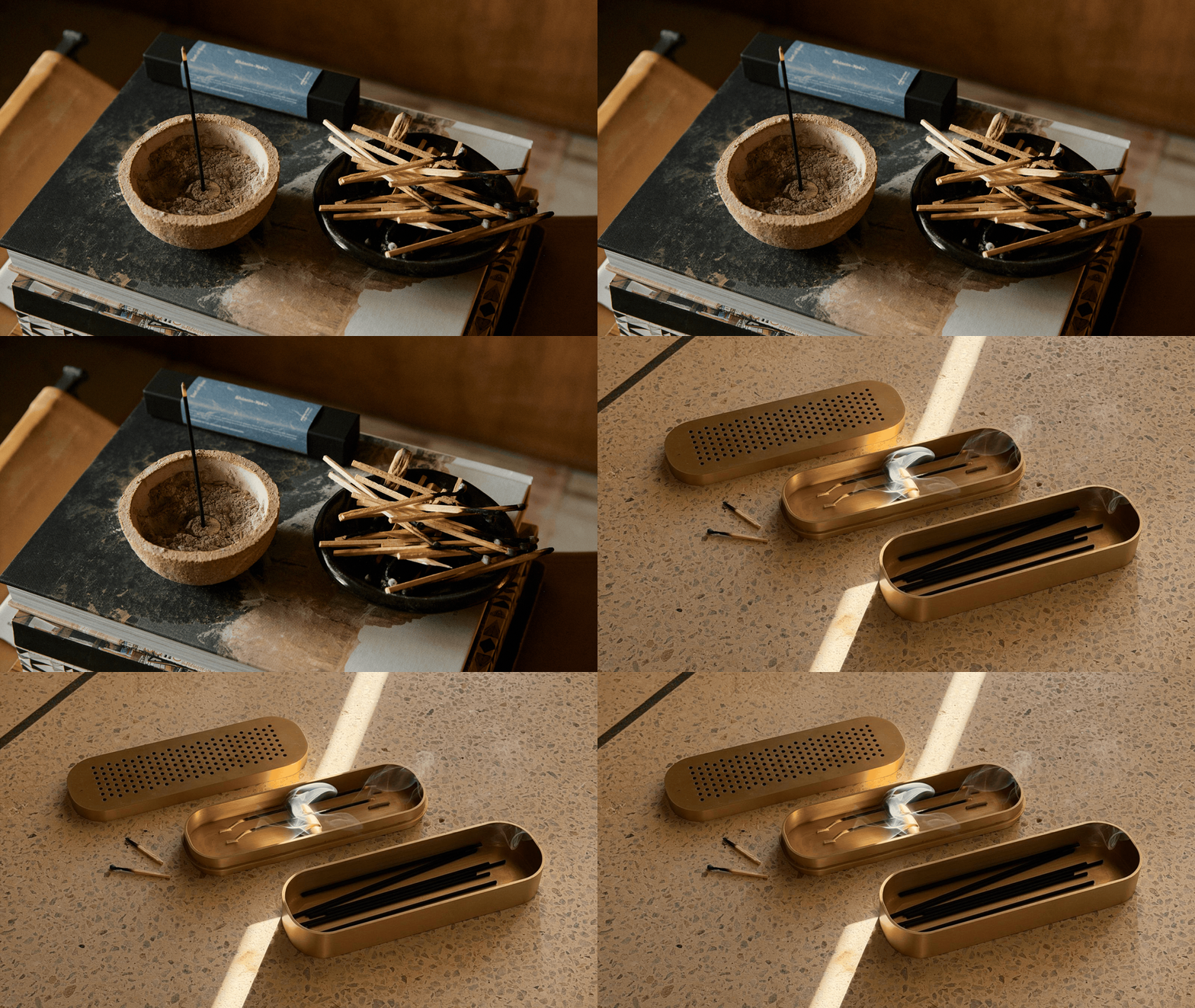
As someone who has burnt my fair share of Indian incense as a child and Japanese incense as an adult, I have a special place for both in my current scenting routine. And while they might not seem it at first glance, they are vastly different.
It's one of my favorite means of home fragrance, and personally, it feels like the most ritual-led way of cleansing and scenting a space. With varying levels of smokiness, different cores, and even a distinctly dissimilar throw, I asked fragrance experts how to pick between the two.

And after understanding the individual characteristics of Japanese and Indian incense, you'll understand just where each of these formats fits into your fragrance rotation. Here's what you need to know.
What are the Characteristics of Japanese Incense?
"Japanese incense is defined by its refinement," says Niko Dakos, co-founder of Earl of East. "The fragrance is layered, balanced and nuanced, revealing different facets as it burns rather than delivering a single dominant note. It's an experience that encourages you to slow down and appreciate the complexity of the scent."
He explains that this sense of craftsmanship comes from both the ingredients and the way it's made. "Traditionally, Japanese incense is crafted using fine woods, resins and other natural materials, blended and rolled using techniques that have been passed down through generations," he says.
"When we visited our manufacturer in the Nikko Mountains, what struck us most was the precision and patience behind the process. Each stick is hand-rolled using cedar charcoal powder and pure mountain spring water before being infused with our signature fragrances, Onsen and Shinrin-Yoku Incense Sticks at Earl of East."
Niko says it's an incense that's as much about ritual and craftsmanship as it is about Japanese fragrance. "There's an almost meditative quality to the process, and you can sense that intention when it's burning."

This pretty green tea set comes with 60 incense sticks for a relaxing, meditative ambiance.

With notes of peppermint, eucalyptus, and mandarin, this is exactly the type of incense I would use to make my kitchen smell good post cooking.

This beautiful Wisteria Incense from Ichiko Ichie includes 30 incense sticks, a mat, and a scent card.
What Are the Characteristics of Indian Incense?
"Indian incense, also known as agarbatti, is often known for its rich, layered, instantly recognizable fragrances that envelope a room," says Nikhila Kakarlapudi, founder of SUNDARA.
"Growing up in an Indian household, that was usually tied to visits to the temple, Indian shops, yoga, or the daily rhythm of cooking and prayer. In the West, those familiar associations have sometimes meant that Indian incense has been confined to spiritual or cultural spaces, rather than a sophisticated way to make your home smell good, as an alternative to candles and diffusers."
However, Nikhila astutely points out that this is now beginning to change, with the new generation of incense makers. "We're experimenting with new styles, blends and fragrance profiles that feel nuanced and contemporary, while preserving their connection to ritual and everyday life."
More technically speaking, Indian incense is typically made by hand-rolling bamboo sticks to be coated in sandalwood, herbs, floral powders, and spices. And its natural composition is why you'll often find it in a wellness room.

Expect notes of vanilla, balsam, and spice from these Sambrani Dhoop Sticks by PHOOL.

Sandalwood is my favorite fragrance of Indian incense, and this set from Cosmic Dealer is on my current wishlist.

This set of Khalira Oud Luxury Hand-Made Incense Sticks includes a rosewood holder to support your scenting rituals.
What Is the Difference Between Japanese and Indian Incense?
"Japanese incense is often associated with quiet minimalism and subtlety, whereas Indian agarbatti has historically embraced a fuller, more expressive fragrance profile in scentscaping," says Nikhila. "One invites you to lean in and ‘listen’ to the fragrance; the other reaches out and transforms the space around you."
Niko also points out that Indian incense is renowned for its rich, expressive character and long history of craftsmanship. "Designed to create an immediate sense of atmosphere, Indian incense has long been used in homes, temples and daily rituals, offering a bold and immersive fragrance experience that lingers beautifully within a space," says Niko.
"Japanese incense comes from that same spirit of craft, just tuned differently. Ours is rolled without a bamboo core, for a cleaner burn and a gentler release of scent. Both are built on generations of skill; they just lead you somewhere slightly different."
Which One Should You Choose?
Now, coming to the choice of incense for your space. In my true, experienced, unbiased opinion, I believe there's a time and place for both Indian and Japanese incense.
If you're partaking in Japanese wellness rituals, burning something like these Seiun Chrysanthemum Incense Sticks from Nippon Kodo feels authentic to the moment. And the same applies for Indian wellness routines.
More generally, I find that Japanese incense is a beautiful way to introduce a subtle, calming scent in smaller spaces. It gently fills the room and weaves together a soothing atmosphere to unwind in.
On the other hand, I'd use Indian incense to perfume larger spaces, like making a living room smell nice. I also favor Indian incense like HEM Sandalwood Incense Sticks to cleanse my home and fill it with a fuller-bodied scent that lingers.

Le Labo's latest foray into incense took the brand to a twelfth-generation family-owned workshop in Japan to bring the art of kōdō into homes.

If you're interested in Indian incense, this pack of Indian rose and white cedar scents is a great place to start.

Aesop's incense brings together a blend of sandalwood, clove, and cinnamon notes for a grounding indoor atmosphere.
FAQs
Which Incense Smells Stronger?
Indian incense tends to smell stronger and fill a room more quickly. Hence, it's recommended to burn Indian incense in larger, well-ventilated spaces and open layouts.
Which Incense Produces Less Smoke?
Traditionally, Japanese incense produces less smoke than Indian incense. It's a more gentle fragrance format with a softer fragrance. However, some brands of modern Indian incense are also available in low-smoke formats.
Aside from the type of incense you introduce to your scenting rituals, there's one other aspect that deserves attention. And that is your incense holders. My advice is to make it a statement. And Plume by SUNDARA is what I have my eye on at the moment.
To keep up with the rest of our explorations into the world of home fragrance, sign up for the Livingetc newsletter.