
Get all your news in one place.
100's of premium titles.
One app.
Start reading
Homes & Gardens
Homes & Gardens
Sarah Wilson

What’s Replacing Wildflower Planting in 2026 – And Why Designers Are Moving Away From Chaos Gardens

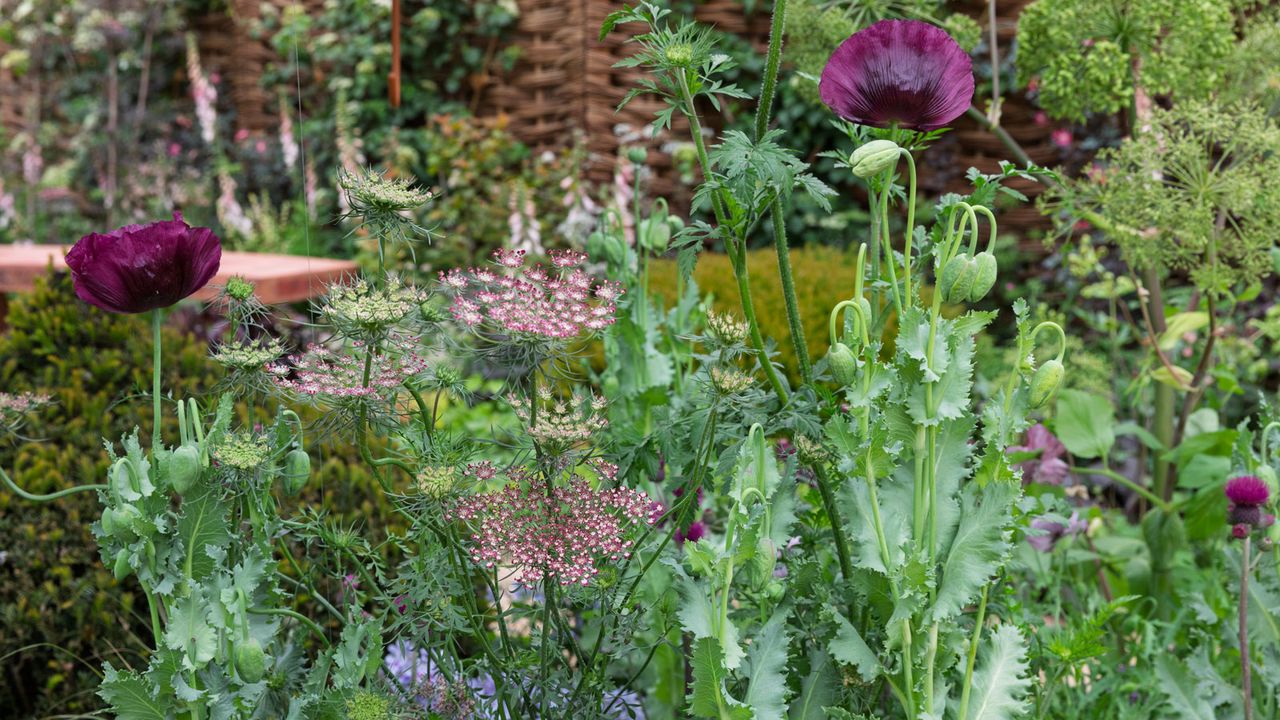
Flowerbed design with oriental poppies, achillea and angelica in pink and purple shades.

Planting wildflowers in the garden has been a popular trend for a few years now and it's not going away anytime soon. But results can be mixed if you don't take an organised approach. So instead of replacing wildflower planting itself what's changing is how you plant them, with the latest trend offering a more structured way to integrate beautiful, native wildflowers into your garden.

There was a popular conception until recently that you could adopt a haphazard approach and cast wildflower seeds over a wide area, just as happens in nature, with a view to getting a good mix of different varieties. But this tends to lead to poor results so now we're seeing a shift away from chaos gardening ideas like this and instead working wildflowers into your garden aesthetic so the result looks more curated.

We still love the idea of finding out how to plant a wildflower meadow in one contained area of your garden, so if you feel an urge to get rid of the lawn in these times of climate change then it's definitely a good idea to try replacing it with an alternative that will be loved by bees, butterflies and other beneficial pollinators. This is what garden design experts suggest if you're looking for ideas for replacing wildflower planting.

1. Organize Wildflowers Into An 'Imperfectly Perfect' Planting Scheme

(Image credit: Miriam Heppell / Alamy Stock Photo)

'I was never a fan of the chaos gardening method,' reveals landscape architect Laura Janney. 'You simply cannot throw seeds in some soil, neglect watering, embrace weeds, then hope for the best.

'People who try this method are disappointed that their garden doesn’t look like the wildflower meadowscaping they see on social media. Instead they usually end up with a big mess.'

We still definitely want wildflowers in our beds and borders to add softness, looseness and spontaneity, Laura points out. It's just we're less keen on the effect of scattering wildflowers around. 'Instead of just randomly planting flowers we do it in a more organized but natural style we call imperfectly perfect.

'We embrace nature's imperfections in an organic yet organized way, designing the garden so it seems effortless with elements of spontaneity that mimic the way plants grow in nature as opposed to rigid lines and exact spacing.'

Laura and her team plant in layers, and group plantings in clusters or drifts. Using intentional palettes they let the garden tell a story that incorporates wildflowers without it looking like a jungle.

Laura's top tips? 'Choose plants that self‑seed or spread so they can fill in over time without taking over. Prioritize fast‑growing, reliable plants to establish structure and cover quickly. Opt for more drought‑tolerant varieties so you’re not tied to constant watering once they’re established.'

You can also keep the 'wild energy' contained by creating one or two small experimental zones instead of chaos across the whole yard for a naturalistic planting design you're in charge of rather than the other way round.

2. Capture The Shift Away From Wildflowers With 'Botanical Bento'

(Image credit: Brian Smith/Alamy Stock Images)

'One of the top trends we've spotted in 2026 replacing wildflower planting is 'botanical bento', which captures the mood shift away from chaos gardening,' says Katie Dubow, garden trend spotter and President of the Garden Media Group.

'People still want the biodiversity offered by chaos gardening, and love the natural aspect of the meadow look, but there's a desire for more intention and artistry.'

If you're looking for neat, compact garden design ideas with everything you need within reaching distance but aren't ready for replacing wildflower planting quite yet then the garden bento box trend is definitely one to explore.

Rather than letting plants and wildflowers take over, this trend offers smaller, more curated compositions. 'These layered, meaningful plantings feel like a collection, calming to look at and far more manageable to maintain,' explains Katie. 'If you’ve ever eaten out of a bento box, these new garden styles give that same feeling, everything in its place, everything working together.'

So the key is to choose one or two wildflower varieties and work them into the planting tapestry of garden borders in an intentional and considered way. This isn't a mainstream idea yet but wild flower varieties are gradually segueing into more neat, structured planting patterns as part of the latest flowerbed trends so think about this when you're next looking for ideas to fill gaps.

Shop Non-Sprawling Wild Flowers

The compact growing habit of this native perennial pollinator plant makes it a favorite for neat flowerbed ideas.

A reliable native variety that attracts pollinators, has a compact growing habit, and loves a spot in full sun.

This compact variety keeps butterflies at eye level and has showy pink blooms from early summer right up to fall.

3. Get A Relaxed Look With Ornamental Grasses Instead Of Wildflowers

(Image credit: Justin Chung/ORCA)

If you're a fan of loose, unstructured planting to create a wildlife friendly space you don't necessarily have to rely on wildflowers to create the look. At this year's Chelsea Flower Show garden designs featuring relaxed ornamental grasses were everywhere, mingling with plants like achillea, allium and geum. Beautiful and versatile in any space, this is a style of planting that transfers more smoothly to urban gardens too.

Easy to grow decorative grasses bring naturalistic texture and movement to a garden design, and come back reliably year after year, unlike scattered wildflower seeds that tend to have a short life span with one variety normally dominating at the expense of others. Combined with perennials this offers a more curated look known as mosaic planting that is a much smarter take on wildflower meadow planting ideas.

If you love the idea of naturalistic landscaping with ornamental grasses try the latest planting trend. 'Grasses used as a base over the entire planting area, and from which other plants are seen to emerge, are referred to as 'matrix' grasses,' explains ornamental grass expert Neil Lucas, author of Grasses for Gardens and Landscapes, available here at Amazon.

'This approach is becoming increasingly popular as gardeners and designers alike enjoy the simplicity of the effect and the low level of aftercare required to maintain such plantings.'

Check out other Chelsea Flower Show trends for US gardens. For a reliable matrix grass choose Sesleria autumnalis available here from Amazon, which is easy to grow, and tolerant of a wide range of soil types and aspects.

If you want more Chelsea inspiration, our guide to the best gardens at the RHS Chelsea Flower Show 2026 reveals five of the top highlights, as picked by our Head of Gardens, Rachel Bull, and how you can recreate the styles and elements in your own space if you're thinking about replacing wildflower planting.

You may also like to find out more about curated mosaic planting, which is based on the idea of a much more designed, intentional feel to naturalistic garden ideas than simply scattering wildflower seeds.

And if you love inspiring garden ideas, outdoor advice, and the latest news, sign up for our newsletter and get the latest features delivered straight to your inbox.

Swamp Milkweed Flower 'Ruby Star' Coneflower Little Joe Pye Weed
Sign up to read this article
Read news from 100's of titles, curated specifically for you.
Already a member? Sign in here
Related Stories
Top stories on inkl right now
One subscription that gives you access to news from hundreds of sites
Already a member? Sign in here
Our Picks
Fourteen days free
Download the app
One app. One membership.
100+ trusted global sources.