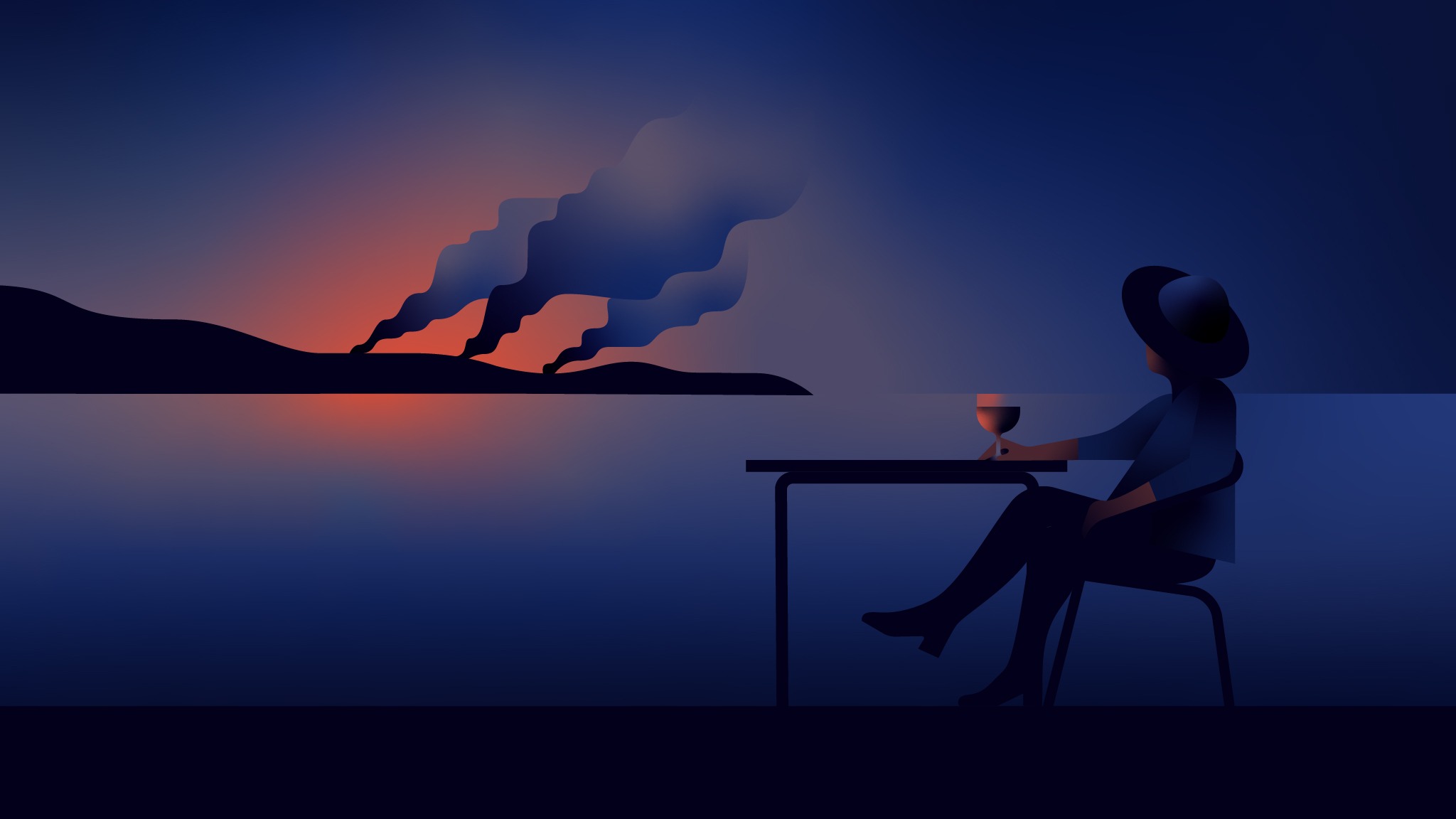
During wars there are always havens of bliss. In Evelyn Waugh’s semi-autobiographical novel Officers and Gentlemen, British troops on their way to fight in Egypt land in Cape Town in 1941 for a stopover in paradise: baths, wine, sun and women to dance with. They enjoy “the spoils of farms and gardens, baskets of oranges and biblical bunches of grapes”.
Today that haven is western Europe. Here in Madrid, where I’m spending some time, spring has come, the pandemic is waning and the lakeside restaurants in the Casa de Campo park are packed. In 1936 the Casa de Campo was a body-strewn battlefield in Spain’s civil war; the odd bunker still remains. Now phones ping with reports from Ukraine. How should we wine-drinking western Europeans process events on the other side of our continent? What can we do for Ukrainians?
Blood used to be spilled almost equally on both sides of Europe. But then Germany stopped invading, while Russia continued. (Europe’s other military giants, Britain and France, generally did their worst damage in distant colonies.) Since 1945, western Europe has enjoyed a holiday from history. That has bred an unearned sense of moral superiority vis-à-vis unluckier people. Refugees from faraway wars are seen as incarnating the chaos they are fleeing.
As we await a potential Ukrainian influx, I remember an Iraqi Kurd I met in “The Jungle” refugee camp near Calais in 2015. He had walked a thousand miles to get there. When a diabetic friend died while crossing Bulgaria, their exhausted group couldn’t move the man’s body, and a Bulgarian policeman told them, “It’s not my fucking problem.” I asked the Kurd if he’d encountered any kindness in Europe. He blew out smoke and reflected. “No. In Germany I was asking people in English, ‘What time is the train?’ They didn’t help me. ‘Humanity’ is just a name.” Look around The Jungle, he said. Europeans couldn’t provide even one clean toilet.
Remarkably, some people in our safe haven are now rooting for Putin. Over a fifth of western Europeans trust him to do the right thing in international affairs, reported Pew Research last year — not bad given the generally dismal approval ratings of modern politicians. Putin’s apologists explain that the poor fellow had to attack Ukraine because Nato expanded into eastern Europe. Some blame the US for this conflict, possibly because they remain understandably irate about past American wars.
Perhaps Nato shouldn’t have expanded. But pro-Putin arguments would be more credible if there were the remotest prospect of Ukraine joining Nato, or if any western democracy had attacked Russia in a century. Putin’s angry speech on Monday made clear his basic war aim: he believes Ukraine belongs in the Russian empire.
What’s true is that Ukraine and Russia are hopelessly intertwined. When I was doing research in the former USSR 30 years ago, my landlady in Moscow was the daughter of a Red Army officer who had invaded Germany. In this officer’s regiment there had been a Ukrainian, and when I went to Kyiv, the Red Army network fixed me up in the Ukrainian’s daughter’s apartment. This week I emailed another Ukrainian acquaintance, an anti-Putinist from Kharkiv, to ask if she was safe. Very safe, she replied; she now lives in Moscow.
But history is full of wars between neighbours, and many Ukrainians may head west, as refugees or economic migrants. (The country has already shrunk from about 51mn inhabitants in 1992 to 43mn now. In that period, Spain’s population has jumped from 39mn to 47mn, partly thanks to immigration, as Europe rebalances towards its lucky side.)
Like many people who flee here, Ukrainians will marvel at our untouched innocence. An Angolan immigrant to France once told me: Europeans are babies. When they’re unemployed, the state gives them money. In Angola, he said, many unemployed people die. Western Europeans take out 30-year mortgages, and plan their pensions, because they have learnt that life is predictable. Some of them can imagine no greater outrage than a refugee drawing state support from their taxes.
I suspect western Europeans will be relatively welcoming to white Christian Ukrainians. After Germany invaded white Christian Belgium in 1914, Britain took in 250,000 Belgians, the largest single influx ever into the country, while the little Netherlands briefly hosted a million Belgian refugees. Many Hungarians in 1956 and Czechs in 1968 also found western havens. Some melted into native populations within a generation.
I hope we’ll be kind to Ukrainians. I hope we’ll crack down on lawyers, public relations firms, private schools, estate agents and political parties — not only in London — who live off the Putinist elite’s plunder. I also hope we’ll keep drinking wine by lakesides. That may be the zenith of the whole human enterprise. Everyday European life is what most Ukrainians long for.
Copyright The Financial Times Limited 2022