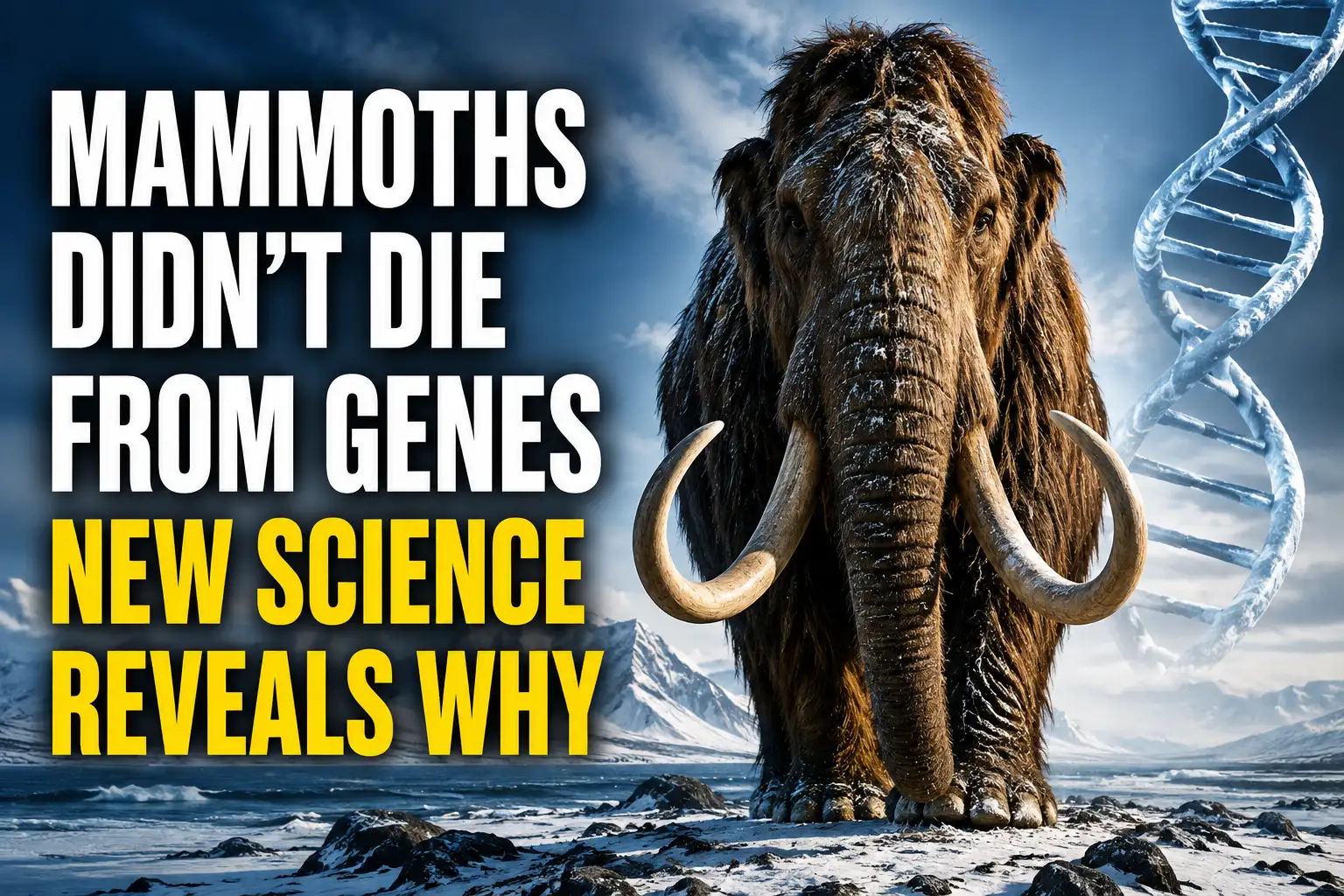
For decades, the story of the woolly mammoth's extinction seemed settled. Scientists believed the final population became trapped on a remote Arctic island, where thousands of years of isolation and inbreeding gradually weakened the animals until their genetics made survival impossible. That explanation appeared in scientific papers, documentaries and classroom discussions, becoming one of the best-known examples of how small populations can disappear.
A major study published in Cell in 2024 is changing that narrative. After examining ancient DNA from woolly mammoths that lived across tens of thousands of years, researchers concluded that the last mammoths did show signs of reduced genetic diversity, but those changes alone were not enough to explain their extinction. Instead, the evidence points toward a more complicated ending involving environmental pressures, chance events and the challenges of surviving in an isolated Arctic ecosystem.