
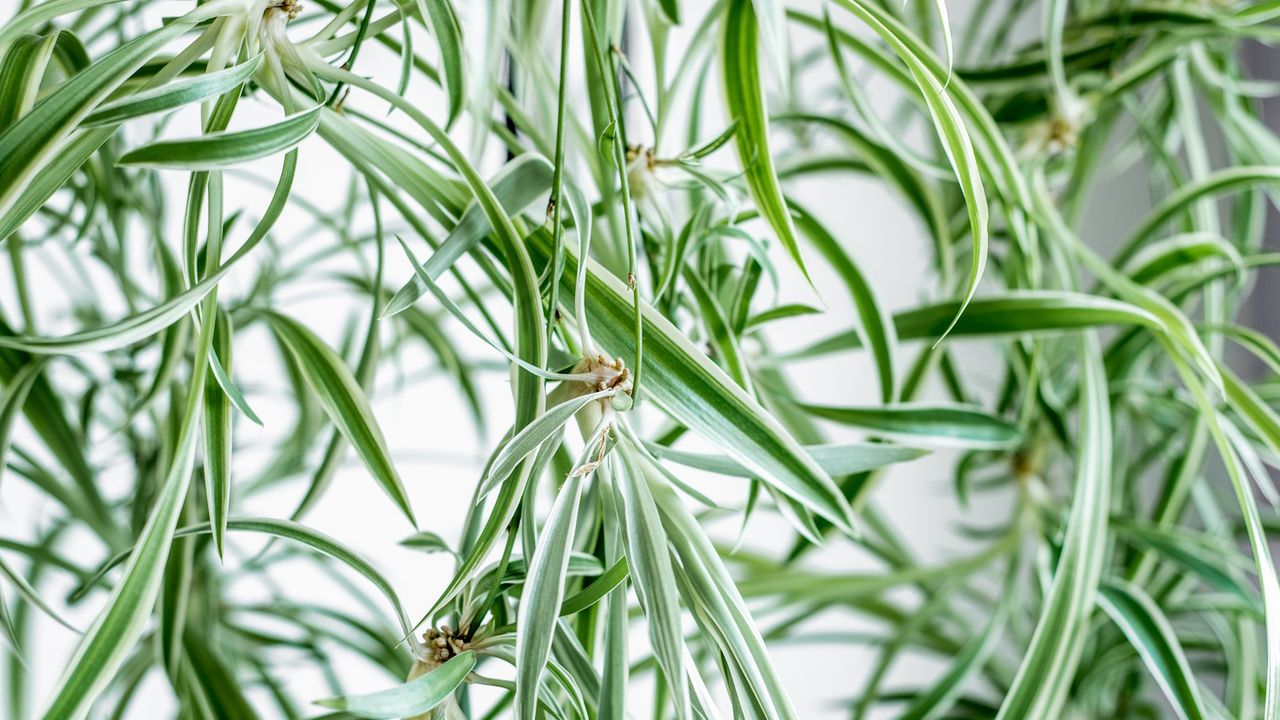
Spider plants are renowned for being both stylish and easy to look after, but there are still a few essential tasks you'll need to do this month to keep yours looking healthy. In March, spider plants are entering their active growth phase, which means you'll want to start watering them frequently – while prioritizing soil drainage to ensure that your plants don't become waterlogged.
This is also an ideal time to clean your spider plants, examine the roots, and repot them if needed, as well as making sure they can enjoy bright but indirect light in the sunnier days ahead.

Want to know exactly what to do this month? Read on for our ultimate guide to spider plant care in March. (And if you're on the market for one to add to your collection, you can pick up a variegated spider plant at Lively Root.)
1. Start Watering More Often

Spider plants are widely considered some of the best low-maintenance indoor plants, but they do need a little more attention in March.
The most important thing to focus on? Watering, says Tenielle Jordison, Gardens Content Editor at Homes & Gardens.
'March is an exciting time for spider plants, as they awaken from their winter slumber and enter an active growth season,' she explains. 'As temperatures warm up, you should increase your watering frequency to ensure the soil stays consistently moist.' A soil moisture meter (like this one from Walmart)will help you keep track and adjust levels accordingly.
'Letting your spider plant dry out will result in crinkled foliage,' warns Tenielle. 'But don’t worry, they’re pretty forgiving and will bounce back with a bit of watering.'
This variegated spider plant from The Sill is currently on sale, at $35.
2. Start Fertilizing

Fortunately, fertilizing houseplants isn't a year-round endeavor – especially when it comes to hardy varieties like spider plants – but you will need to do so in spring and summer.
'I recommend starting to fertilize your spider plant this month,' says Tenielle. 'I like to use an all-purpose balanced liquid houseplant feed for my spider plants, which helps encourage the growth of ‘spiderettes’ or baby spider plants. These can later be propagated and grown into brand new plants.'
If you're looking to stock up on plant food, you can find Miracle-Gro Indoor Plant Food at Amazon.
3. Carefully Clean the Leaves

It's a good idea to clean your houseplants regularly, but if you've found yourself neglecting the task recently, it's particularly useful to check this off your list in March.
If you spot any damage or discoloration, pests like mealybugs could be the culprit. They may well be hiding underneath the leaves; you can use a horticultural oil (like this one from Amazon) to remove them, helping you to ensure that your spider plant is pristine and healthy as spring arrives.
4. Check the Roots

Wondering if your spider plant is starting to outgrow its container? Now is the time to examine the roots and find out.
'Spider plants can become pot-bound after a couple of years, so March is a good time to check in with the roots,' advises Tenielle. 'If they’re starting to wrap around themselves and have formed a hard mass of roots, you'll need to move your spider plant.'
5. Repot if Necessary

It's best to repot your spider plant once every few years, and spring is widely considered the best time to do it.
'Yellowing leaves and a lack of water absorption are signs to look for when identifying if your spider plant needs repotting,' says Tenielle. 'If your plant looks unhappy, it might be time to move it to a bigger pot.'
6. Adjust Locations Based on Sunlight

Spider plants are native to southern Africa, and they thrive in warm areas with plenty of sunlight. However, they are in fact happiest in indirect light – which is worth remembering as sunnier days arrive.
If your spider plant currently graces a windowsill, its leaves could risk being scorched on hot days, so March is a good time to check in and position it somewhere bright but protected.
What to Shop

With a handsome blue finish and an elegant pattern, these planters are the perfect addition to your home, balcony or garden. They have drainage holes and saucers to remove excess water.

This liquid plant food is formulated specifically for spider plants. It will help them maintain their vibrant green leaves and produce more 'spiderettes' for propagation.

This set has everything you need to keep houseplants hydrated – and it would make a great gift, too. The watering can features a detachable nozzle for increased accuracy.
Spider plants are perfectly suited to containers, but they look particularly striking in hanging baskets. If you're keen to nurture your own cascading plant, you can check out our guide on how to grow hanging spider plants.
And if you love inspiring garden ideas, outdoor advice, and the latest news, why not sign up for our newsletter and get the latest features delivered straight to your inbox?