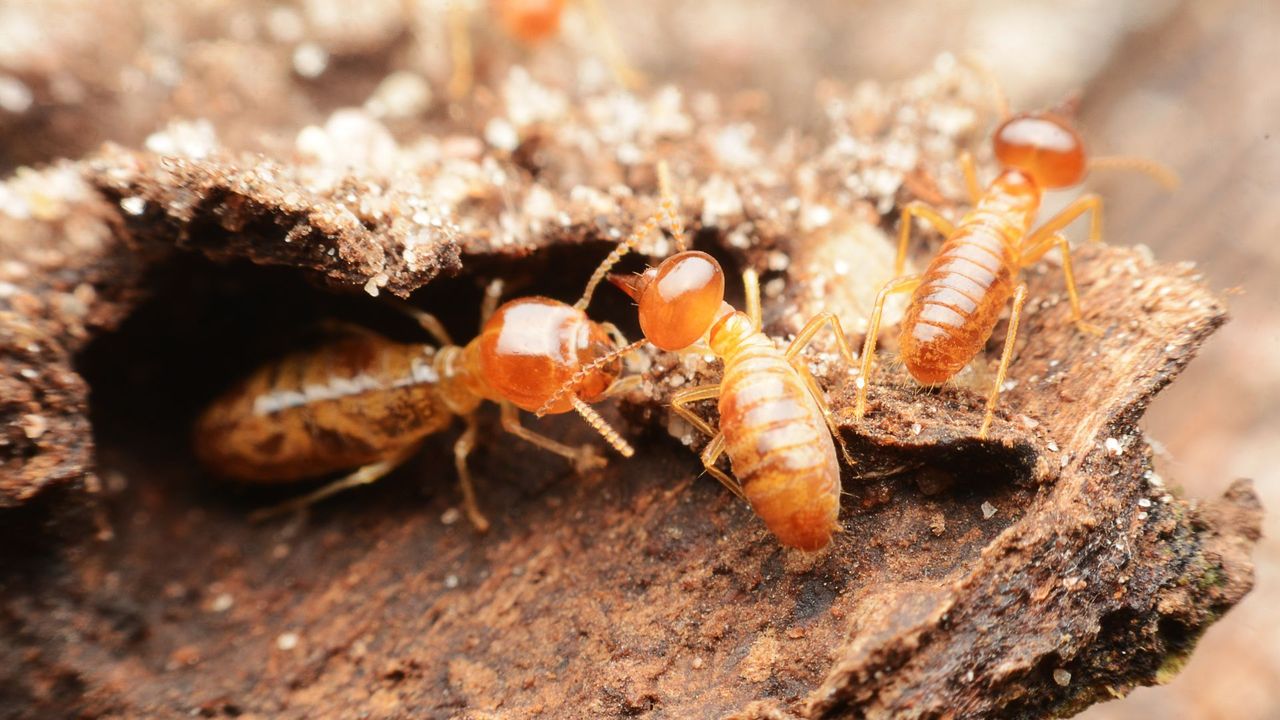
Termites can cause chaos inside your home, and it’s difficult to know you have them until the damage is done. What’s more, the destruction can be severe, with the U.S. Environmental Protection Agency (EPA) stating that property owners spend two billion dollars a year on structural repairs.
But aside from your home, termites can secretly cause damage in your yard, as they are attracted to wood and moisture. Think wood piles, rotting tree stumps, mulch, and wood chips. They’ll also make their way to standing water, leaky faucets, and clogged gutters and downspouts, which provide the damp environment where they thrive.
If you discover termites in your yard, you’ll need to act fast to prevent them from causing any further damage.
How to spot termites in your yard
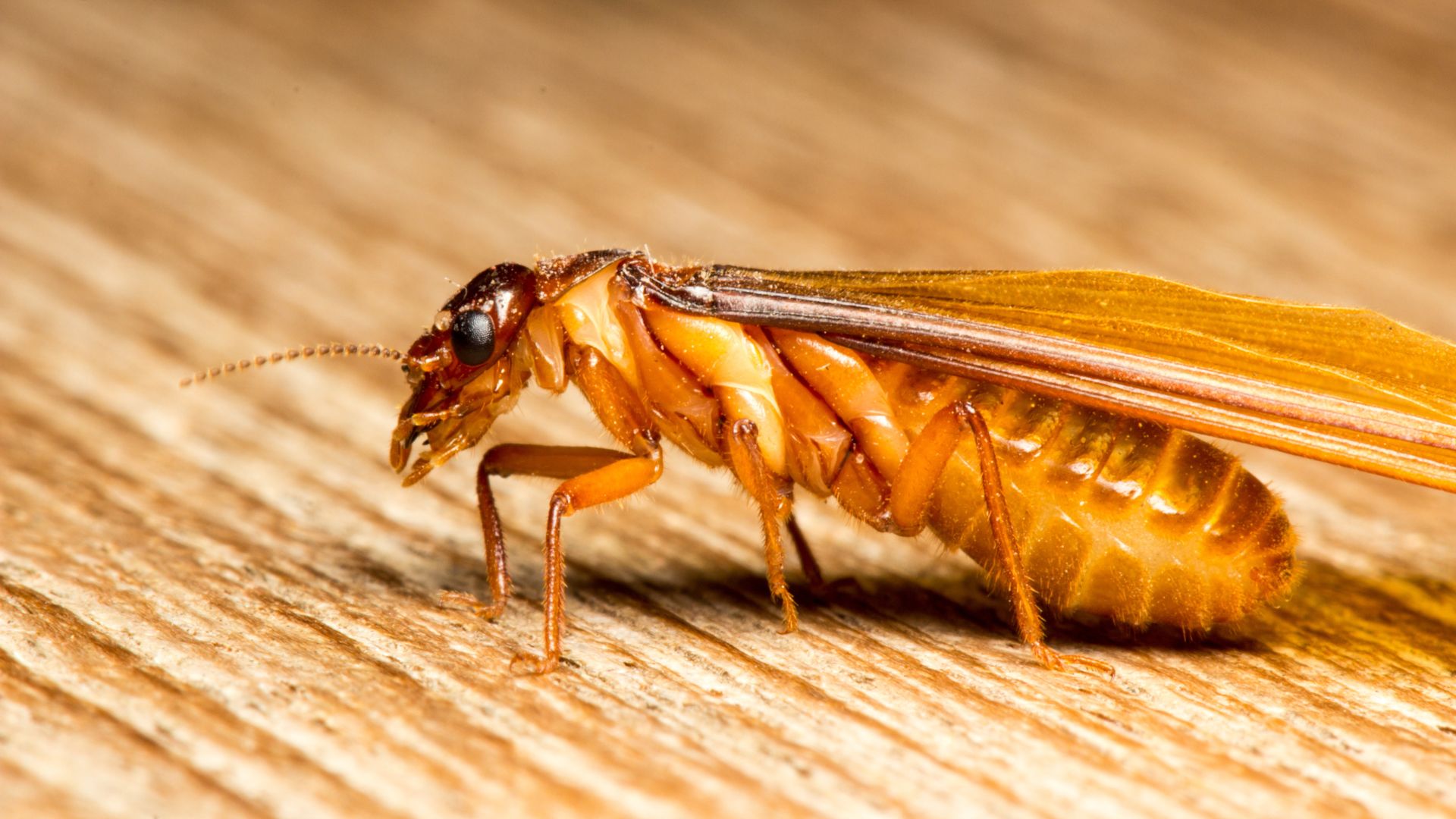
The EPA says it’s unusual for termites to emerge from soil, mud tubes, or food sources through which they are tunneling. In fact, you won’t necessarily know you have termites in your yard until you spot the destruction they’ve caused or see a swarm.
However, it can be difficult to spot the difference between termites and ants when they swarm, but there are a few differences to help you identify them. A termite’s wings are roughly equal in length, while the front wings of an ant are longer than the hind wings. A termite’s antenna is straight and may droop, while an ant’s antenna is bent at a ninety-degree angle.
The most common type of termite in the U.S. is the subterranean termite, although there is also the smaller drywood termite and the Formosan termite. According to Orkin, subterranean termites are more likely to swarm between March and June, on warm sunny days, following rain. You’re more likely to see dry termites during the late summer or fall, from August through to November.
Apart from spotting swarms, there are other signs you have termites in your yard. Look for mud tubes along foundation walls, garden borders, tree trunks, and outdoor furniture. Check for hollow-sounding wood, as termites feed from the inside out, consuming the cellulose. You may also notice wing piles, as swarmers shed their wings after mating and leave the remains near window sills, decks, or foundations.
But according to Ryan Lawn, termites don’t just target wood; they also affect the surrounding soil structure, and warn that unusual patches of lawn or soil mounds can be an early sign of subterranean termite activity beneath. What’s more, outdoor sheds, decks, and playhouses can also show signs of termite infiltration, where blistering paint indicates termites tunneling behind the surface layer.
5 DIY termite treatment methods
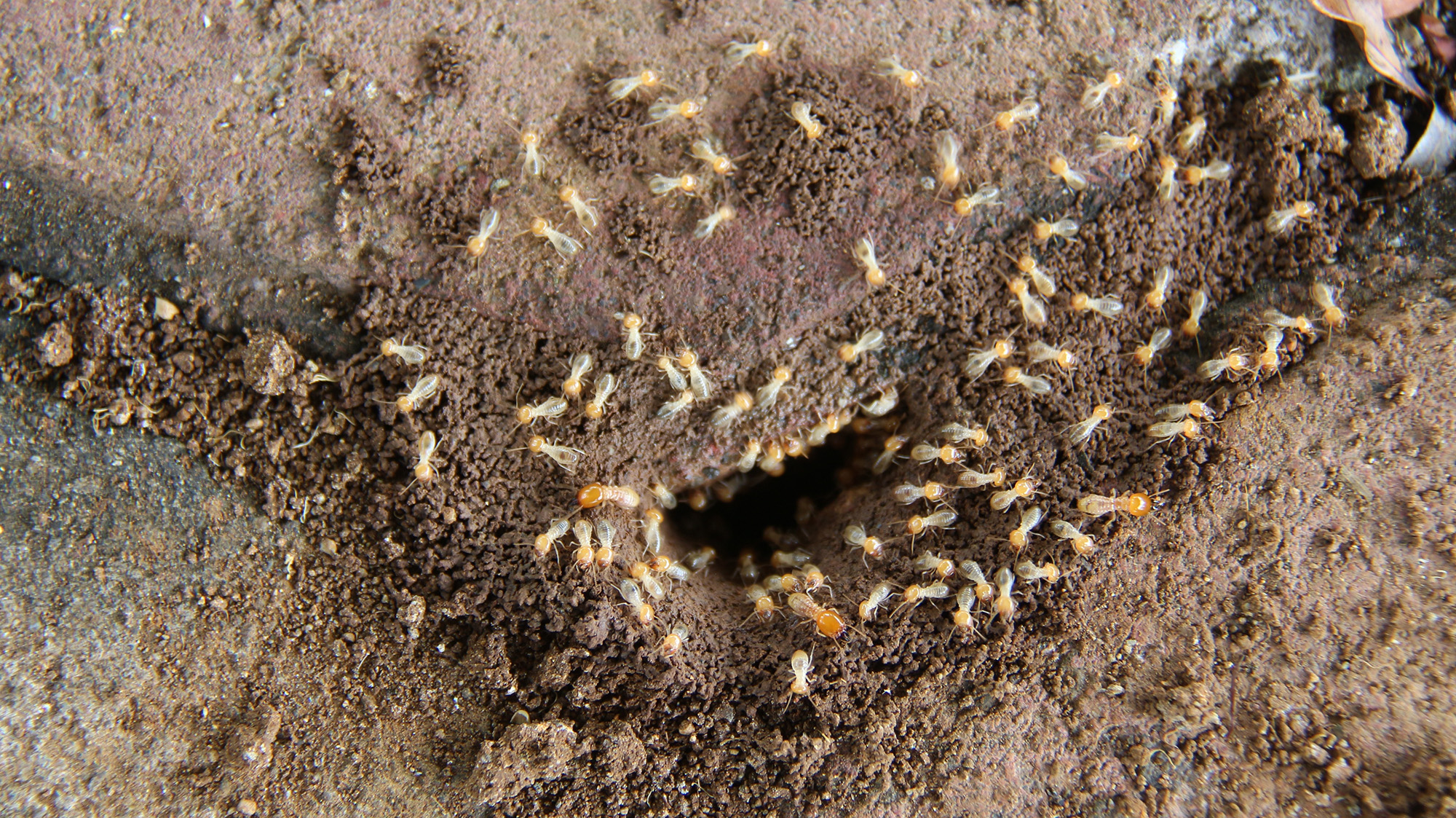
DIY treatments can help eliminate termites in your yard, although if you have a serious problem, or the termites have invaded your home, it’s best to call in a professional.
1. Termite foams
Lawn Love1 suggests using a foam termiticide, such as Termidor, which contains the chemical fipronil, into any holes, cracks, or crevices where you suspect termites are hiding. It will last for about one month before needing reapplication if activity continues. You can purchase BASF’s Termidor Insecticide for $32 from Amazon.
2. Termite baits
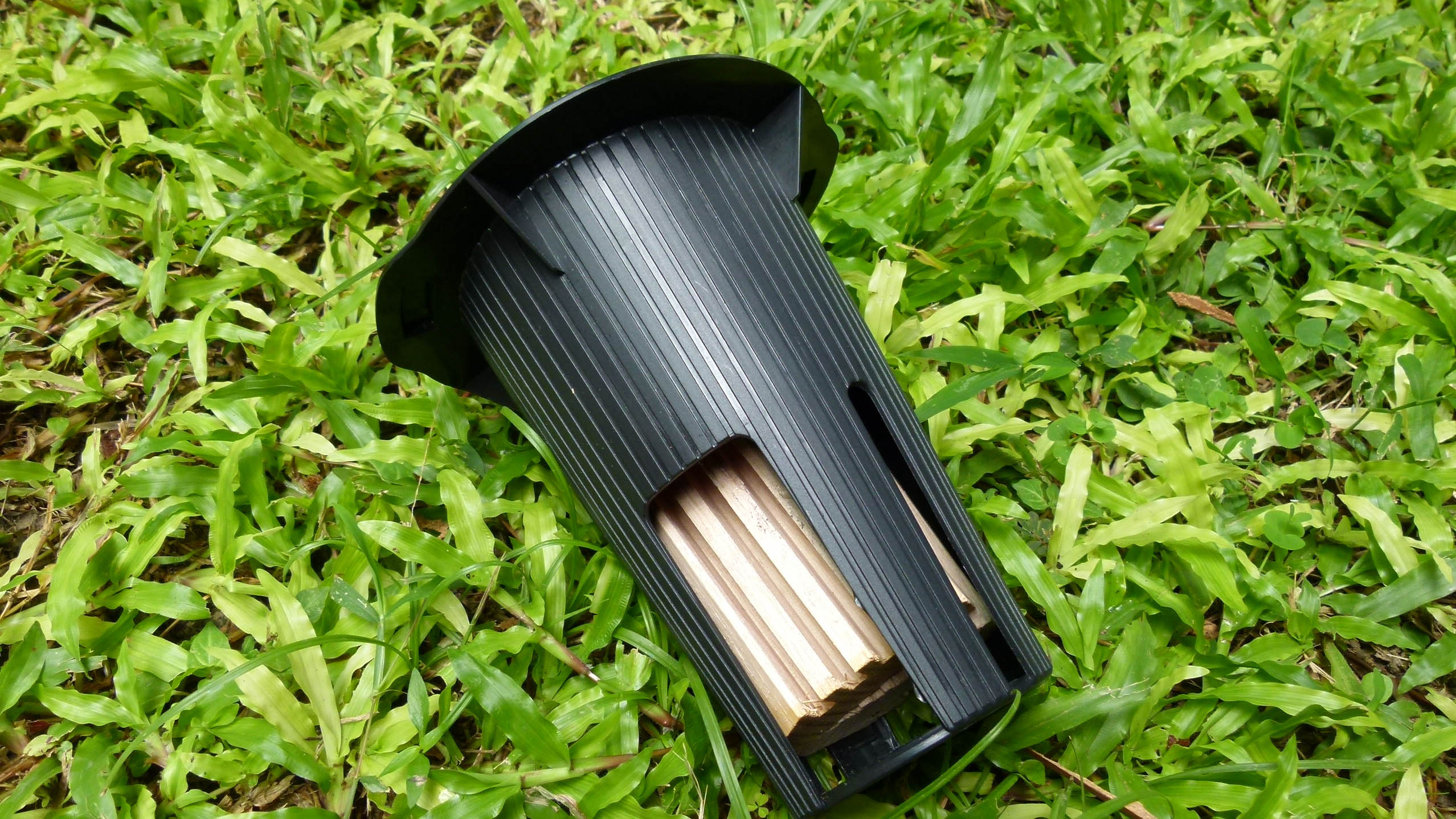
Termite bait works in the same way as other insect baits. Lawn Love explains that cellulose is laced with a toxin that kills the termites. However, it is slow-acting and gives the termites time to take it back to their colony to spread its effect.
3. Termiticide barrier
Liquid termiticides and granular termiticides are both undetectable by termites. Lawn Love suggests spreading granular termiticides around your home’s foundation, decaying trees, woodpiles, and other wooden structures. When using the liquid, it suggests creating a moat around your foundations, so even if they get any further, they won’t survive for long.
4. Nematodes
For a natural solution, you can try nematodes. Lawn Love explains that nematodes are parasites that prey on termites, and once inside the termite's body, they release poisonous bacteria. You could try Live Beneficals Nematodes Triple Blend Mix, $19 at Amazon.
5. Boric acid
Boric acid can be applied as a powder, with Lawn Love recommending it can be sprayed undiluted with a powder sprayer, or made into a solution of 1 teaspoon of boric acid for every cup of water and sprayed where you suspect termites.
Apart from these 5 termite treatments above, you can take other precautions to deter a termite infestation.
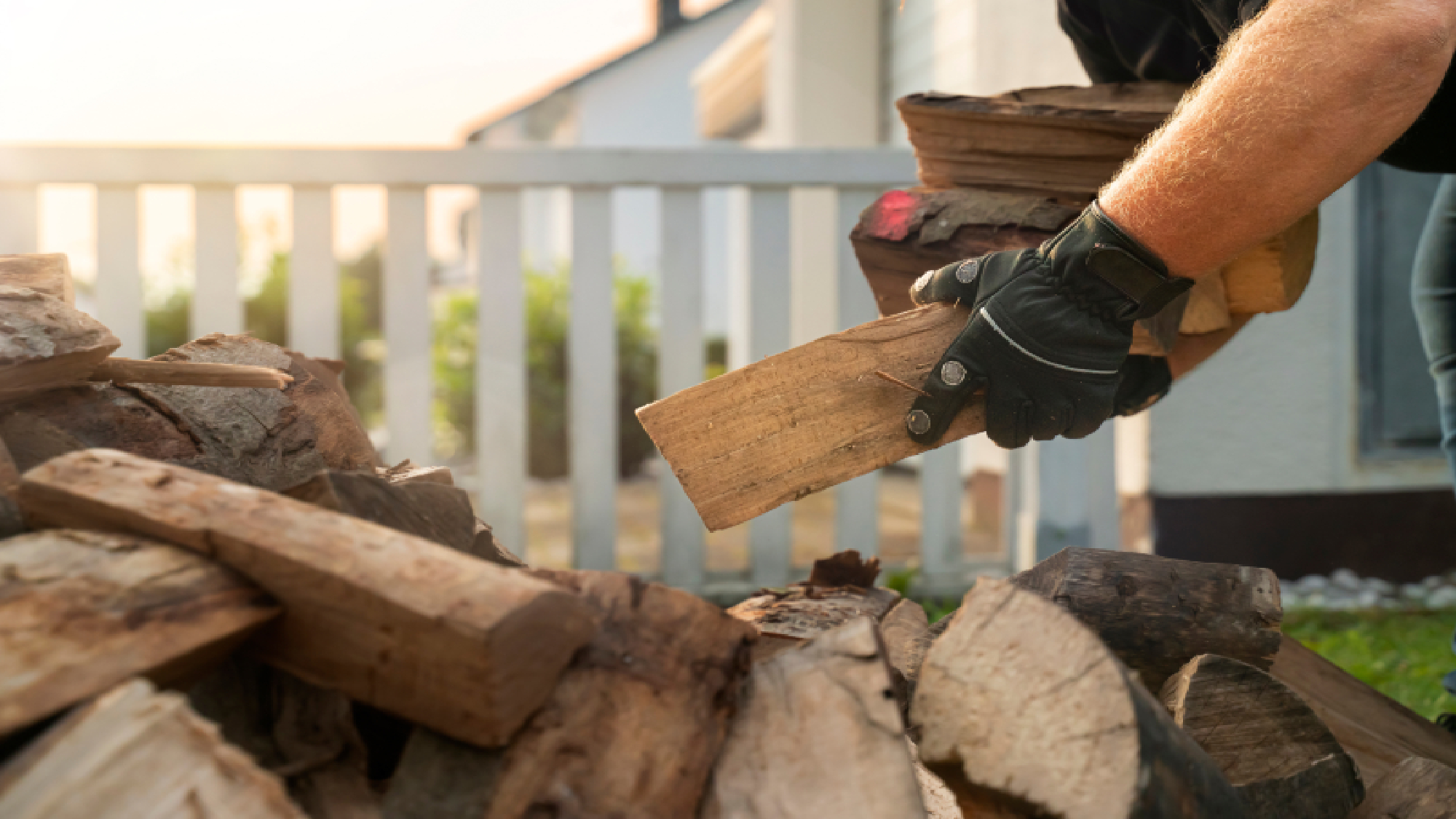
Reduce wood to ground contact and place firewood at least 20 feet from your home and raise it off the ground. You should do the same with any outdoor furniture, while all wooden structures will benefit from a protective coating using a quality wood sealant. Finally, clear old tree stumps and infected wood, and repair andy leak faucets or outside pipes.