
Get all your news in one place.
100's of premium titles.
One app.
Start reading
The Conversation
The Conversation
Bill Jeffery, Contract Instructor, Health Law, Department of Law and Legal Studies, Carleton University

What the U.S. Supreme Court’s pesticide ruling means for gardeners and farm workers

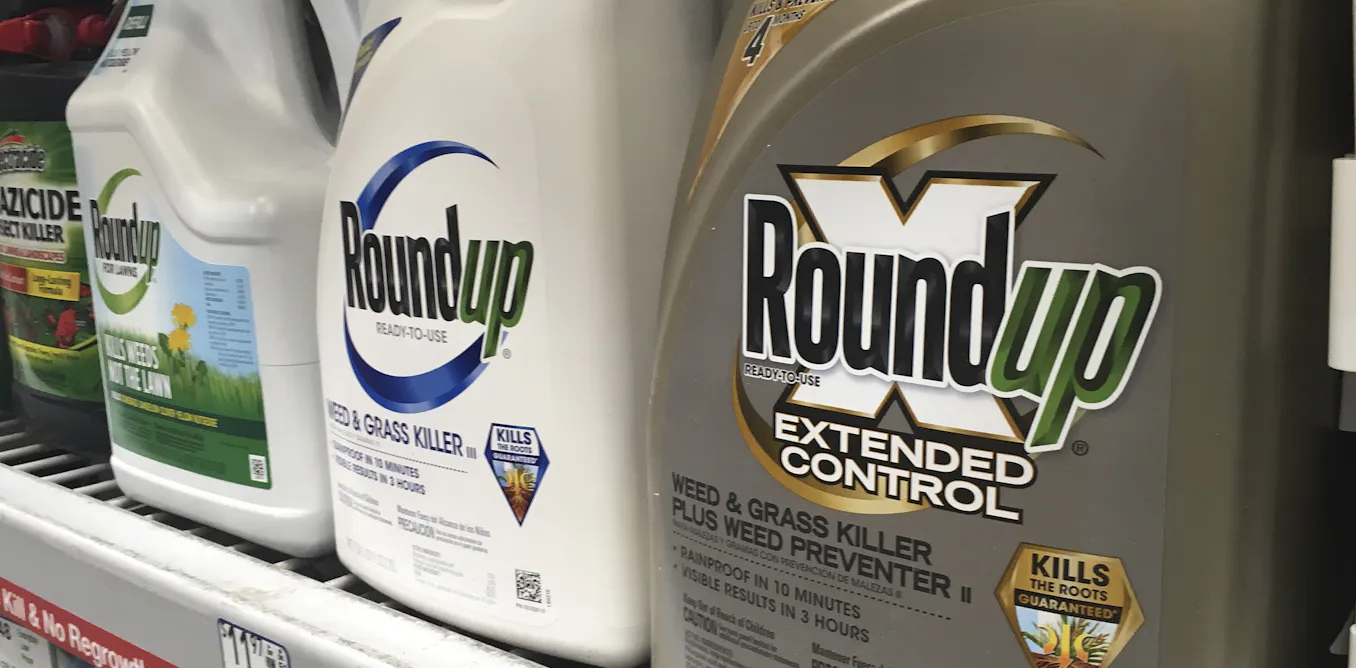
In June, the United States Supreme Court ruled that state goverments’ duty-to-warn laws do not oblige chemical manufacturer Monsanto to disclose a cancer risk on its pesticide labels. Monsanto manufactures the well-known pesticide Roundup that has been the subject of thousands of lawsuits in the U.S. and Canada.

The company argued that if the U.S. Environmental Protection Agency (EPA) does not require a cancer warning label, states cannot hold it liable in court for failing to warn consumers about cancer risks.

In their decision, the U.S. Supreme Court made no pronouncements on whether glyphosate causes cancer, only that the EPA is the sole arbiter of label warnings. The decision also forbade anyone else from issuing cancer warnings — including states, lower courts and manufacturers — unless the EPA approves.

The EPA maintains that there is “no evidence that glyphosate causes cancer in humans.” However, in 2015, the World Health Organization’s International Agency for Research on Cancer (IARC) classified glyphostate as “probably carcinogenic to humans.”

The court’s decision relieves the sellers of hundreds of pesticides on the market from failure-to-warn obligations, not just glyphosate.

Un-acknowledged regulatory bias

Monsanto’s lawyers argued that the EPA “exhaustively studied” glyphosate and did peer review while the International Agency for Research on Cancer did not, and that the EPA reviewed more data and unique expert analysis. This is misleading.

None of nearly three dozen briefs submitted by parties and friends of the court (industry groups, academics and environmental groups) told the court about the systemic bias of regulators.

The EPA appears to have primarily made its decisions based on confidential data and studies provided by regulated companies, and largely ignored studies published in peer-reviewed scientific journals.

Canadian, European and U.S. regulators seem to exhibit the same preference for company data and dismissive attitude over research published in peer-reviewed journals.

For instance, a 2017 report on glyphosate from Health Canada, prepared with the EPA, acknowledged that Health Canada relies mainly on “seller-sponsored science.” The report also said that “IARC considered only published sources of toxicology data…did not directly consider, or did not consider at all, unpublished toxicology studies…[and] that unpublished registrant-sponsored studies are not requested by the IARC for their deliberations.”

Similarly, a statement from 94 scientists characterized the difference in approaches of the WHO’s International Agency for Research on Cancer and the European Food Safety Authority:

“IARC reviews only publicly available data … In the [EFSA Renewal Assessment Report], almost no weight is given to studies from the published literature and there is an over-reliance on non-publicly available industry-provided studies using a limited set of assays that define the minimum data necessary for the marketing of a pesticide.”

The U.S. Supreme Court also did not mention a 2025 study that found glyphosate causes malignant tumours in laboratory rats faster and at lower doses than previously thought. The researchers concluded that their “results provide robust evidence supporting IARC’s conclusion that there is sufficient evidence of carcinogenicity [of glyphosate] in experimental animals.”

Injudicious thinking?

The U.S. Supreme Court’s decision is an example of the constitutional principle of pre-emption: the approach that U.S. federal law renders inoperative any contrary state law.

In essence, this decision prizes nationwide legal uniformity over protecting pesticide users from potentially developing cancer. The court’s majority seemingly opted to resolve ambiguity in the law and science in favour the commercial interests of the sellers, not the health of consumers, gardeners and farm workers.

The court’s majority was silent on errors committed by the EPA’s safety assessment of glyphosate, which a U.S. federal Circuit Appeals Court vacated in 2022 due to “serious errors.” The EPA has not yet addressed those errors.

Justice Clarence Thomas claimed to support the majority view, but wrote supplementary reasons claiming that all federal EPA regulations punishable by penalties are unconstitutional, which seems more in line with the minority decision. He cited only one case authority, a 2026 Supreme Court decision involving U.S. President Donald Trump’s trade tariffs.

This seems like the sort of injudicious reasoning that fuels the near-constant barrage of attacks on science catalogued by the Union of Concerned Scientists’ Trump Tracker.

All this makes for an unreliable scientific and judicial knowledge partner south of the border.

Glyphosate in Canada

In 2017, the Canadian health minister refused to mandate warning labels for glyphosate. Provincial laws likewise require the disclosure of material facts to consumers, and class action and mass tort lawsuits against Bayer-Monsanto concerning glyphosate have been filed in Canadian courts since 2018.

That means it’s not enough for companies to refrain from actively misleading consumers; they must disclose pertinent facts that would likely influence the purchase or use decisions of consumers.

The closest Canadian constitutional principle to pre-emption, paramountcy, is much more respectful of areas of concurrent provincial and federal jurisdictions, generally allowing both laws to operate if a regulated party can comply with both.

Furthermore, the Canadian Pest Control Products Act places the ultimate responsibility of disclosing material facts and selling safe products on the seller, not the regulator.

As an Ontario Superior Court observed in 2023 when deciding to certify a Canadian class action against Bayer-Monsanto for claims of glyphosate-induced cancers, Health Canada’s regulatory approval of glyphosate is no excuse for selling a harmful product. The judge wrote:

“Health Canada is an imperfect regulator and Canadian courts have repeatedly certified class actions involving medical products that were not recalled and were still on the market.”

Regulating glyphosate

Health Canada has a problematic record of regulating glyphosate and pesticides. The Pest Control Products Act mandates a Parliamentary review of the act every seven years. That review is at least five years overdue.

There is an urgent need to rethink the government’s approach to company studies on pesticide safety, lack of conflict-of-interest measures to evaluate seller-sponsored studies, ambiguous interpretations of “scientifically founded doubt” and ill-defined triggering conditions for applying the precautionary principle.

In 2023, Canada agreed to United Nations treaty obligations to reduce harmful pesticide and chemical risk by 50 per cent by 2030. However, a Health Canada report to Parliament indicated that Canadian annual sales of all pesticides increased by 23 per cent between 2019 and 2023, and the government may not even be tracking the risk.

Furthermore, of 460 pesticides in the Pesticide Action Network list, the European Union has either banned or not approved 383; Canada has banned only 29.

As of today, Canada has not yet consulted on an approach to measuring harmful chemicals use and may choose an equation based on variables that are not publicly reported and, as such, not subject to verification by experts.

The U.S. Supreme Court was encumbered by blinders, idiosyncrasies of constitutional and congressional law, and injudicious reasoning. And the future of glyphosate and pesticide regulation in Canada may turn on the outcome of class-action litigation and the five-years-overdue Parliamentary review of the pesticide regulatory system.

This article was originally published on The Conversation. Read the original article.

Sign up to read this article
Read news from 100's of titles, curated specifically for you.
Already a member? Sign in here
Related Stories
Top stories on inkl right now
One subscription that gives you access to news from hundreds of sites
Already a member? Sign in here
Our Picks
Fourteen days free
Download the app
One app. One membership.
100+ trusted global sources.


