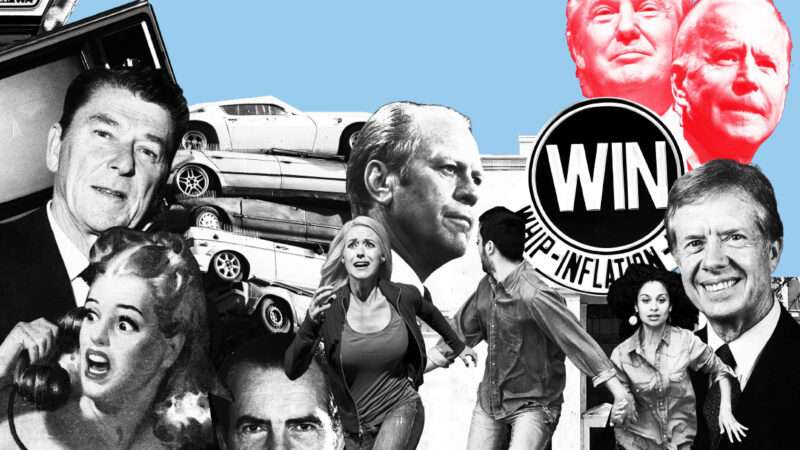
Ronald Reagan won the 1980 presidential election for many reasons—energy woes, taxes and regulations, crises in Iran and Afghanistan, discomfort with the sexual revolution, a vague yet unmistakeable "crisis of confidence" that Reagan's Democratic rival, President Jimmy Carter, infamously described in his 1979 "malaise" speech. But all that took second place to a single, highly specific metric: inflation.
By October 1979, Americans agreed by an overwhelming margin that inflation was the most important issue facing the country. A New York Times/CBS News poll found that 40 percent of the country named it as their top concern, more than twice the number that picked the next biggest concern, energy. That 40 percent figure arguably understated the public's sense of alarm: Another 20 percent said inflation was an important problem (if not the most important), and 8 percent said the nation's biggest issue was "the economy," which could easily cover concerns about stagnant wages and rising prices. Even those who named "energy" were likely worried about supply constraints and spiraling costs.