Get all your news in one place.
100's of premium titles.
One app.
Start reading
The Independent UK
The Independent UK
Jeff Meyer

What size solar panel do I need? How to choose the right fit for your home

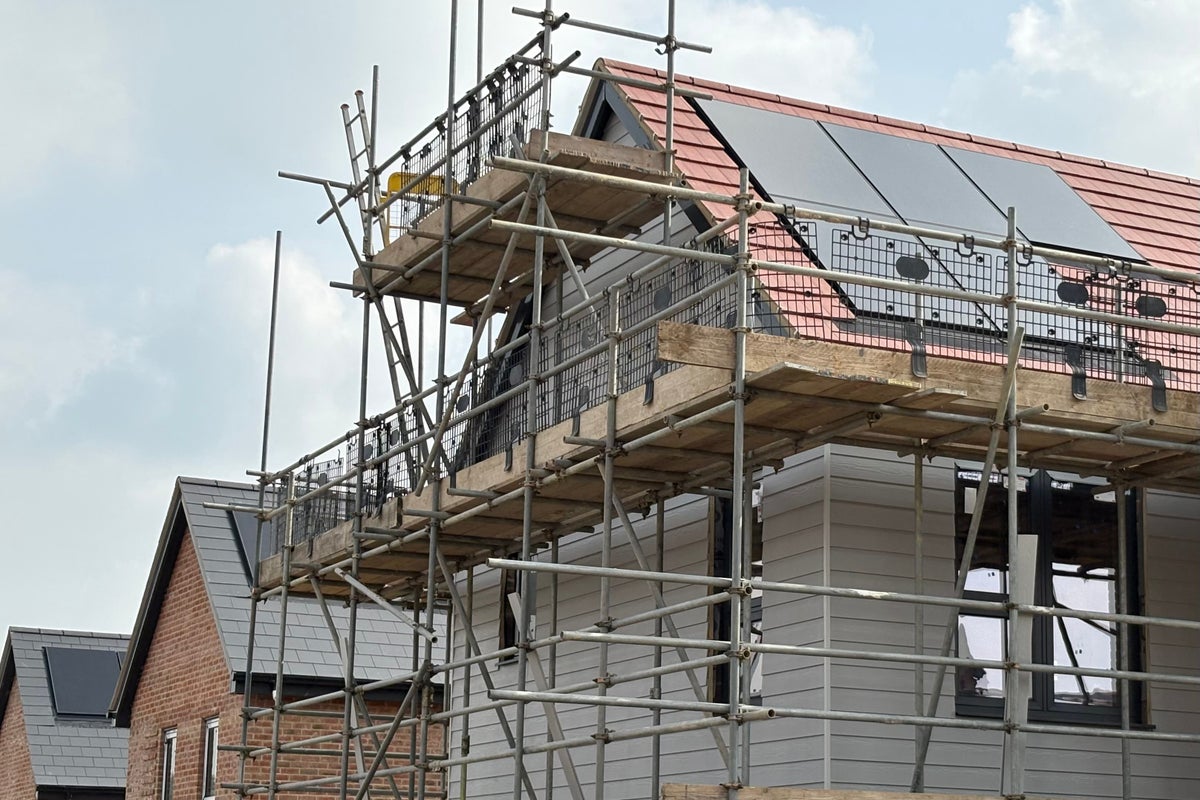
Most households install systems between 3.5kWp and 5kWp, depending on energy use and roof space - (Sunsave)

Solar panels are often sold on a simple premise that the more power you install, the more you save. But contrary to popular belief, choosing the best solar panel system for your home doesn't necessarily mean you should buy the most powerful kit you can afford. The real question is simpler and more personal. How much electricity do you actually need your system to generate, and how does that fit your home, your roof, and the way you live day to day?

Get that balance right, and solar can do more than trim your electricity bill. It can help you use more of your own power, rely less on the grid, and in some cases even stabilise what you pay for energy over time.

Get a free quote for solar panels

Use our comparison tool to get a free quote on solar panels from a range of installers across the UK.

What does solar panel size actually mean?

One of the biggest sources of confusion is that the ‘size’ of solar panels can mean three different things. There is the physical size of each panel, which is typically around 1.7m by 1m. Then there is the wattage of each panel, which tells you how much power it can produce under ideal test conditions. And finally, there is the size of the entire solar panel system, measured in kilowatt peak, or kWp.

It’s this final number that usually matters most. When installers talk about a 4kWp system, they’re referring to the combined output of all your panels working together. A system made up of 10 x 400W panels, for example, would be a 4kWp system.

How much electricity does your home use?

Before thinking about panels, you need a rough sense of your annual electricity use. A typical UK household uses around 2,700-3,500kWh per year, but that can rise quickly if you have an electric vehicle, a heat pump, a hot tub or simply a busy household with lots of appliances running during the day.

This is the foundation of any good system design. Rather than aiming for the biggest possible setup, most installers try to match generation to real-world usage.

Ed Janvrin, director of franchise at OVO Energy, says a good design should take account of both annual usage and “site-specific yield” – or in other words, how much sun the property’s location is likely to receive. OVO typically aims for a system that can cover at least 50 per cent of a household’s energy needs, while still allowing for roof safety requirements such as fire gaps.

For homeowners who have already made the switch, this often becomes a practical exercise. Justin Webb, a homeowner in Wiltshire who installed solar panels and a battery on his home several years ago, says he based his system on how his household actually uses electricity day to day.

“I sized the whole system based on what I thought I would use in the daytime,” he says, adding that understanding your own consumption is the most important piece of knowledge to have before deciding on panel size.

What size solar system do most UK homes need?

While every home is different, most UK installations fall into a few common ranges. A 2kWp to 3kWp system may suit a smaller home or a property with limited roof space. A 3.5kWp to 4.5kWp system is more typical for a three-bedroom house, while larger homes or households with higher electricity demand may look at systems of 5kWp or more.

In practical terms, a 4kWp system might generate around 3,400-4,200kWh per year in the UK, depending on location, roof orientation and shading.

Real-world performance can vary significantly across the year. Webb’s 4.5kWp system, for example, produces as much as 30-35kWh per day in summer, but closer to 5kWh or 6kWh on some winter days. That seasonal swing is normal, and one of the reasons why system size alone doesn’t tell the full story.

How many solar panels do you need?

The number of panels you need depends on their wattage. A 4kWp system typically uses around 10-12 panels, while a 5kWp system may need 12-14 panels, depending on the model.

Higher-wattage panels mean you can achieve the same system size with fewer panels, which can be useful if roof space is tight. This is something installers say is often overlooked.

Lloyd Greenfield, founder of Glow Green, points out that two quotes with the same number of panels can produce very different results depending on panel wattage. If one installer is quoting eight lower-wattage panels and another is quoting eight higher-wattage panels, the systems may look similar on paper but they’ll generate different amounts of electricity over their lifetime.

Greenfield adds that homeowners are sometimes drawn to the lowest headline price, but may be better off paying slightly more for a higher-wattage panel if it produces more power from the same amount of roof space.

How much roof space do you need for solar panels?

A typical 4kWp system requires around 20 square metres of roof space. But as well as area, you also need to consider how usable that space is.

Installers will look at the roof direction, pitch and shading. South-facing roofs usually generate the most electricity, but east-west arrays can still work well because they spread generation across more of the day. Roof pitch also matters, though most pitched roofs in the UK are within a workable range.

There’s also a practical lower limit. Alfie Ireland, head of operations at solar installer Sunsave, says if an installer cannot fit more than around six panels on your roof, it is “rarely worth going ahead” because the costs of installation can outweigh the benefits. The fixed costs of scaffolding, wiring and installation can make very small systems less economical.

Should you aim for solar panels to cover 100 per cent of your electricity use?

Not necessarily. One of the most common misconceptions is that a solar panel system should generate all the electricity a household uses.

In reality, this isn’t always the most cost-effective approach. Solar panels generate electricity during the day, but most household demand happens in the morning and evening. Without storage, excess energy is exported to the grid, often at a lower rate than the cost of buying electricity back later.

This is why many systems are designed to cover a portion of your usage, rather than all of it. The aim isn't simply to maximise generation, but to maximise the amount of solar power your household can actually use. You can get a clearer picture of how this works in practice in our guide to how much electricity solar panels generate.

As Janvrin explains, a well-sized system is about “matching annual usage against what the property can realistically generate,” rather than chasing total self-sufficiency.

How batteries change the equation

Adding a battery can fundamentally change how you size a solar panel system. Instead of exporting excess energy, you can store it and use it later. Some households, such as Webb’s, also use their battery to charge from the grid overnight on cheaper time-of-use tariffs, then use that electricity during more expensive daytime periods.

Phil Steele, future technologies evangelist at Octopus Energy, says batteries work best when paired with solar. “As soon as you're generating your own energy, storing that excess to use later creates a direct financial benefit,” he explains.

For Webb, this was central to his setup. “The battery does two jobs,” he says. “It stores the solar, but also gives me the ability to buy electricity at a good rate and use it later.”

In practice, this means sizing the battery to match daily usage rather than total annual demand. “You size the battery for your use for the day,” he adds.

Janvrin adds that battery size should depend on the number of panels you have and your home’s energy use. However, he says that OVO would not always recommend a battery for households with high daytime usage or limited physical space.

For a deeper dive into how batteries interact with tariffs and energy prices, see our guide to whether home batteries can protect you from high energy prices.

What if you have an EV or are planning to install a heat pump?

Future energy use is also worth considering. If you’re planning to install a heat pump or already own an electric vehicle, your electricity demand is likely to increase significantly.

In these cases, it can make sense to size your solar system slightly larger than your current needs to accommodate future usage. An EV can also make it easier to use more of your own solar generation, particularly if you can charge during the day.

Webb says having an electric car influenced his own thinking because excess solar generation could help reduce motoring costs as well as household electricity bills.

How much does system size affect cost?

System size has a direct impact on cost, but not in a simple linear way. Larger systems tend to offer better value per kWp because some costs, such as scaffolding and labour, are already built into the installation.

Based on typical UK pricing, a 3kWp system is likely to cost around £6,000 to £7,000, while a 4kWp system usually falls between £7,000 and £9,000. Larger systems of 5kWp to 6kWp can cost £9,000 to £11,000 or more, depending on the equipment and complexity of the installation.

Solar panels are currently zero-rated for VAT until 2027, which helps reduce upfront costs. For more on this, see our guide to solar panel grants and funding schemes.

It’s also worth looking beyond the headline price. Cheaper quotes may use lower-wattage panels or older equipment, which can reduce long-term generation and savings. As Greenfield notes, “you might pay a bit more up front, but over time higher-wattage panels will generate more energy and better returns.”

Quick sizing checklist

To work out what size system is right for you, start with your annual electricity use and how much usable roof space you have. Then consider how much electricity you use during the day, whether your roof is affected by shading, whether you plan to add a battery, and whether your future energy use is likely to rise because of an EV or heat pump.

You should also compare quotes carefully. Ask what panel wattage is being proposed, why that inverter size has been chosen, whether a battery is being recommended and why, and whether the installer’s generation estimate is based on your property rather than a generic assumption.

When to get a professional assessment

Online calculators can give a rough estimate, but they can’t account for all the variables that affect performance.

A proper installer assessment will consider roof structure, shading, wiring, scaffolding needs, and how your home actually uses electricity. It’s worth getting two or three quotes to compare approaches, especially if your roof has dormers, partial shading or more than one usable aspect.

If you’re not sure where to start, our guide to the best solar panel installers in the UK compares leading providers and what to look for.

The bottom line

There’s no single ‘right’ solar panel size for every home. The best system is one that balances your energy use, roof space and budget and, increasingly, how you want to manage your energy day to day.

For many households, that means thinking beyond panels alone. As Webb highlights, the real benefit is not just generating electricity, but gaining more control over what you pay for it.

Sign up to read this article
Read news from 100's of titles, curated specifically for you.
Already a member? Sign in here
Related Stories
Top stories on inkl right now
One subscription that gives you access to news from hundreds of sites
Already a member? Sign in here
Our Picks
Fourteen days free
Download the app
One app. One membership.
100+ trusted global sources.