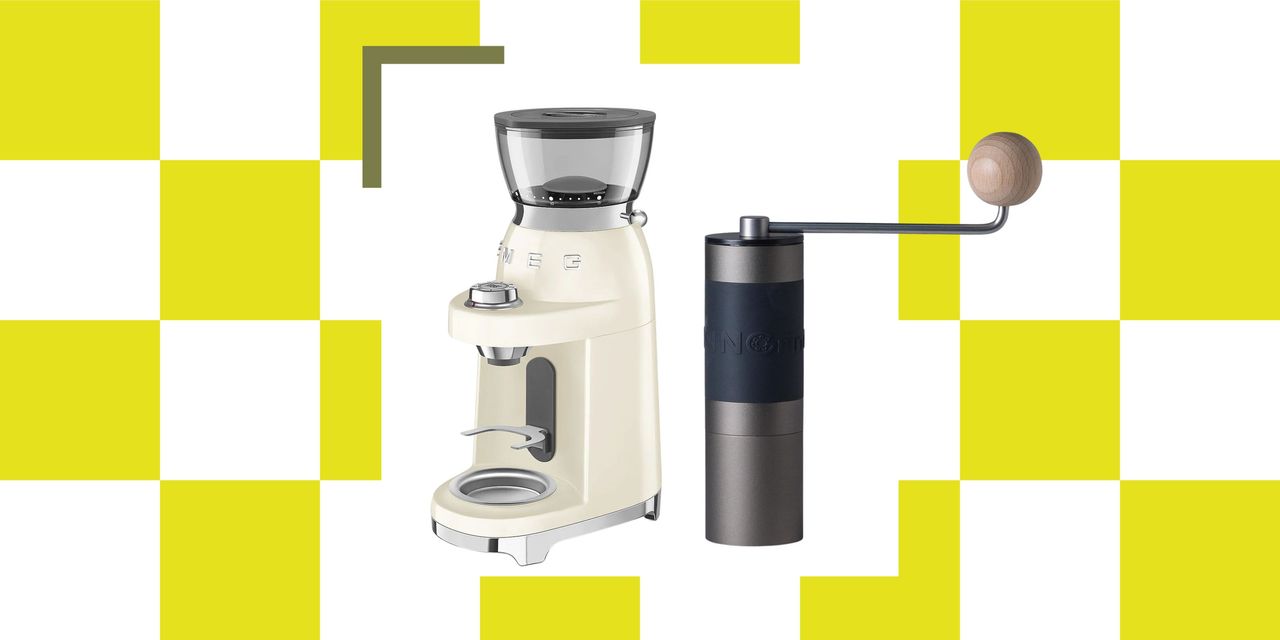
If you've been dabbling in the art of homemade coffee, then you're also likely dabbling with the idea of acquiring a coffee grinder for your setup. Freshly ground beans mean a stronger flavor profile, better coffee, and a more advanced routine. However, there are plenty of different types of coffee grinders to choose from, namely from two different categories: manual vs electric coffee grinders. So which should you pick?
Many of the best espresso machines on the market come with a built-in grinder, and, of course, this is an ideal setup for convenience and quality. But automatic and semi-automatic espresso machines with grinders attached often come with a higher price tag. Sometimes a separate coffee grinder is more affordable, or it's an option to elevate the coffee maker or machine you already own. Either way, it's an investment in better-tasting brews.

As you would assume, manual coffee grinders offer a more hands-on approach and are typically under £100, while automatic grinders promise advanced convenience and are a larger investment. Whether to opt for an electric or manual coffee grinder is dependent on the coffee-making experience you are looking for. So, let's dive into the pros and cons of both.
Why Grinding Your Coffee At-Home Matters

I'd argue that your coffee nook is not complete without a coffee grinder to produce freshly ground beans. And if possible, it's best to grind your coffee fresh before each brew.
Jason Richter, ceo and head roaster at Path Coffee Roasters, explains, "This ensures the best extraction when pulling espresso shots. Grinding at home also gives you the ability to adjust your grind setting depending on the age, moisture, or type of coffee you're using."
For instance, some coffees benefit from a finer grind, while others, such as dark roasts, benefit from a coarser grind. Adjusting your grind setting affects extraction and, therefore, flavor.
There is nothing wrong with pre-ground beans, but grinding at home gives you much more control over your coffee-making experience, from the freshness of the flavor to the type of drink you're making.
Pros and Cons of an Electric Coffee Grinder

An electric grinder is exactly what it sounds like — a device that will grind coffee beans to a certain size and fineness at the push of a button. These appliances will likely be more expensive, but they're worth considering if you are after convenience and quality.
I recently tested the Smeg coffee grinder alongside the Smeg cold brew and espresso maker, and it's one of my personal favorite automatic coffee grinders currently on the market. As you may suspect, adding an extra coffee machine accessory to your kitchen counter means more space taken up. That said, you'll want to consider how much room you have to dedicate to your coffee corner.
Something like the Smeg grinder is a surprisingly slimmer model with a chic retro design, while something like the La Pavoni kube mill grinder (which I also recently tested alongside the La Pavoni Mini Cellini machine and loved it) is slightly larger.
As for function, automatic coffee grinders provide a built-in storage space for beans in the hopper, easy adjustment dials to customize your grind, and the advancement of freshly ground beans.
These are devices for people who care about their coffee routine and are ready to invest in the best products. Below are a few I'd recommend.
Pros and Cons of a Manual Coffee Grinder

As for manual coffee grinders, it's all about getting back to the basics. Manual grinders offer a unique hands-on coffee-making experience — no fancy machines or buttons required. Manual grinders are for the coffee purists who still want to elevate their current morning routine.
Manual machines are typically much less expensive than an automatic grinder, as you are cutting out all of the high-tech flourishes. Plus, you can pack up and take a manual grinder with you on the go — good coffee while traveling? Don't mind if I do.
While I am partial to an espresso machine with a built-in grinder (the KitchenAid semi-automatic machine is my current favorite), I recently tested the KIN K1 manual grinder and was thoroughly impressed.
You can still change the grind settings on these devices (although it takes a little more elbow grease, admittedly). Then you pour the beans into the top, pop the handle on, and start grinding. There is something satisfying about the hands-on element, and I found that the smell was more fragrant and the grounds fluffier and finer.
Here are a few manual grinders that are popular amongst coffee drinkers.
How to make your coffee machine work better starts with investing in the right tools, coffee accessories, and equipment. If you are considering an automatic or an electric coffee grinder for your space, consider this your sign to elevate your caffeine routine.