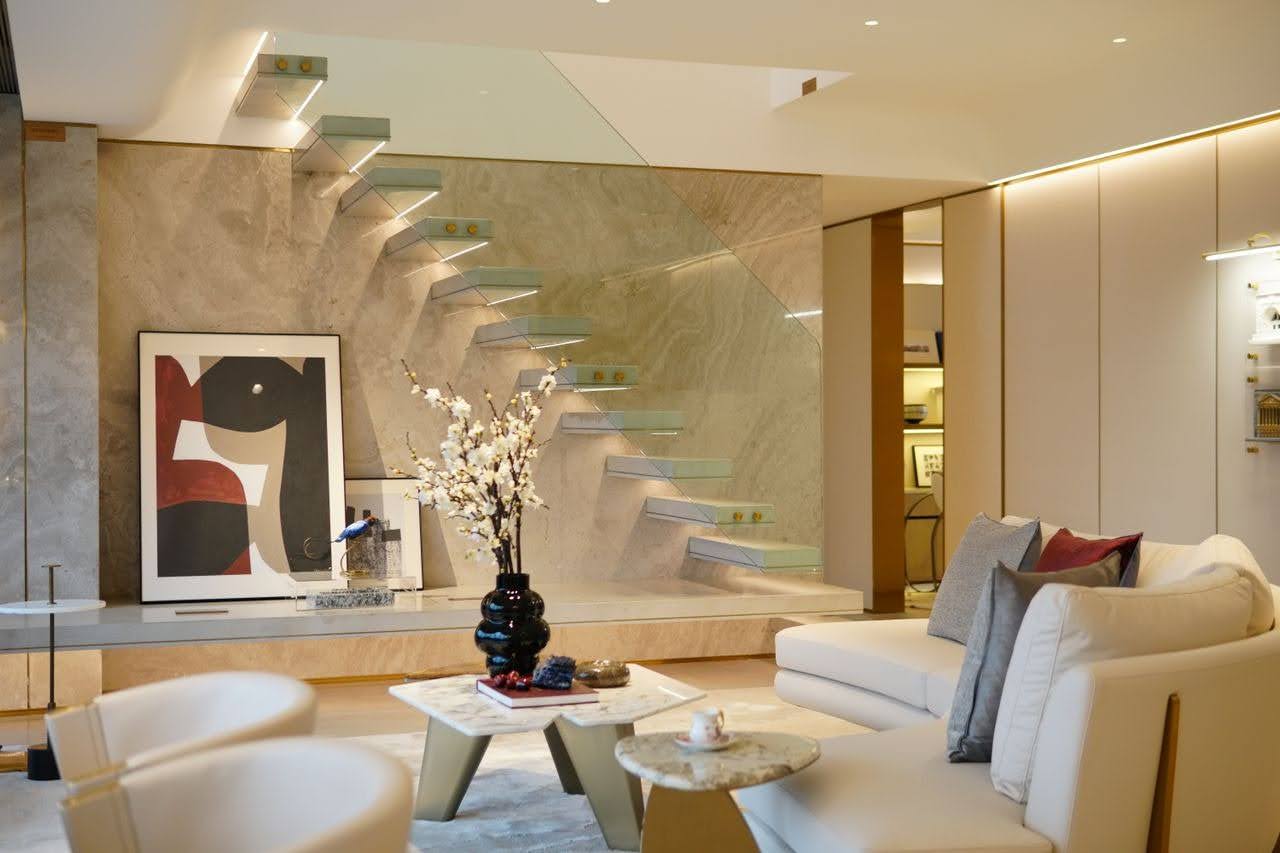
A luxury home can have expensive marble, custom millwork and a chandelier that costs more than a car, and still feel... anonymous. The problem usually isn't the budget; high-end projects rarely suffer from a lack of resources. The issue is that the room looks designed for an imaginary buyer rather than the person who actually lives there.
That is why personalization has become the ultimate measure of luxury. The strongest high-end interiors don't simply display good taste. They make specific decisions around how you live, what you collect, what you value, and what you want your home to feel like and do.
Custom Pieces That Have a Reason to Be There
Custom furniture is one of the clearest ways to move beyond a showroom look. A sofa can be made to fit an awkward wall, a dining table can accommodate the way you actually entertain, and built-in cabinetry can hide the equipment and clutter that otherwise disrupt a well-designed room.
The important part is not simply adding something bespoke because “custom” sounds luxurious. The dimensions, materials and function should solve a real problem or express something specific about you.
The same thinking applies to artwork. A home feels more individual when the pieces have some connection to the owner, whether that's a serious collection, a favorite artist, family photography or an unusual object you picked up while traveling.
Materials, Lighting, and Layout Should Follow Your Life
A personalized interior starts before you choose the sofa. Materials should make sense for how you use the space: durable upholstery for a busy family room, natural stone where its maintenance suits your routine, or softer finishes in rooms intended for quiet.
Lighting deserves the same attention. Instead of relying on one dramatic fixture, use layers: ambient lighting for general illumination, task lighting where you work or read, and accent lighting to highlight art or architectural features. The U.S. Department of Energy identifies these three functions as distinct parts of a residential lighting strategy, which is a useful way to think beyond the decorative fixture hanging in the middle of the room.
Then look at the floor plan. If you regularly host dinner parties, a beautiful dining room that forces guests into one rigid seating arrangement isn't particularly luxurious. If you work from home, a dedicated workspace may matter more than another formal sitting area.
Let the Details Reveal the Owner
Personalization often shows up in smaller decisions. This could be a reading chair positioned exactly where you like to sit, storage designed around a collection, or a bedroom layout that prioritizes privacy over symmetry.
You also don't need every room to match perfectly. In fact, current luxury interiors are moving away from the showroom-like sameness of highly coordinated spaces toward stronger contrasts, layered materials, and details with actual meaning.
The trick is to create a visual relationship between rooms without making everything identical. Consistent materials, repeated finishes, or a restrained color connection can do that work quietly.
DIY vs. Hiring a Professional
You can absolutely personalize a room yourself. If the project involves a few furniture changes, artwork and accessories, your own judgment may be all you need.
A whole-home luxury project is different. You are coordinating furniture dimensions, materials, lighting, contractors, installation, custom pieces, and dozens of decisions that can affect one another. The benefits of hiring a full-service interior design firm include having one team coordinate those moving parts while keeping the overall design coherent.
For example, Houzz's 2025 U.S. Kitchen Trends Study found that 86% of homeowners hired a professional for their kitchen renovation. That's not evidence that every decorating project needs a designer, but it does illustrate how quickly a substantial renovation becomes a coordination problem as much as a design exercise.
But even with professional support, you remain the primary decision-maker. The professional's job is to translate those preferences into a home where the pieces work together, and where the expensive things don't look like they were simply ordered from the same catalog.
The Best Luxury Interiors Could Only Belong to You
If you removed the designer's name, the brand labels, and the price tags, would the home still tell you something about its owner? That's the best test.
A truly personalized luxury interior has enough discipline to feel cohesive, but enough individuality that you couldn't copy it by walking through a furniture showroom. It works beautifully, yes, but it also makes sense for the particular person who gets to live there.