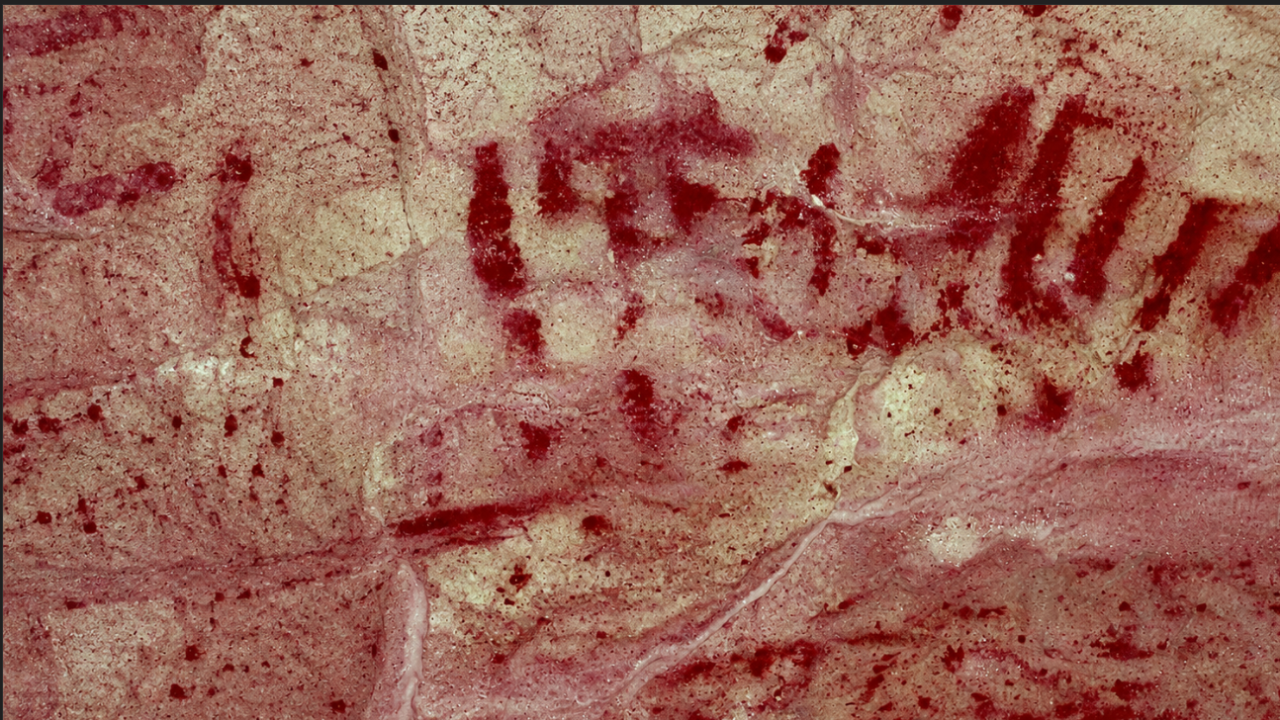
Inside a limestone cave on the Gower Peninsula in south Wales, eleven parallel horizontal lines of red pigment have been sitting on a cave wall for roughly 17,100 years. They were first noticed by scientists in 1912, declared a remarkable example of Palaeolithic cave art, then reclassified as a natural mineral seep sixteen years later, and subsequently forgotten by the academic community for nearly a century. A new study published in the journal Quaternary has now closed the debate decisively, confirming through uranium-thorium dating, geochemical analysis, and multispectral imaging that the marks are genuine prehistoric art made by human hands. The finding makes Bacon Hole cave home to the oldest known cave art in Britain and in north-western Europe, a title that had been sitting, unrecognised, on a cave wall near Mumbles all along.
How Britain's oldest cave art was first discovered in 1912