Get all your news in one place.
100's of premium titles.
One app.
Start reading
Euronews
Euronews
Quirino Mealha

What King Charles' historic tax disclosure reveals and what it hides

In a break with a long tradition of royal financial secrecy, Buckingham Palace disclosed on Thursday that the King paid £12.9 million (€15mn) in tax for the 2024-25 financial year, the first time such a figure has been put before the public.

The sum is likely to place King Charles III among Britain's biggest taxpayers.
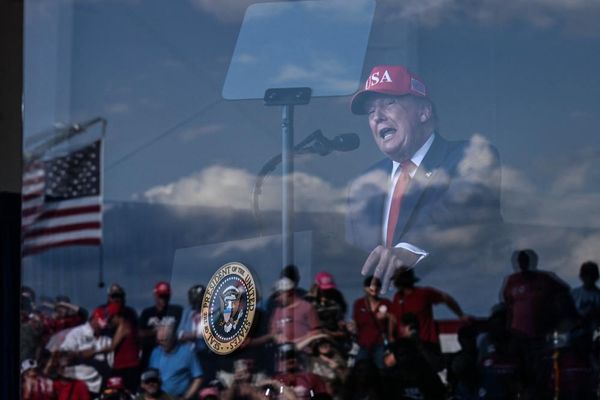
The disclosure, which Buckingham Palace said was made at the King's own wish as part of a drive for greater transparency, also revealed that he paid £11.7 million (€13.5mn) the previous year and more than £30 million (€34.8mn) in total since acceding to the throne in September 2022.

Charles's eldest son and heir, Prince William, also revealed his personal tax information for the first time, having voluntarily paid more than £20 million (€23.2mn) in tax since inheriting the title of Prince of Wales when his father became King.

What makes the figures unusual is that the King is under no legal obligation to pay much of this tax at all. British monarchs are exempt from income tax and capital gains tax, and crucially pay no inheritance tax on assets passed from one sovereign to the next, an exemption rooted in a 1993 arrangement.

King Charles III instead pays income and capital gains tax voluntarily, following a practice begun by his late mother, Queen Elizabeth II.

The royal family at the King's annual birthday parade in London, 13 June 2026 (The royal family at the King's annual birthday parade in London, 13 June 2026)

The bulk of the King's private income flows from the Duchy of Lancaster, a centuries-old estate of farmland and commercial property worth hundreds of millions of pounds, which generated around £25 million (€29mn) for the monarch last year.

Further income comes from his private estates at Balmoral and Sandringham, as well as from personal investments.

Transparency drive meets persistent criticism

The timing is no accident.

The royal household has faced mounting pressure to open up its finances following the scandal surrounding the King's brother, Andrew Mountbatten-Windsor, the former Prince Andrew, who is under police investigation following allegations linked to his relationship with the late sex offender Jeffrey Epstein.

The tax disclosure was unveiled alongside other attempts to modernise the institution, including confirmation that King Charles III will not live in Buckingham Palace once its £369 million (€428mn) refurbishment is complete.

However, not everyone was persuaded.

Graham Smith, of the anti-monarchy group Republic, argued that the headline figure means little without a corresponding breakdown of the King's income, and accused the palace of presenting King Charles III as a generous contributor to the public finances while leaving the bigger questions unanswered.

Such criticism is sharpened by the scale of public funding the monarchy receives, with the taxpayer-funded Sovereign Grant due to rise to £137.9 million (€160mn) in 2026-27, though officials confirmed it will be cut to around £100 million (€116mn) a year from 2027.

For all the caveats, the moment remains historic.

For the first time in modern British history, the public can see how much a reigning monarch has voluntarily paid in tax, even if the full picture of royal wealth remains firmly behind palace walls.

Sign up to read this article
Read news from 100's of titles, curated specifically for you.
Already a member? Sign in here
Related Stories
Top stories on inkl right now
One subscription that gives you access to news from hundreds of sites
Already a member? Sign in here
Our Picks
Fourteen days free
Download the app
One app. One membership.
100+ trusted global sources.