
Get all your news in one place.
100's of premium titles.
One app.
Start reading
Times Life
Times Life
Aishwarya Kapoor

What JRD Tata's Obsession With Detail Teaches About Leadership, Discipline, and Execution

The man who read the seams

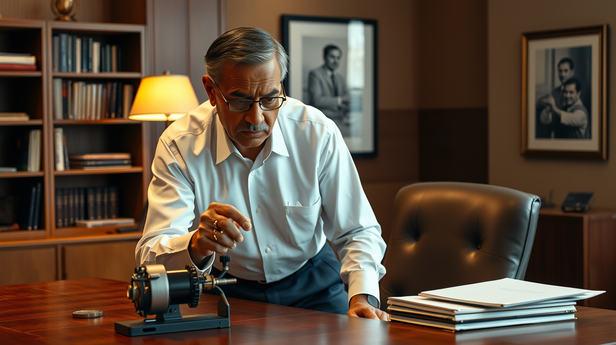
When Tata Airlines was still finding its feet in the late 1930s, JRD Tata would walk through the aircraft cabin and run his hand along the upholstery. Not as a gesture. He was checking whether the stitching met his standard. He had logged India's first solo airmail flight in 1932 and understood, in a way most executives never do, that the passenger's confidence begins before the engine starts, in the smell of the cabin, the give of the seat, the crispness of the crew's uniform.

This is the detail that most accounts of JRD reduce to a personality quirk. It was not a quirk. It was a management philosophy expressed physically. JRD believed that the person running an organisation had to maintain direct sensory contact with what that organisation produced. Delegation was necessary. Abdication was not.

He applied the same attention to Tata Steel's worker townships in Jamshedpur, housing quality, school attendance, hospital staffing. These were not charity. They were, in his reading, operational variables. A workforce that lived poorly worked poorly. The detail connected to the outcome, even when the chain was long.

What Chanakya understood about the person at the top

Chanakya wrote in the Arthashastra that a king's discipline is the foundation of the kingdom's discipline. The formulation sounds obvious until you watch how many organisations collapse not because of bad strategy but because the person at the top stopped paying attention to the granular. The strategy was fine. The execution rotted because nobody senior was watching the seams.

Chanakya's argument was structural: subordinates calibrate their own standards to what they believe the person above them will actually notice. If the leader checks only revenue numbers, the organisation optimises for revenue numbers and lets everything else slide. If the leader checks the stitching on the seat, the person responsible for the stitching knows the stitching matters.

This is what JRD operationalised without naming it. His attention was the organisation's signal system. What he noticed became what the organisation prioritised. His precision at the top produced precision several layers down, because people learn very quickly what the person in charge actually cares about versus what they claim to care about.

The discipline gap between deciding and doing

Most management advice stops at the decision level. Decide your priorities. Set your goals. Communicate your vision. JRD's lesson sits one layer below that, at the execution level, where discipline is the only currency that matters.

Discipline here means something specific: the consistent application of attention to things that do not reward you immediately for paying attention to them. The aircraft upholstery does not send JRD a thank-you note. The worker's school in Jamshedpur does not appear in the quarterly earnings call. These details ask for focus with no short-term return, which is why most leaders stop paying attention to them once the organisation reaches a size where they can plausibly claim they have delegated.

JRD ran Tata Group from 1938 to 1991, fifty-three years. Across that span he added airlines, steel, chemicals, hotels, and consulting to the group. The breadth should have made detail impossible. It did not, because he treated the personal inspection of specifics as a non-negotiable habit rather than an optional quality-check. Habits do not require motivation. They require only that you do them again.

How to build a detail practice that actually holds

The lesson transfers, but not as inspiration. Inspiration fades. It transfers as a set of specific habits you can install before you need them.

Pick one output you are responsible for and read it the way JRD read that cabin. Not for the headline metric, for the thing one layer below the metric that the metric is supposed to measure. If you run a restaurant, the food cost percentage is the metric. The thing below it is whether the prep cook is trimming the vegetables to the same specification every shift. Go look at the vegetables.

Set a fixed cadence for direct contact with your product or service. Not a review meeting where someone presents you a slide about the product. Physical or direct contact: read the customer complaint emails yourself once a week. Walk the floor. Open the app and use it the way a first-time user would. JRD's walkthroughs were not surprise audits designed to catch people out. They were scheduled into his week because he understood that the moment a leader stops touching the work, their judgment about the work becomes theoretical.

When you find something wrong at the detail level, trace it up rather than down. The instinct is to fix the specific problem, retrain the prep cook, replace the upholstery. JRD's instinct was to ask what system had allowed the problem to persist without reaching him. The detail is the symptom. The management structure is the condition.

Finally, be specific about what you are looking for before you go looking. Vague attention produces vague findings. JRD knew what good cabin upholstery felt like because he had flown in enough aircraft to have a standard. Build your standard before the inspection, not during it.

Sign up to read this article
Read news from 100's of titles, curated specifically for you.
Already a member? Sign in here
Related Stories
Top stories on inkl right now
One subscription that gives you access to news from hundreds of sites
Already a member? Sign in here
Our Picks
Fourteen days free
Download the app
One app. One membership.
100+ trusted global sources.