
Get all your news in one place.
100’s of premium titles.
One app.
Start reading
Times Life
Times Life
Riya Kumari

What Is True Love: Loving Yourself or Loving Someone Else? Krishna Answers

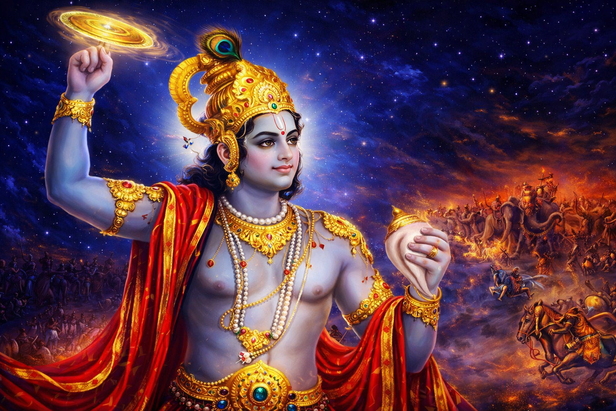
Lord Krishna’s dialogue with Arjuna in the Bhagavad Gita doesn’t treat this as a simple comparison. Instead, Krishna reveals the essence of love, rooted in self-awareness and universal connectedness. What He teaches is both radical and liberating, love is not a rivalry between “me” and “you,” it is a transformative path that starts within and blossoms without.

Self‑Love is Not Selfishness, It’s Foundation

Krishna
<p>Self-love grounds you; frees mind from neediness.</p>

Most people confuse “self‑love” with selfishness. But the Gita sees self‑love as clarity, not craving. Loving yourself doesn’t mean indulging the ego - it means recognizing your true worth as a soul, not just as a body or role. True self‑love stabilizes the mind, frees you from insecurity, and dissolves the very fear that makes relationships needy and dependent. When you are content within yourself not waiting to be completed, you can love others without demanding validation, approval, or reward.

Krishna teaches that the wise person becomes stable in both joy and sorrow - unshaken by life’s swings because they have found peace in their own Self. This inner stability is not narcissism; it is self‑knowledge. Only from this grounded self can love grow that doesn’t wither when circumstances change.

The Mirror of Love - Love Reflects What Is Inside You

Before Krishna talks about loving others, He invites Arjuna to look inward. He reveals that what most people call “love” is often attachment - a form of self‑interest in disguise. We tell others, “I love you,” but what we really mean is: “You satisfy my longing for security, attention, or identity.” This kind of love is not love at all, it’s need dressed up as affection.

Krishna doesn’t ask you to stop loving others. He asks you to purify your love so it is not driven by fear, insecurity, or desire for approval. A healed heart, one that sees itself clearly, will love others not by trying to complete itself, but by sharing the wholeness it already has.

Loving Others is Loving the Divine in All

Radha Krishna
<p>Loving others arises from seeing the Self in everyone.</p>

Once self‑love is rooted in truth, love for others naturally expands. In the Gita, Krishna explains that the highest form of love sees the same Self within everyone. The yogi who “sees the Self in all beings and all beings in the Self” is thriving in a universal love that doesn’t discriminate, attach, or cling. This is love that doesn’t diminish you when someone leaves, it simply recognizes life’s unity.

Krishna describes love as expansive like the sun that shines its light on everyone equally. From this perspective, love of others is not a separate action; it is the realization of shared existence. This is why selfless love - love without expectation - is called dharma in the Gita: it aligns individual life with universal harmony.

Love Without Attachment Transcends Both Self and Other

Krishna’s core wisdom isn’t choosing between self‑love or love of another. It is about loving without attachment - a love anchored not in possession, fear, or identity, but in presence and clarity. In the Gita, attachment (moha) clouds perception; love that arises from clarity is free, generous, and enduring.

True love, Krishna teaches, does not arise from a sense of lack, it flows from completeness. When love is a gift, not a demand, then you love others as naturally as you breathe. This is the dharmic, spiritually mature form of love, both inward and outward - integrated and undivided.

Love Begins Within, and Extends Without

So what matters more - loving yourself or loving someone else? Krishna’s answer is simple, yet profound: Love yourself honestly first, not for ego’s sake, but for self‑understanding. Then let that stability radiate outward, so your love for others is not need, but generosity. In other words, love is not a competition between self and other. It is a single journey of consciousness, a path where self‑knowledge and compassion become inseparable. When you truly love yourself, you love all beings. And when you love others without attachment, you discover the infinite Self within. That is the heart of Krishna’s teaching - that love, at its highest, is not about possession, identity, or dependency. It is about freedom, clarity, and the unity of all life.

Sign up to read this article
Read news from 100’s of titles, curated specifically for you.
Already a member? Sign in here
Related Stories
Top stories on inkl right now
One subscription that gives you access to news from hundreds of sites
Already a member? Sign in here
Our Picks
Fourteen days free
Download the app
One app. One membership.
100+ trusted global sources.