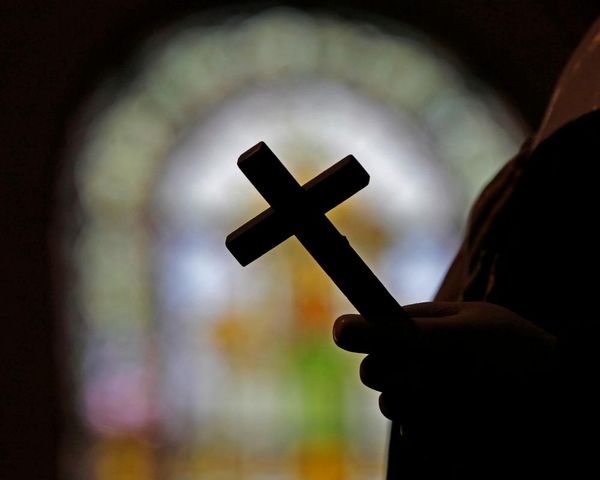
Town of Greece v. Galloway (2014) presaged the Court's turn towards history and tradition in the Establishment Clause context. The case concerned whether religious prayers could be offered before a town council meeting began. Some of the prayers were fairly "generic." They referred to general concepts like "Lord," "Our father," and so on. Other prayers were explicitly Christian and referenced Jesus, crucifixion, and resurrection. During oral argument, Justice Kagan read from one of the more sectarian prayers: "We acknowledge the saving sacrifice of Jesus Christ on the cross. We draw strength from His resurrection. . . . Blessed are you, who has raised up the Lord Jesus, you who will raise us, in our turn and put us by His side." Justice Kennedy's majority opinion rejected the argument that Greece's prayer policy "falls outside of our traditions because it was not generic or non-sectarian." Stated differently, the Establishment Clause does not permit the Court to block the prayer because it is sectarian.
The word "sectarian" has always given me difficulty. Where exactly is the line between "sectarian" and "non-sectarian"? Justice Kagan thought watered-down liturgy was fine but actual liturgy was not. Of course, to an Atheist or a Satanist, even a bland reference to "God" would be sectarian. So what is the actual meaning of "sectarian"?
A recent dissental from the Ninth Circuit in Woolard v. Thurmond speaks to this issue. The author, of course, is the judge who forever will be known as Swinging Dick VanDyke.