
Get all your news in one place.
100’s of premium titles.
One app.
Start reading
Golf Monthly
Golf Monthly
Sport
Fergus Bisset

What Is The Difference Between 3-, 4- and 5-Layer Golf Balls?

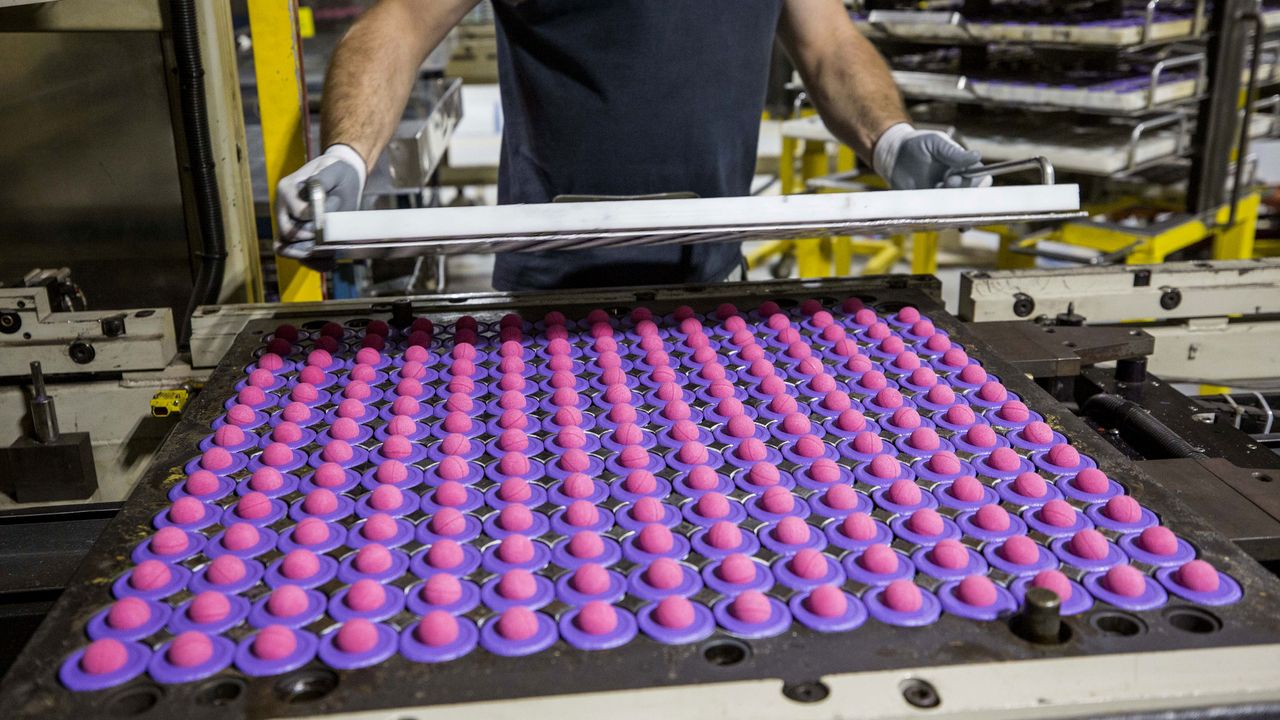
Golf Balls in production.

The golf ball has come a long way since the game’s earlies days and the history of the golf ball's evolution is fascinating.

From wood to stuffed leather to gutta percha, then balata and Surlyn-covered wound balls and more recently, urethane-covered multi-layered balls, the technology is constantly moving onwards.

From 2028, pros will use a ball conforming to new regulations that will come into force. Recreational golfers will be required to start using the new specification balls in 2030.

The R&A and USGA have announced the new regulations to “reduce the impact increased hitting distances have on golf’s long-term sustainability.”

Although the new tolerances will likely bring the longest drivers in world golf’s averages down by about 13-15 yards, the relative change for the average amateur will be less significant.

Today’s premium golf balls are non-wound and feature multiple layers. But what’s the difference between 3, 4 and 5-layer golf balls?

A look inside the 2025 Titleist Pro V1 golf ball (Image credit: Callaway Golf)

Well basically, using different layers, specifically internal “mantle” layers, allows manufacturers to create balls that perform differently to suit different player requirements. Changing the internal layers creates optimised distance, control and feel for players with different swing speeds.

Generally speaking, more layers means more precision in terms of spin control, with the best multi-layer balls offering a blend of low spin with longer clubs, for maximum distance and high spin with shorter clubs for better control and feel around the greens.

3-Layer Golf Ball

The Titleist Pro V1 is a 3-layer ball (Image credit: Titleist)

This will be comprised of an inner core, an internal mantle and a cover. The ball is designed to suit a wide range of players who are seeking a blend of power and control.

The core is generally made of polybutadiene rubber. It’s a robust material that compresses on impact and returns to its original shape quickly to deliver spring.

The mantle tends to be made of synthetic polymers, often ionomer resins like Surlyn. Its function is to act as a buffer between the core and the cover, this can help with spin control – reducing it on the harder-hit shots, increasing it on the softer, shorter strokes.

The cover on multi-layer balls is soft yet durable and made from an ionomer or urethane. It’s designed to offer the player feel and feedback on all shots.

Famous examples of 3-layer balls include the Titleist Pro V1, Srixon Z-Star and the Callaway Chrome Tour.

4-layer Golf Ball

(Image credit: Callaway Golf)

A four-layer ball is normally made from an inner core, two distinct mantle layers and a cover. The extra mantle layer is designed to offer more precise spin control.

Sometimes a 4-layer ball might feature an inner and outer core (dual core) to produce better energy transfer and so more distance.

The 4-layer ball is for players who swing a little harder and are seeking more control – less spin with the driver, more with the wedges.

Examples of the best four-layer balls include the Titleist Pro V1x, Callaway Chrome Tour X and the Wilson Staff Model X.

5-layer Golf Ball

TaylorMade makes a 5-layer ball - the TP5 and TP5x (Image credit: TaylorMade Golf)

These are normally made featuring a core, three mantle layers and a cover. But sometimes there might be a dual core featured, as with the 4-layer ball above.

The extra layer is included to maximise spin management. The idea is that the ball will perform differently when different clubs are used, delivering the ultimate in performance from driver down to wedge.

The 5-layer ball is designed with elite players in mind – golfers looking for absolute precision with every shot.

The only major manufacturer that makes a 5-piece ball is TaylorMade with its TP5 and TP5x, which have been reinvented for 2025 with a new microcoating paint application for better consistency of flight.

Which golf ball do you use? Let us know in the comments below!

Sign up to read this article
Read news from 100’s of titles, curated specifically for you.
Already a member? Sign in here
Related Stories
Top stories on inkl right now
One subscription that gives you access to news from hundreds of sites
Already a member? Sign in here
Our Picks
Fourteen days free
Download the app
One app. One membership.
100+ trusted global sources.