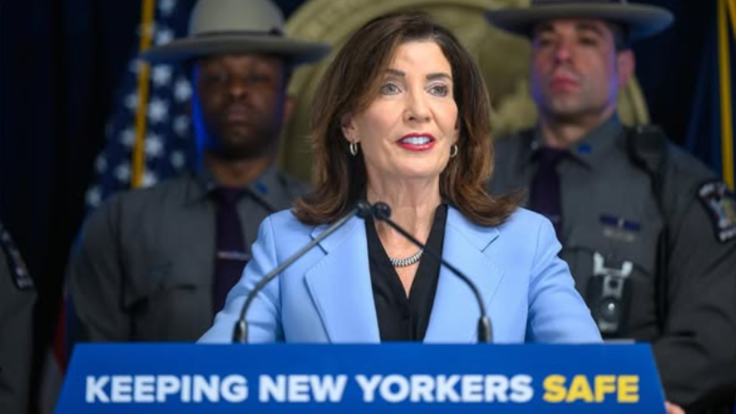
New York Governor Kathy Hochul has proposed a new pied-à-terre tax targeting luxury second homes worth $5 million (around £3.7 million) or more in New York City, in a move aimed at closing a widening budget gap without increasing pressure on working residents.
The plan would allow the city to impose an annual surcharge on high-value properties that are not used as primary residences, with officials estimating it could raise at least $500 million (roughly £368 million) per year in recurring revenue.
New York Budget Gap Drives Luxury Property Tax Proposal
The pied-à-terre tax forms part of a wider fiscal strategy to stabilise New York City's finances as it faces a significant budget shortfall. The proposal is intended to target ultra-wealthy, non-New York City residents who own high-value real estate but do not pay city income tax.
Governor Hochul's office said the measure is designed to ensure that those benefiting from city infrastructure and services, such as policing, parks and transport, contribute more fairly to their upkeep. The proposal has been positioned as a way to protect everyday New Yorkers from additional tax burdens while expanding revenue from luxury property taxation.
The plan also builds on broader financial support from the state, including an additional $1.5 billion (£1.1 billion) commitment to New York City in the FY2027 budget. City officials have also agreed to pursue savings measures as part of efforts to close the gap.
What Is a Pied-à-Terre Tax and Who Would Pay It
A pied-à-terre tax is an annual surcharge applied to residential properties that are not used as primary homes. Under the proposed framework, it would apply only to properties valued at $5 million or more and located in New York City.
The tax would be limited to homes that are not occupied by the owner as a primary residence, and are not rented to a primary resident or used by the owner's family. It is intended to target so-called pied-à-terre properties, often high-end apartments owned by wealthy individuals who spend limited time in the city.
Supporters of the policy say it is designed to ensure that luxury real estate used as investment or occasional-use property still contributes to funding essential city services.
Hochul Defends 'Fair Share' Approach to Luxury Home Taxation
Governor Hochul defended the proposal as a fairness measure, arguing that ultra-wealthy owners of luxury second homes should contribute more to the city's finances.
'If you can afford a $5 million second home that sits empty most of the year, you can afford to contribute like every other New Yorker,' Hochul said.
The governor has also pointed to a wider record of tax and affordability measures, including an expanded Child Tax Credit, a middle-class tax cut that has brought rates to their lowest level in 70 years, reductions in the payroll mobility tax for small businesses, and phased increases in the state minimum wage.
Officials say the pied-à-terre tax is part of a broader attempt to rebalance the tax system towards higher earners and luxury property owners while maintaining relief for middle-income households.
Mamdani and City Officials Back Revenue Plan
New York City Mayor Zohran Mamdani has backed the proposal, saying it would help address the fiscal deficit while ensuring fairness in how the city raises revenue.
He said the administration was focused on ensuring that 'the wealthy contribute what they owe' as part of efforts to stabilise the city budget.
City Council Speaker Julie Menin also described the plan as a practical step to strengthen New York's financial position, saying it would generate significant new revenue without burdening working residents.
Several borough presidents, including those representing Manhattan, Brooklyn, the Bronx and Queens, also expressed support, arguing that high-value vacant homes should contribute more to public services given their impact on the city's economy and infrastructure.
Luxury Property Market in Focus as Revenue Debate Grows
The proposal comes amid ongoing debate over how to address affordability and fiscal pressure in New York City, where luxury real estate remains a significant part of the property market.
Supporters of the pied-à-terre tax argue it reflects the reality that some high-value homes remain underused while benefiting from city services funded largely by local taxpayers.
If implemented, the tax would mark a new approach to luxury property taxation in New York State, focusing specifically on high-end second homes as a dedicated source of public revenue.