
Get all your news in one place.
100's of premium titles.
One app.
Start reading
Woman & Home
Woman & Home
Lifestyle
Sennen Prickett

What is PDRN, and why is it suddenly everywhere? Dermatologists weigh in on the K-Beauty phenomenon

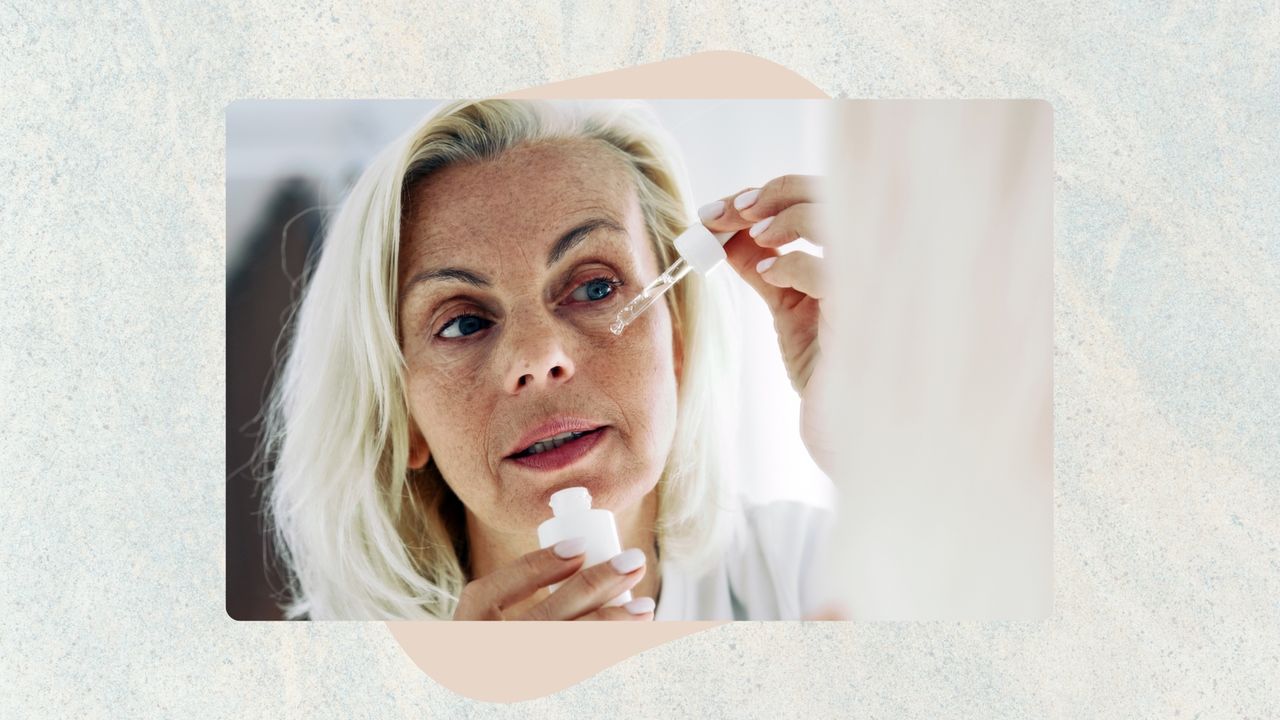
Image of woman with white hair applying serum to face, on a blue textured background .

If you keep your eye on the skincare world, you might've noticed the recent buzz around PDRN – AKA Polydeoxyribonucleotides, if we're talking in scientific terms.

What started as an injectable treatment, PDRN has gone on to become extremely popular in Korean skincare products. Now, the DNA-derived ingredient can be found on the labels of the best facial moisturisers to the best hyaluronic acid serum. With so much talk about PDRN all of a sudden, you may be wondering what exactly it is.

We took that very question to three experts, including two dermatologists, so they could explain everything we need to know about PDRN. We're talking about what it is, where it comes from, the benefits of using it and whether it's worth incorporating into a routine for mature skin.

An expert guide to the K-Beauty phenomenon, PDRN

Before we get into the science behind the ingredient, if you're looking to incorporate PDRN into your skincare routine, we've rounded up a few popular K-beauty buys on the market that feature the talked-about ingredient – from a hydrating serum to a restoring ointment.

What is PDRN?

So, what exactly is PDRN? As consultant dermatologist, Dr Magnus Lynch explains: "PDRN is polydeoxyribonucleotides, and it is a mixture of DNA and RNA fragments which are derived most commonly from salmon or trout DNA. There is evidence that it can help with tissue repair and regeneration and is often used as an injectable treatment for the skin." If injectables are your game, our beauty editor's polyneucleotides review has all the details on the more invasive side of PDRN.

As for the effects PDRN has on your skin, Alethea Demetriou, Product Strategy & Merchandising Manager at K-Beauty emporium Pureseoul says: "Think of it as a reset button for your skin - encouraging a healthier glow, smoother texture, and quicker recovery after treatments."

What are the benefits of using PDRN?

Whether you opt for an injectable treatment or a topical formula, you might be wondering what benefits you can expect to notice on your skin. Emma Coleman, Dermatology Nurse & Founder of Emma Coleman Skin Clinics, explains: "PDRN triggers the skin to repair tissue through stimulating the cells responsible for producing collagen and elastin. In addition to skin renewal and faster recovery after microneedling or lasers, it is also being considered within a medical setting as an aid to wound healing."

Dr Magnus Lynch agrees by noting similar evidence: "It can improve tissue repair, reduce inflammation, and stimulate collagen production, resulting in improvement in hydration and skin appearance." However, he also adds that much of this evidence is seen in injectable usage: "It's important to emphasise that the evidence is strongest for injectable usage and there is not good evidence that it will work as a topical treatment as it will not penetrate the skin barrier."

Who should be using PDRN?

Wondering if you're a suitable candidate for using PDRN? As Dr Magnus Lynch advises: "It is best suited for ageing skin or conditions such as acne and scarring. I would be cautious to use it in those with sensitive skin, and it should be avoided by those who have an allergy to fish."

Alethea Demetriou adds: "PDRN is suitable for all ages and skin types, making it a highly versatile option for overall skin health. From the mid-20s onward, it can be used to support hydration and early collagen preservation, while in more mature skin, it helps improve elasticity, smooth fine lines, and restore a firmer, more youthful look."

For those considering active injectables, Emma Coleman also recommends: "As it is an active injectable, each client should be checked for suitability, particularly if they suffer from any pre-existing skin conditions or sensitivity."

Should I incorporate PDRN into my skincare routine? If so, how?

"In the right patient, injectable PDRN can be helpful, although it is important to have realistic expectations, and often the benefits are subtle. It can also be used as a topical treatment, but the evidence here is weak, and it would not be the first thing that I would suggest to patients," says Dr Magnus Lynch.

However, if you're looking to add PDRN into your at-home skincare routine, Alethea Demetriou advises: "At Pureseol, we recommend introducing PDRN to your skincare routine gradually - start with 2–3 times a week to see how your skin responds, and then increase usage as tolerated. PDRN can be included in a variety of products, such as eye patches, creams, face masks, and serums."

How does PDRN differ to vegan PDRN?

Much like PDRN, vegan PDRN is also an ingredient that has been floating around in recent years. While we know PDRN typically means DNA derived from salmon, it might leave you questioning where vegan PDRN comes from.

Dr Magnus Lynch explains: "Traditional PDRN is derived from salmon or trout DNA. There may be some concerns that this is animal-derived. An alternative is vegan PDRN, which is derived from plants. There is significantly less evidence for this; however, it may be that this evidence becomes more robust in the future."

Meet the experts

Sign up to read this article
Read news from 100's of titles, curated specifically for you.
Already a member? Sign in here
Related Stories
Top stories on inkl right now
Our Picks
Fourteen days free
Download the app
One app. One membership.
100+ trusted global sources.