There were a handful of cool suit system failures in the NASCAR Cup race at the Circuit of the Americas and while many might want to place the blame on faulty hardware the root cause is actually a bit more complex and often due to team choices for performance.
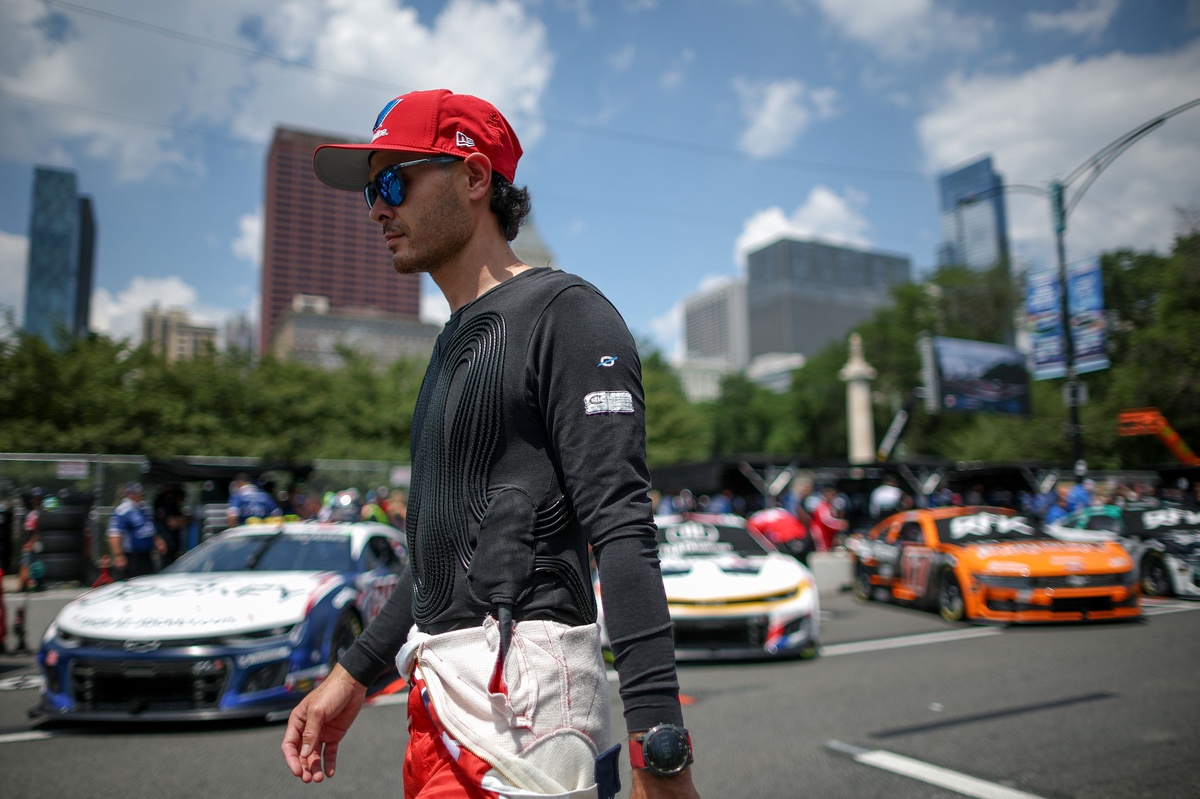
A cool suit system typically consists of a small box that is a miniaturized air conditioning unit which has an input and output for a hose that runs over the chiller. Those hoses are connected to hoses which are coiled on a shirt that the driver wears under their firesuit. When the system is functioning correctly fluid circulates through the cool suit unit and is chilled before getting to the hoses on the shirt. The ambient heat in the car and the body heat of the driver will warm the liquid as it moves through the coils in the shirt but it will still cool the driver down and be chilled again once it circulates back through the unit.

What happens when it fails, and what causes it?

If a cool suit system fails, it will often result in the chiller part of the unit stopping to function and at that point the liquid will just continue to increase in temperature. At that point, drivers are typically in a worse situation than not wearing one of the shirts at all because they now have hot liquid layered under their firesuit that can no longer be chilled. This will often overheat drivers and cause them to need assistance like we saw with AJ Allmendinger this weekend.
Many are quick to blame the manufacturers of the cool suit units for the failures but it’s often team choices for power and airflow that greatly contribute to how well the units last. Since the cool suit units have a small compressor as part of the air conditioning circuit they need cooling and on a NASCAR Cup car that is typically accomplished by running a hose from a quarter window duct. Teams want to have as few openings on a car as possible so they will often limit the size of these hoses and openings which will result in the cool suit unit receiving less air flow. As air flow is reduced, the units can overheat and components like that compressor or the pump that moves the liquid can turn off leaving the driver with stale fluid in their shirt that heats up quickly.
On top of the air flow demands, teams also want to control voltage to any accessory that they can because every bit of power used to power electronics is power taken away from the engine and additional fuel that is burned. For that reason, the cool suit units will often receive the bare minimum of power or be turned on and off depending on the strategy for the team which can also result in failures. Once a cool unit fails, the only realistic recourse that a driver has is to drain the shirt part of it and try to at least get rid of the hot fluid but even that typically requires a long pit stop to get an adapter that can be inserted to drain it. Since there were not a lot of incidents at COTA and with the fuel strategy being pretty aggressive, drivers didn’t really have time to stop and drain their shirt so many had to ride around with hot liquid sitting on their chest.

Many of the cool suit systems that are used in NASCAR are also used in other racing series, with NASCAR teams running some of the smallest ones. IMSA teams will typically run larger units with more cooling and it is a rarity to see a unit fail. NASCAR teams run units that are around half the size of those used in sports cars because the margins for weight are so much smaller there. IndyCar teams run something similar since they don’t have the space to run anything large. Formula 1 teams have also recently tested and adopted some of these cool suit systems and what they use is basically a slightly modified version of the systems found in NASCAR. During their testing period, F1 has gotten around some of the electrical load issues in their initial requirements by having the cool suit system run on its own battery.
NASCAR has added some rules in order to push teams in the right direction by requiring that inlet and outlet hoses for cooling system be routed in such a way that they’re optimized for driver cooling and not for aerodynamic advantages along with requiring teams to submit drawings of how they route hoses but teams always find methods to optimize every component in the car.