Get all your news in one place.
100's of premium titles.
One app.
Start reading
International Business Times UK
Politics
Ma. Kyla Morco

What Is a White House 'Hard Pass'? Judge Orders CNN, Politico, and MS NOW's Special Access Restored

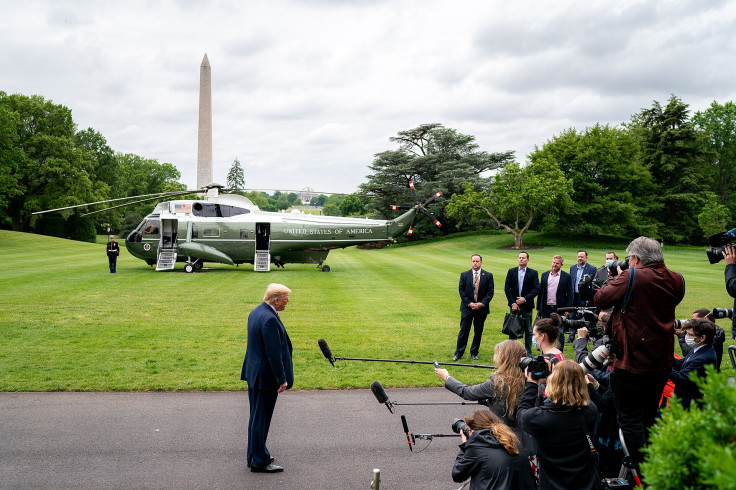
President Trump speaks to reporters outside the White House on 17 May 2020, highlighting the press access at the heart of the credential dispute. (Credit: Wikimedia Commons/The White House)

A federal judge has ordered the White House to restore press credentials for journalists from CNN, Politico, and MS NOW, temporarily reversing President Donald Trump's decision to bar the three news organisations from the White House.

US District Judge Timothy Kelly issued a 14-day temporary restraining order on 24 September, requiring the government to return, reinstate, and restore the journalists' credentials while the legal challenge continues. Kelly found that the reporters were likely deprived of a constitutionally protected interest without adequate due process.

The ruling has also put an obscure but important part of presidential reporting in the spotlight: the White House 'hard pass'. The credential determines whether a regular White House correspondent can move through designated press areas without seeking temporary clearance for each visit.

The Role of a White House 'Hard Pass'

A White House hard pass is a credential for journalists who regularly cover the president and the White House. Holders undergo background checks and can access designated press facilities, including the James S. Brady Briefing Room and press workspaces.

It is different from a temporary day pass. Reporters without a hard pass can still seek access to specific events, but they face a separate clearance process and may require an escort.

The distinction matters because losing a hard pass does not necessarily mean a journalist is permanently barred from covering the president. It does, however, remove the routine access that makes daily White House reporting possible. More than 1,000 journalists have historically held hard passes, according to a federal court document describing the White House credential system.

Why CNN, Politico, and MS NOW Lost Their Credentials

Trump announced on 18 September that CNN, Politico and MS NOW would be barred from the White House, criticising their coverage of his administration. Reporters from the three organisations were subsequently denied entry to the White House grounds, and their credentials were confiscated or deactivated.

The administration has argued that access to the White House is a privilege rather than a right. It has also cited national security concerns and accused the organisations of publishing what it described as false or sensitive information.

The outlets challenged the decision in court, arguing that the government had improperly used its control over White House access in response to their journalism. That distinction is central to the case: the dispute is not simply about whether the president can control access to restricted areas, but whether an existing press credential can be revoked without constitutionally adequate procedures.

Judge Timothy Kelly's 14-Day Order

Kelly's ruling does not permanently settle the dispute. Instead, the temporary restraining order preserves the journalists' access for 14 days while the wider case proceeds. The judge said the outlets were likely to succeed on their claim that their hard passes were revoked without adequate due process.

He also expressed scepticism about the administration's national security justification, noting that Trump's public explanation had focused on criticism of the outlets' reporting. The White House and Justice Department have maintained that the president's actions are lawful. The administration can continue to contest the case as the court considers the broader constitutional issues.

The Wider Impact on White House Coverage

The consequences extend beyond the individual reporters because White House coverage relies on shared press arrangements. CNN is one of the broadcasters involved in the television press pool, which rotates responsibility for presidential video coverage among major networks. After CNN was excluded from a scheduled assignment, other networks declined to simply take its place.

That system means a restriction affecting one outlet can have practical consequences for other journalists and broadcasters covering the president. The situation also demonstrates why a hard pass is more than an identification badge. It forms part of the infrastructure that allows reporters to work inside the White House on a continuing basis, attend briefings, respond to breaking developments, and participate in pooled coverage.

The legal dispute was still producing practical uncertainty on 24 September. The Washington Post reported that some CNN and Politico journalists were denied entry even after Kelly issued his order, while MS NOW said it was seeking clarification about when its passes would be reactivated.

For now, the court order restores the credentials for 14 days. Whether that temporary protection develops into a longer ruling on White House press access, due process, and presidential authority remains to be decided.

Sign up to read this article
Read news from 100's of titles, curated specifically for you.
Already a member? Sign in here
Related Stories
Top stories on inkl right now
One subscription that gives you access to news from hundreds of sites
Already a member? Sign in here
Our Picks
Fourteen days free
Download the app
One app. One membership.
100+ trusted global sources.