
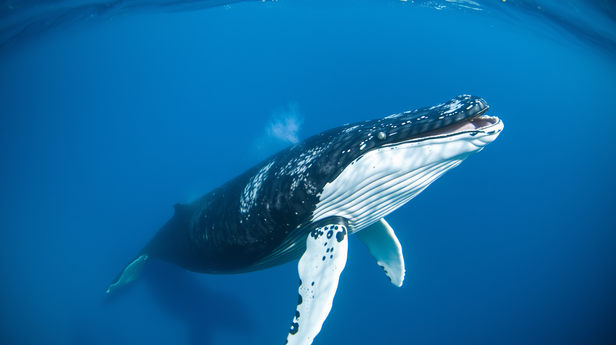
The song is not random noise
A single humpback whale singing in the North Pacific can produce a sound sequence lasting up to 30 minutes, then repeat it almost exactly. Over weeks, the song changes, new phrases inserted, old ones dropped, and every male in the same ocean basin makes the same update, in the same order, as if following a score that nobody wrote down. This is not metaphor. Roger Payne and Scott McVay documented this coordinated evolution of humpback songs in their 1971 paper in Science, and the pattern has held in every ocean population studied since. The songs are not random. They are structured into units, phrases, and themes, a hierarchy that linguists use to describe human language, borrowed here because nothing else fits.