
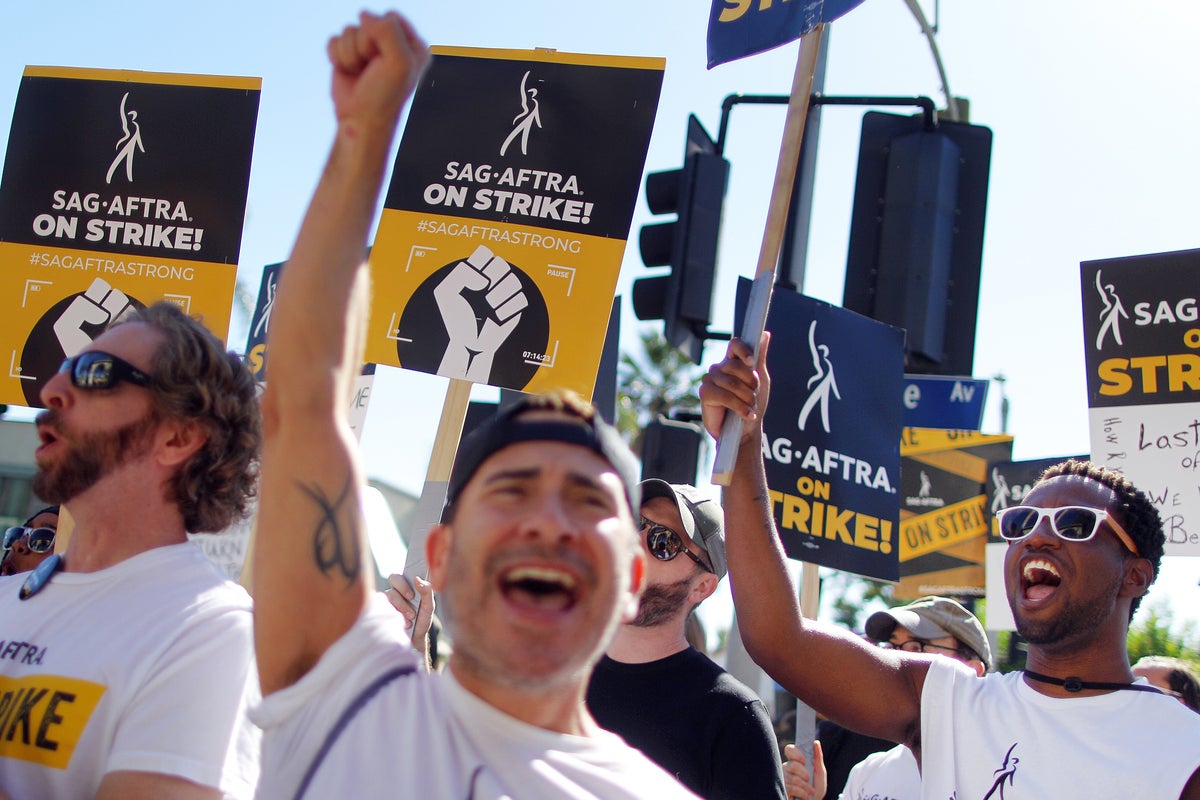
We did it.” So spoke Fran Drescher, actor, comedian and president of the American actors union Sag-Aftra. On Thursday morning, the industrial action that brought Hollywood grinding to a halt finally came to an end after 118 days. The writers union (WGA) had called off its own 146-day strike in late September, having also struck a deal with the studios. The combined effect of the two labour stoppages has reverberated throughout popular culture. Film and TV productions have shut down – not just Stateside, but in the UK and internationally – while performers and crew members have been left in professional limbo.
The end of the strike was always inevitable; there is no way of producing quality scripted shows without the involvement of actors or writers. The surprise was that it went on for as long as it did, that the studios were content to lose so much money before capitulating. The deal ultimately reached between Sag-Aftra and the studio bosses has been described as an agreement worth $1bn; the strikes themselves are estimated to have cost California’s economy more than $5bn. Even those already-shot films that did make it to screen on time were hamstrung by strike rules – with actors unable to promote them in interviews.



.jpg?w=600)










