
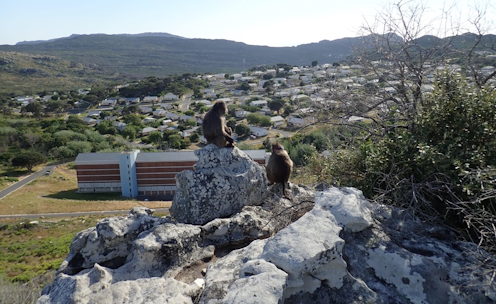
Many animals form groups. Living in a group can protect individuals from predators, reducing risk; it also helps them to find more food, increasing rewards. However, the presence of cities can alter these patterns of risk and reward. When wildlife enters urban space, there’s the potential that the way individuals behave in groups – their “collective behaviour” – can be drastically altered.
Until recently, scientists have known little about the collective behaviour of wild animals because it’s difficult to observe many individuals at once. Even less is known about wild animals’ collective behaviour in human-changed environments because the physical structure of urban spaces makes observations even harder.














