Get all your news in one place.
100's of premium titles.
One app.
Start reading
Livingetc
Livingetc
Lucy Lindfield

What Exactly Is 'Traditional Interior Design'? This Is How You Can Bring It Into a Modern Home Without It Feeling Like a Pastiche

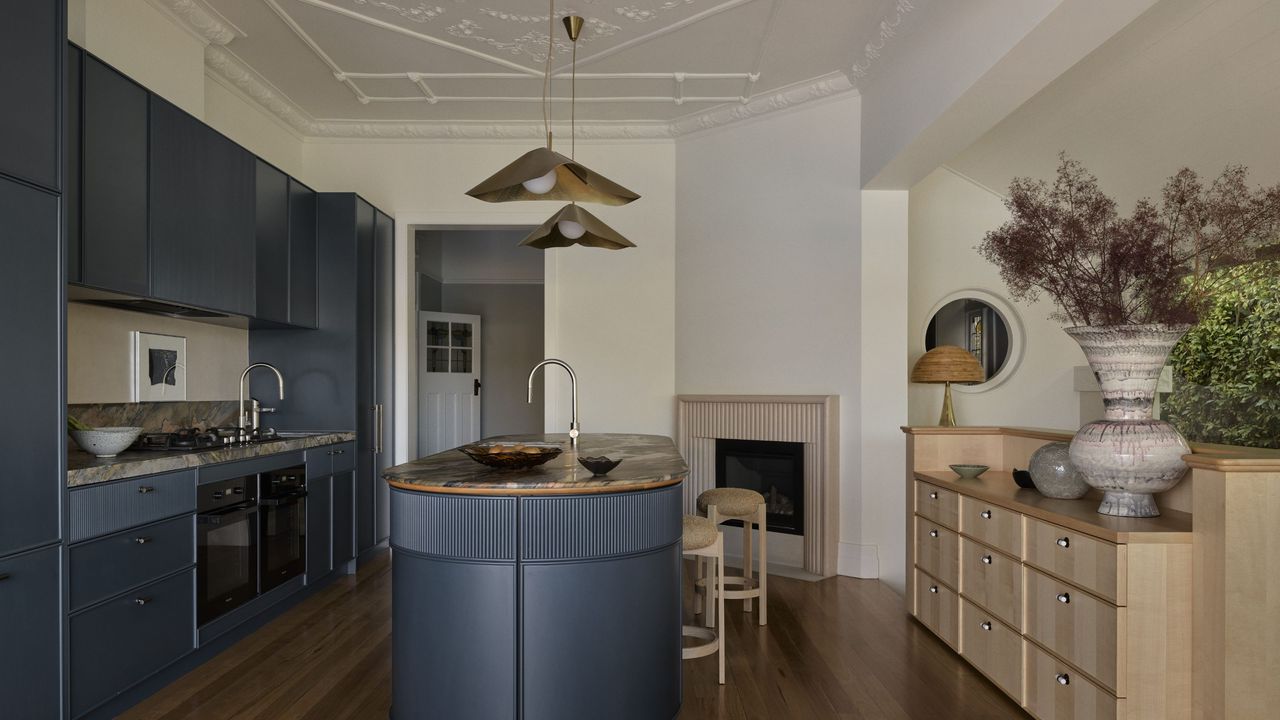
A traditional style kitchen with navy cabinetry and contemporary features.

I'll be the first to admit that I find the definition of 'traditional interior design' to be a somewhat elusive one. Is it an era? A specific architectural style? Just a vibe? Turns out, it's a combination of all those. Found in ceiling details, sturdy, timber floors, symmetry, rich textures, and intricate details, traditional interior design is a balance of strength and elegance that oozes sophistication. It's classic Victorians drenched in the influence of Classical, Rococo, and Gothic revivals, made timeless with contemporary luxuries and mod-cons.

But traditional interior design can embrace a home's heritage and modern living equally, with ornamentation, saturated color, and opulent textures taking center stage. While grand and refined, no doubt, when executed well, a contemporary traditional home should feel comforting and familiar — and not at all like a period pastiche.
To help define this design style and ID its specific characteristics, I asked several international experts for their take. Here's how to do 'traditional', the Livingetc way.

Why Is Traditional Interior Design Still Relevant?

"We revitalised a beautifully preserved 1920s Bugalow-style residence, intertwining the language of ‘old’ and ‘new’ to accommodate modern living," explains Sarah-Jane Pyke of Arent & Pyke. "Tessellated porcelain tiles were popular in the 1920s, so in bathrooms we laid contemporary star and floral patterns." (Image credit: Anson Smart. Design: Arent & Pyke)

Looking back in history at any design style always begs the question: Why should I care? When it comes to traditional interior design, the answer is: because it's classic and, more simply, because it's everywhere. Found in many of our homes, the ornate ceilings and decadent palettes command respect — and the experts say they're well worth honouring. "Leaning into traditional style can ground a home instantly," says Sarah-Jane Pyke, principal of design firm Arent & Pyke.

Likewise, Rebecca Hughes, of the eponymous Rebecca Hughes Interiors, describes how pairing architectural detail with a rich color palette is a shortcut to curating an inviting atmosphere at home.

Not to be confused with transitional style, which aims to blend the old with the new, traditional interior design focuses more on honouring what's already there.

"Mixing furniture from a range of periods is a brilliant way to create a layered look, making a home feel like it has organically evolved over time," adds Rebecca. "This juxtaposition offers the best of both worlds — the coziness of traditional style and the crispness of contemporary design all in one harmonious space."

What Are the Characteristics of Traditional Design?

Looking up at the ceiling is often an easy way to spot features of traditional interior design. (Image credit: Alicia Waite. Design: Buchanan Studio.)

Traditional interior style is all about luxury, celebrating architectural finesse and the finer details. Sarah-Jane says the 18th and 19th centuries — of which traditional design is typically a derivative — represented a shift from the structure and restraint of years past.

"For example, entry doors and windows featured colored leadlight windows, often with floral and swirling patterns in rich jewel tones," she says. "Door and window architraves were surrounded by ornate timber trims, while painted timber fretwork featured both geometric and sinuous patterns, lining internal entry points and lacing the upper vertical posts on verandas and balconies."

Other clues to look for include decorative plasterwork like ceiling roses and ornate cornices.

What Colors Are Associated With Traditional Interior Design?

Stripes and a jute rug add a contemporary edge to the luxuriously ornate traditional features of this living room by Buchanan Studio, while floral patterns and vintage artworks throw a nod to bygone times. (Image credit: Alicia Waite. Design: Buchanan Studio.)

The colors found in traditional interiors are typically warm and inviting, and paired with plenty of pattern and texture, says Rebecca Hughes. "I love pattern mixing and playing with varying scales in a scheme, whether that be large prints, small ditsy florals, bold stripes, or solid expanses of color," she explains.

When it comes to pinpointing actual 'traditional' color schemes, as a style that floods spaces with grandeur and luxuriousness, traditional design typically leans heavily on saturated hues.

"Colors for draped curtains (often silk), rugs, and soft furnishings tended to include deep gem tones including sapphire, garnet, and emerald, highlighted by citrine yellows and lighter semi-precious stone shades," says Sarah-Jane Pyke, who also describes the "grounding rich walnut and toffee shades" often seen in furniture and flooring.

That said, some contemporary interpretations rest less on color and more on texture, embracing softer, more neutral palettes with occasional pops of red, blue, or green.

How Can 'Traditional' Design Work in Modern Homes?

"This kitchen is typical of certain features that define the traditional style aesthetic," says Rebecca Hughes. "It features details influenced by classical features, but it also has beautiful contemporary twists through details such as the mirror and warm coloring." (Image credit: Astrid Templier. Design: Rebecca Hughes Interiors.)

Unlike the name may suggest, the beauty of traditional style is that it is ever-evolving and allows for multiplying layers. However, while the style has its roots in ornate, sometimes rigid origins, it has softened slightly over time.

For modern homes, Sarah-Jane Pyke explains that traditional style is typically applied through patterns found on vintage rugs and flora-and-fauna motifs, which are overlaid beautifully with streamlined window treatments (such as Roman blinds), art, colored stone, vertical dowels, curves, and soft edges in joinery.

Rebecca Hughes speaks to the power of wallpaper, another key and often-seen feature. "Personally, I feel wallpaper can completely transform a space, elevating it instantly," she explains. "Currently, we are using a lot of hand-blocked prints and vintage floral wallpapers, creating a playful look. We often mix eye-catching printed fabrics with plain linens, velvets, or wools to prevent the space from feeling too busy."

This bedroom, by Moore House Design, demonstrates how a traditional detail like a canopy bed can be incorporated into a modern design scheme. (Image credit: Zack DeZon. Design: Moore House Design.)

Effortless sophistication born of collective personality and style, traditional interior design is one that transcends taste and time. And considering the traditional kitchen features coming to the fore in 2026, I expect you'll be seeing a lot more of it.

For more design ideas like this, make sure you're subscribed to Livingetc's newsletter.

Sign up to read this article
Read news from 100's of titles, curated specifically for you.
Already a member? Sign in here
Related Stories
Top stories on inkl right now
One subscription that gives you access to news from hundreds of sites
Already a member? Sign in here
Our Picks
Fourteen days free
Download the app
One app. One membership.
100+ trusted global sources.