
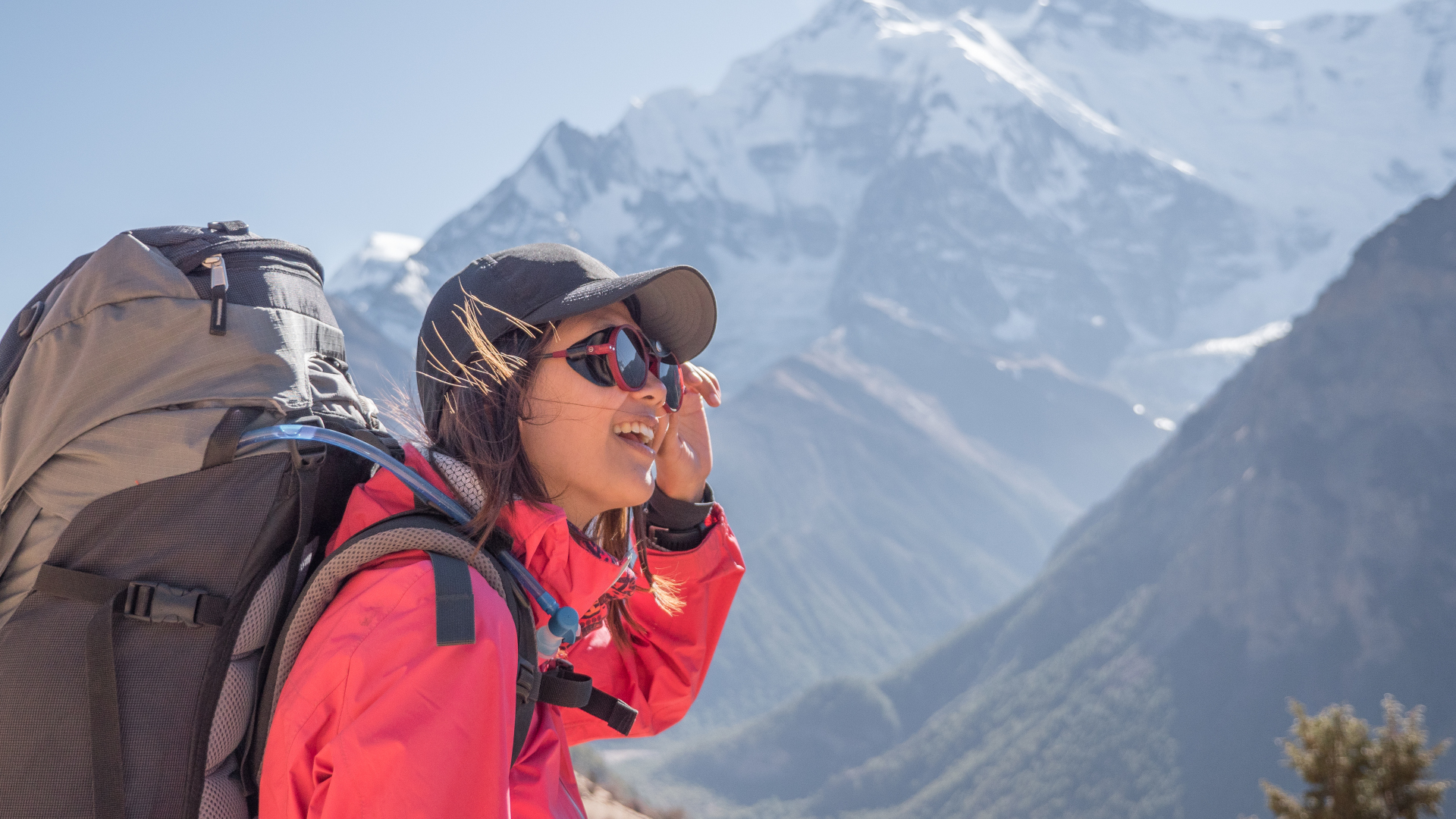
If you’re spending a lot of time outdoors these days, you've probably had a hitch with your sunglasses, either wearing a pair that were too dark meaning you had to take them off and squint all day long, or a pair that were too light for the amount of sunlight leaving your eyes feeling strained at the end of the day. Your eyes need as much protection from the sun as the rest of you, and if you're picking out a new pair for your outdoor trail running, there's a lot more to consider than how they look. Sunglasses for trail running need to be lightweight and stay put when you’re bouncing along the trail, for example, whereas you’ll need to prioritize polarized lenses if you’re going to be snowshoeing in extremely bright conditions like in Colorado. Then there's the question of how much light your lenses allow in, which is determined by a criteria usually known as VLT.
VLT then is obviously an important factor to consider, but one that can seem kind of confusing at first. In this article, we explain what VLT means and what the different categories are used for, so you don’t end up picking shades that are too light – or dark – for your favorite adventures.