Taxation is central to a country’s social cohesion, providing the revenue governments need to function, deliver services and maintain stability. The EU says it wants to make taxation fairer, more transparent and more efficient by tackling tax discrimination, double taxation and tax evasion.
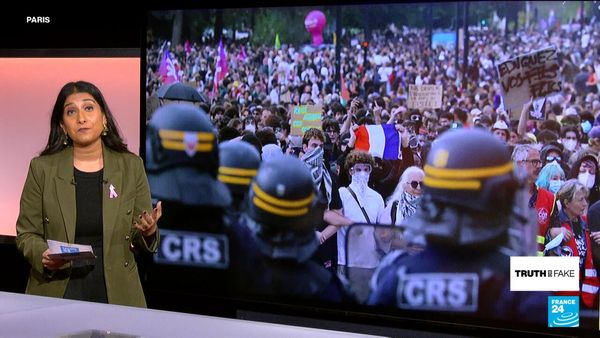
Large multinational companies and wealthy individuals are increasingly under scrutiny as debate grows over whether they pay their fair share. Protests across Europe have at times called on them to contribute more.
A 2025 Eurobarometer survey found that two-thirds of EU citizens support a tax on the rich, while four in five favour taxing large multinational companies. Support varies widely across Europe, and experts say differences in trust in governments and public institutions help explain the gap.
Participants were asked: “What is your opinion on a minimum level of tax based on wealth applied to the wealthiest individuals (top 0.001%) in your country?”
On average, 65% across the EU supported such a minimum tax. Support ranged from 45% in Czechia to 78% in Hungary.
Beyond these two countries, support is at least 70% in Bulgaria, Romania, Croatia and Greece, while it falls below half in Poland and Denmark.
Among the EU’s four largest economies, support levels are similar. Italy leads with 70%, followed closely by Germany and Spain at 69% each. France, at 65%, matches the EU average.
Overall, support is high in Central and Eastern Europe, though internal differences are striking. Poland and Czechia stand out as clear outliers, with significantly lower backing.
In some lower-support countries in the region, “don’t know” responses are also relatively high, including Czechia (25%) and Latvia (19%).
Inequality and wealth gaps
“Perceptions of inequality and the visibility of wealth gaps play a decisive role in shaping attitudes toward taxation,” Erick Kirchler of the University of Vienna told Euronews Business.
“Where social safety nets are weak and disparities in wealth are salient, citizens tend to demand stronger corrective measures, including higher taxes on the very rich.”
He noted that many wealth taxes were abolished in the Nordic countries amid concerns about efficiency and tax avoidance. Citizens there, he said, generally trust existing income and capital-income taxes to work effectively and to distribute burdens fairly. “Consequently, the willingness to reintroduce net-wealth taxes remains limited,” he added.
Role of trust in government
Caren Sureth-Sloane of Paderborn University said differences in trust in government shape these perceptions. Levels of income and wealth inequality, and what people see as acceptable inequality, also play a role.
“If people are convinced that the ‘rich’ are able to cheat the system, and that the political system and public administration are poorly monitored or even corrupt, this dissatisfaction fuels calls for a wealth tax,” she told Euronews Business.
When participants were asked “to what extent do they agree that large multinational companies should be required to pay a minimum amount of tax in each country where they operate?”, support rose significantly.
Across the EU, 80% of respondents agree. Of those, 44% strongly agree and 36% somewhat agree. Support ranges from 67% in Hungary to 87% in Greece.
More than four in five respondents in several countries say multinationals should pay a minimum level of tax where they operate, including Austria (86%), Bulgaria (84%), France (83%), Finland (83%), Portugal (83%), Malta (83%), Croatia (82%), Germany (82%) and Luxembourg (81%).
The share of those who strongly agree is particularly high in Austria (54%), Croatia (51%) and Germany (48%).
Alongside Hungary, overall support falls below three in four in Latvia (72%), Slovenia (73%), Slovakia (73%) and Czechia (74%).
Caren Sureth-Sloane said Austria remains an attractive destination for foreign direct investment (FDI), while Hungary is among the least attractive. This suggests Hungary is keen to draw in FDI, even if it means giving up some corporate tax revenue.
“This strategy is most likely fostered by the expectation of overall benefits from increased revenues from other taxes, e.g. consumption-based taxes such as VAT. In Austria, people are more concerned about the competitiveness of domestic firms compared to other international players,” she said.
Foreign direct investment
Kirchler noted that Austria, Croatia, and Bulgariasee themselves not as tax havens but as market economies that expect fair contributions. “A minimum tax promises greater stability and protection against profit shifting — issues that are particularly relevant in Southeastern Europe,” he said.
Kirchler stated thatHungary and Latvia rely on low corporate tax rates and foreign investment to strengthen their economies. “_A_ttitudes are more cautious… Many people fear that stricter international tax coordination could weaken their competitiveness,” he added.
Amazon, Meta, Google and Apple are among the most prominent multinational companies. Some of them have faced protests over how much tax they pay.
Perceptions of tax fairness are generally higher in Nordic and Western European countries and lower in Eastern Europe. Experts link this gap to the quality of public services and how effectively tax systems redistribute wealth.
A Euronews article titled ‘Wealth taxes in Europe’ takes a closer look at which countries levy them and how much revenue they raise. Top personal income tax rates for the highest earners vary widely across Europe.