
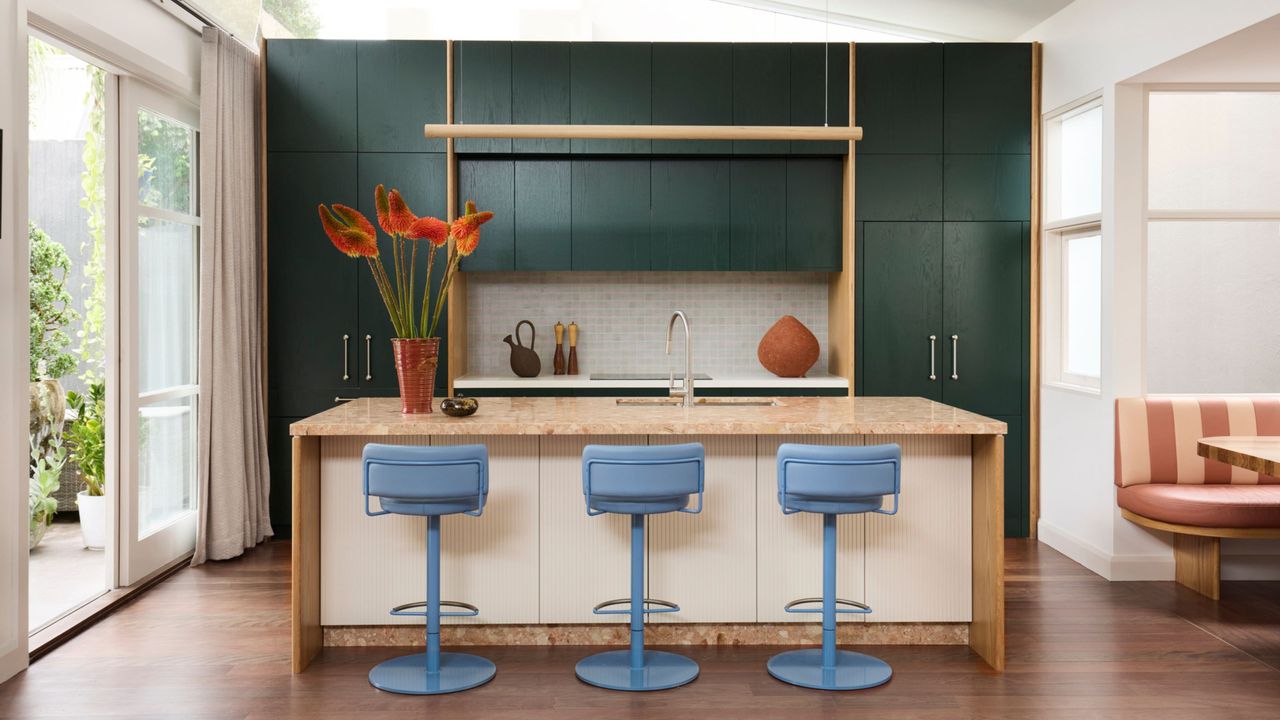
The kitchen is one of the busiest and most emotionally charged spaces in the home. It’s where mornings begin half awake with a coffee in hand, where conversations unfold around the table, where people gather, snack, celebrate, unwind, and sometimes avoid cooking altogether. Because kitchens are so tied to food, nourishment, routine, and social interaction, the colors used within them can have a powerful effect on how it feels to spend time in the space and how we behave within it.
When it comes to thinking about kitchen color psychology, some colors can stimulate appetite, conversation, warmth, and energy. Others can feel calming and restorative, helping the kitchen become a place to switch off at the end of the day. And some colors can create a disconnect from the very things we instinctively associate with food, comfort, and eating. That’s why your choice of kitchen color is about far more than what looks good. The colors surrounding you can influence whether a kitchen feels lively and sociable, calming and at ease, bright and uplifting, or cold and emotionally distant.













