
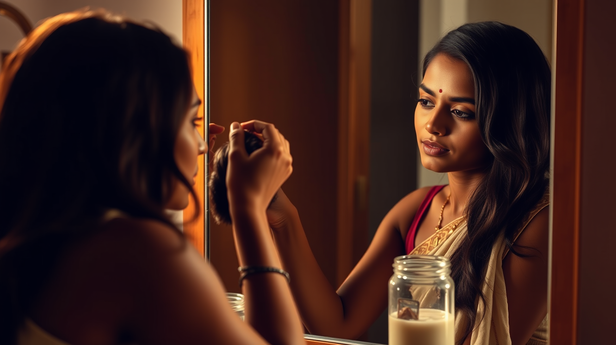
What chemical colour actually does inside the hair shaft
Permanent hair colour works by forcing the cuticle open with an alkaline agent, usually ammonia, so that hydrogen peroxide can bleach existing melanin and let the new pigment molecules settle in. For Indian hair, which tends to carry dense, tightly packed melanin granules (eumelanin, responsible for black and dark brown tones), this process requires a higher developer volume or a longer processing time than it would for naturally lighter hair. That extended exposure is where the structural damage begins. The cuticle, which normally lies flat like overlapping roof tiles, gets lifted and sometimes permanently disrupted. The cortex underneath loses a portion of its keratin and lipid content. The hair becomes porous, meaning it absorbs moisture quickly but cannot hold it. This is why colour-treated Indian hair often feels soft immediately after washing and brittle by the next morning.