
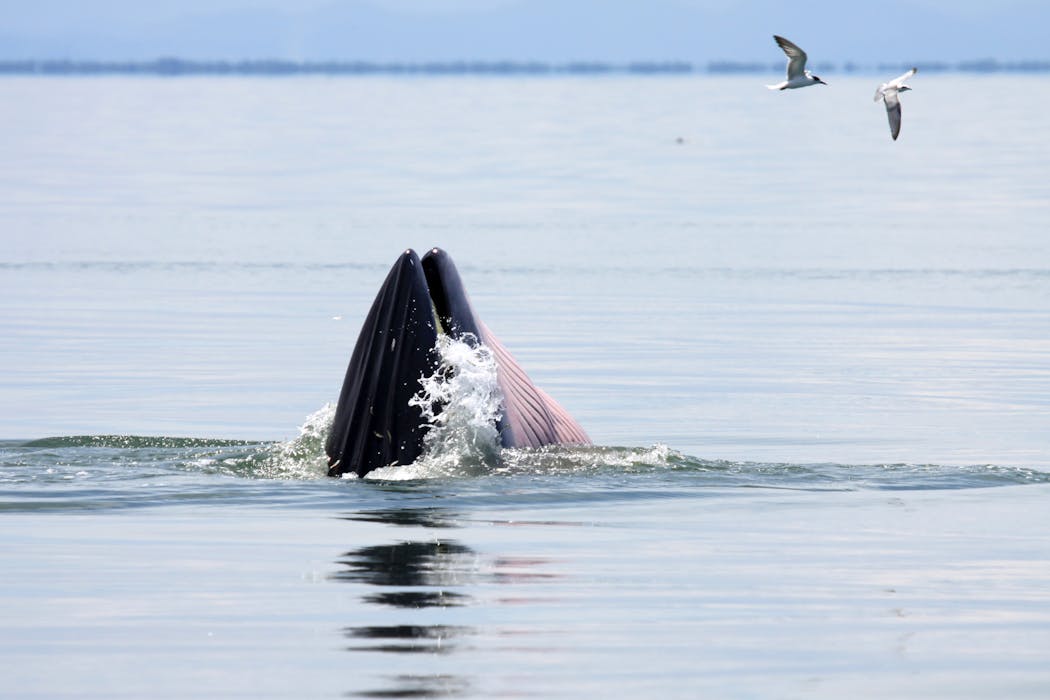
The Mediterranean Sea is home to some of the ocean’s largest animals. Among the nine species of cetaceans commonly found along its western shores are the fin whale (Balaenoptera physalus, the world’s second-largest marine animal), and the sperm whale (Physeter macrocephalus). These species can reach lengths of up to 23 and 18 metres respectively, and their populations are genetically isolated from their Atlantic counterparts.
But despite their size, these enormous animals can be difficult to spot. The sperm whale, for example, lives mainly in the open ocean, where it feeds on squid and deep-sea fish found at depths of over 1,500 metres. Its dives tend to last between 30 and 60 minutes, after which it briefly surfaces to breathe and rest for five to fifteen minutes before beginning a new dive.













