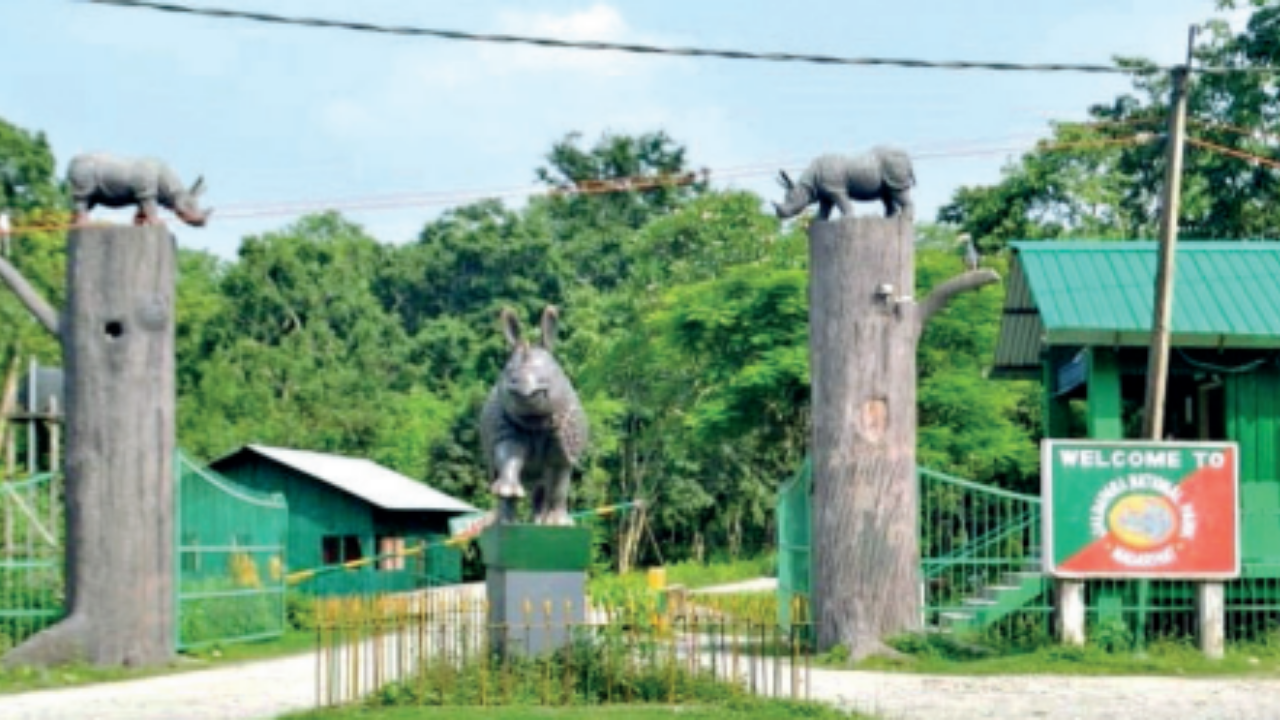
KOLKATA: Jaldapara National Park in north Bengal has recorded more than 20% rise in its rhino population in three years.
The national park is now home to about 292 rhinos, compared to 237 in 2019.

Following the exercise on March 25 and 26 at the park, the foresters have put the count at 287 with an upper limit of 292. CCF (wildlife, north Bengal), Rajendra Jhakhar, said that more than 450 field staff and others were involved in the exercise.
“We divided an area — a little more than 100 square kilometres — in 55 blocks. At least four to five persons were assigned to each block. This apart, there were 51 observation lines. The enumeration was done based on direct sighting,” added Jhakhar. Apart from forest staff, members of NGOs and joint forest management committees also took part in the exercise.
According to him, the highest rhino density at the park was recorded at 3.8 rhinos per square kilometres whereas the lowest density was .8 per square kilometres. “The sex ratio, too, has improved this year to 1.3, compared to .9 last time,” he added.
“While the area of the entire park is 215 square kilometres, we didn’t take into account the areas where there is less grassland because rhinos usually don’t venture out there. Though, as per our records, two rhinos are currently outside the area where the exercise was taken up. So, if we take into account these two, then the total rhino population in the park will be 294,” Jhakhar added.
Jaldapara is Bengal’s largest rhino habitat located in Alipurduar district. Among the rhinos found during this exercise, a source said, 101 were male, 134 female and 57 sub-adults, whose sex couldn’t be determined.
In 1985, only 14 rhinos were known to survive in the park. Over these years, the department also took up several anti-poaching measures in the park. As per reports, between 2014 and 2016, the park officials made 44 arrests in connection with rhino poaching and lodged 14 cases.
More than 2,00,000 tourists visit the park each year. The result for a similar exercise, that was completed in Gorumara National Park recently, will be out soon.