
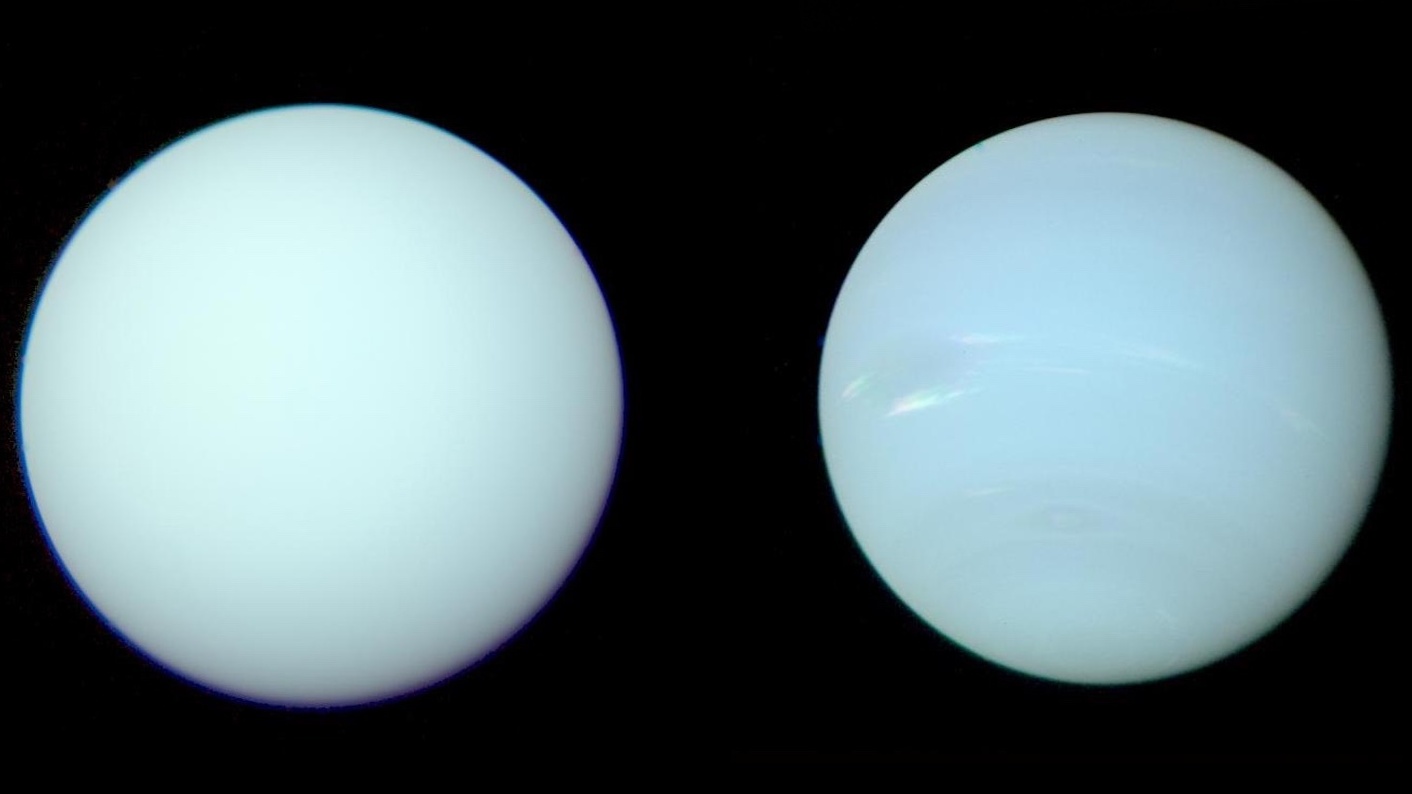
In the depths of our solar system — a realm where chemistry meets speculation — scientists have reported the possible existence of a molecule known as aquodiium, an elusive cousin of the ammonium ion. If true, that could explain oddities in Neptune and Uranus’ magnetic fields.
This is a big deal because stable aquodiium, which consists of four atoms of hydrogen and one atom of oxygen (H4O2+), has never been observed before due to the high energy barrier involved in adding a second proton to the molecule hydronium (H3O+), which is how aquodiium must be formed. Hydronium, however, is a bit easier to create. It forms through the fundamental process of adding a proton to water. The jump from hydronium to aquodiium is the hard part.












