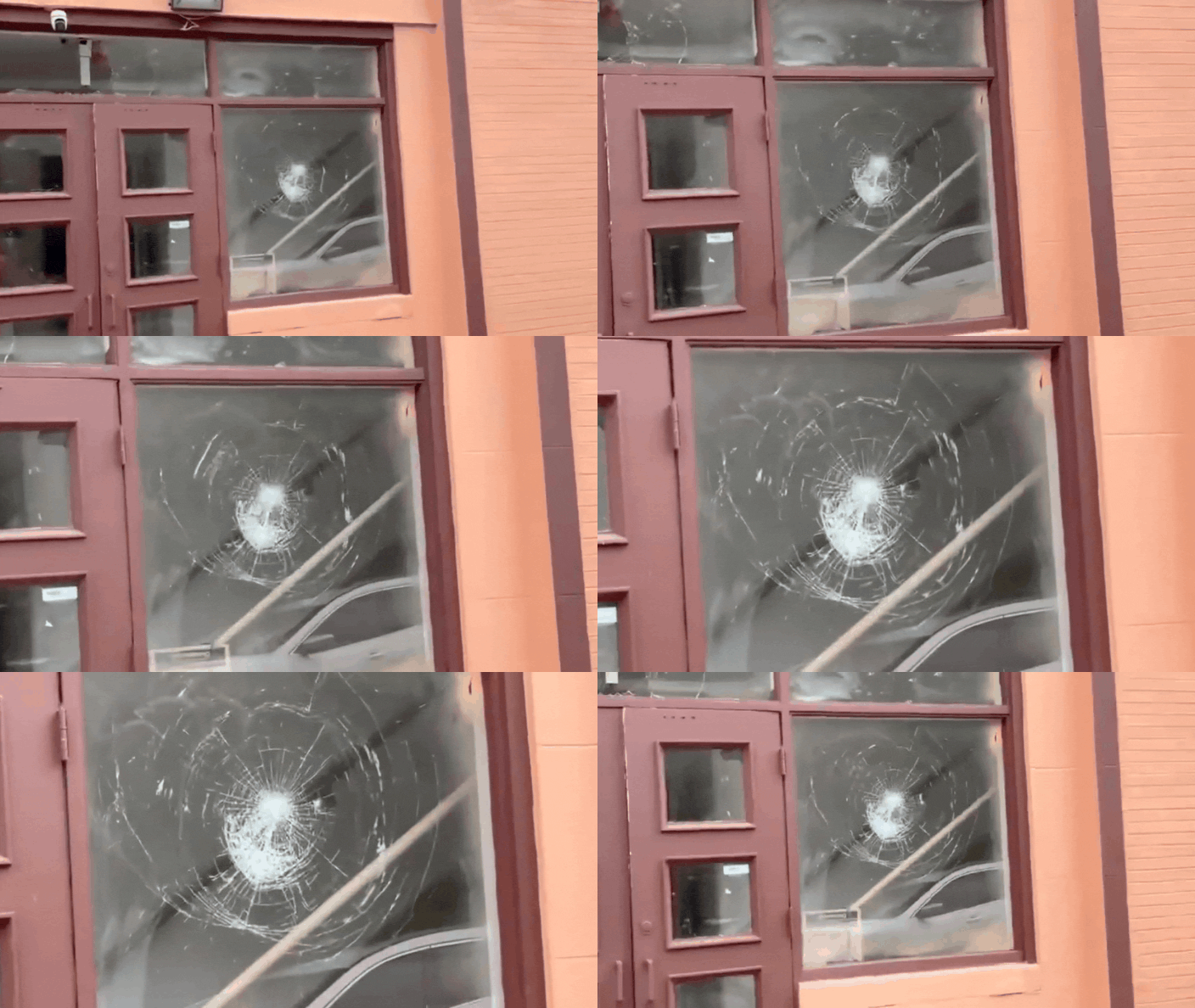
This week France has been rocked by nationwide student protests that turned violent, with thousands arrested, more than 100 schools damaged and dozens of teachers injured.
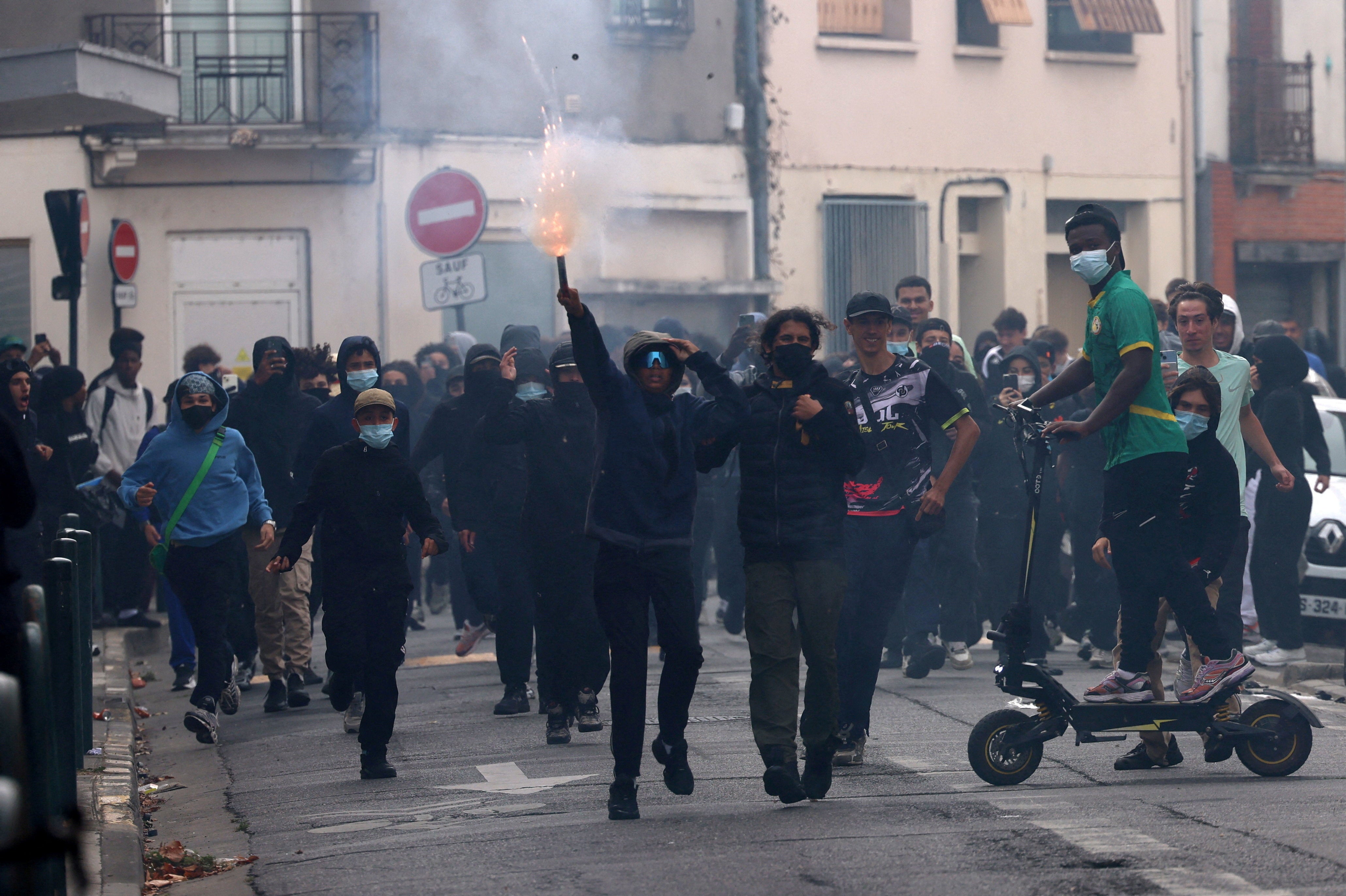
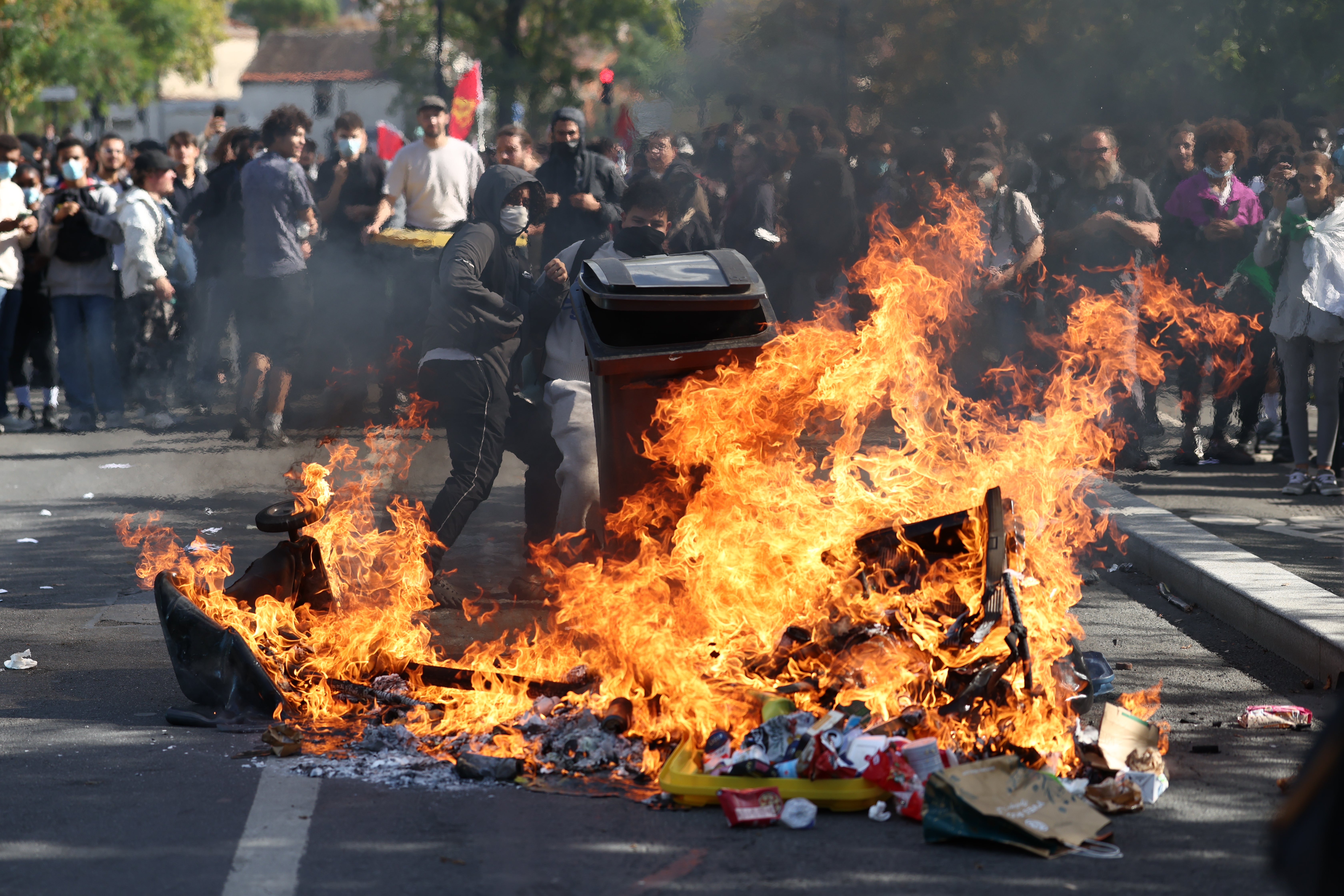
By midday on Friday, the ministry of national education announced that 564 schools have been affected. Dramatic pictures show fires in the streets, burned out entrance gates and youths clashing with riot police. At least four hundred high schools, roughly one in 10, were closed due to the unrest.
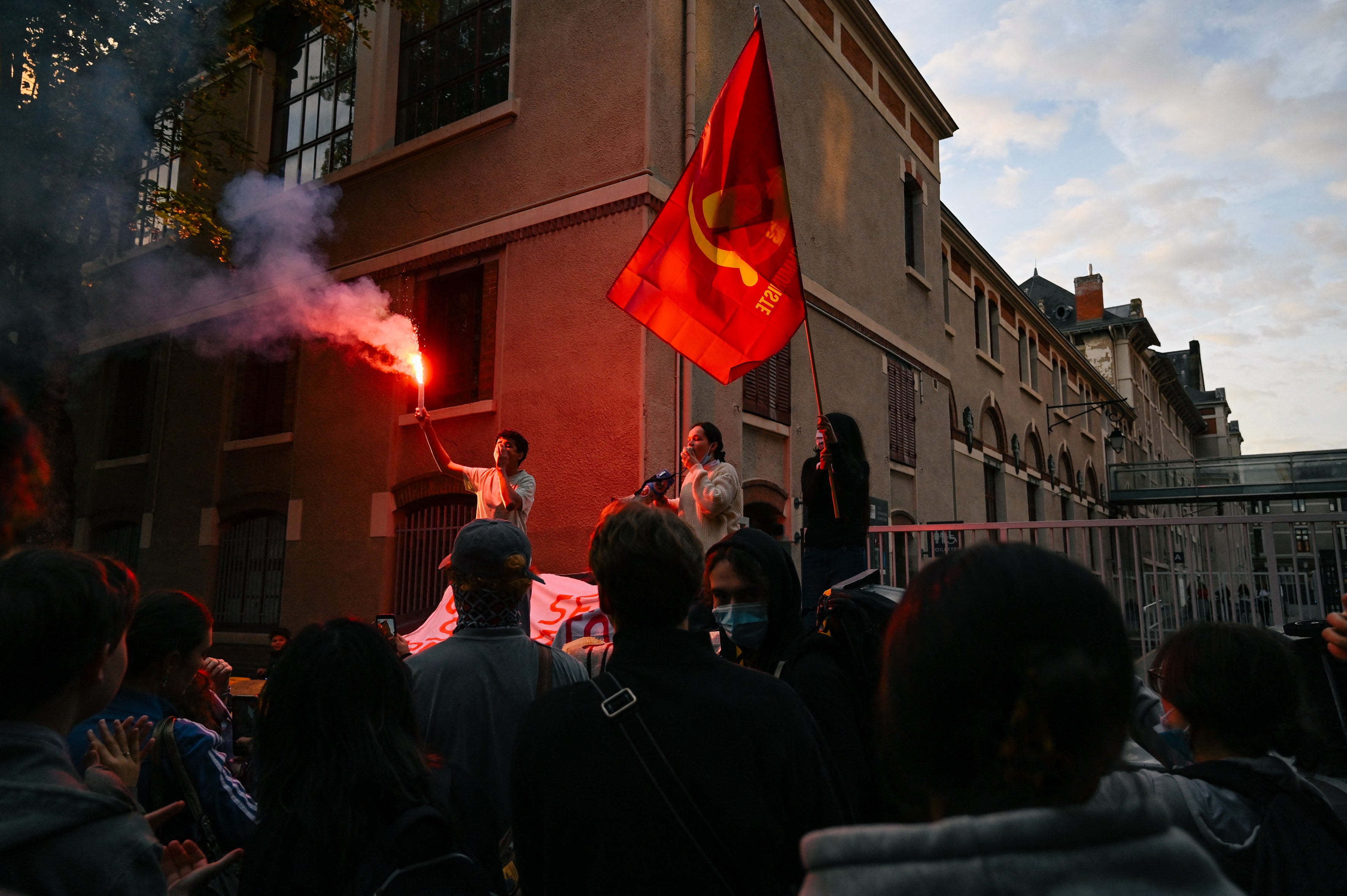
The protests began last week over frustrations about school conditions with peaceful blockades of secondary schools around Paris.
They soon morphed into wider discontent with the government and spread across the country, after France's main union for secondary school students called for a nationwide blockade. University students and other supporters also joined the demonstrations.
French Interior Minister Laurent Nunez told TF1 TV on Friday that police had arrested a total of around 5,000 people, most of them teenagers, since Monday.
Justice Minister Darmanin had earlier told RTL radio that parents of those damaging property should pay reparations.
So far 65 school staff have been injured, including 40 headteachers, and there has been significant damage to facilities, with classes now taking place remotely, French education minister Édouard Geffray told French media on Friday. More than 300 police officers have also been injured in the chaos.
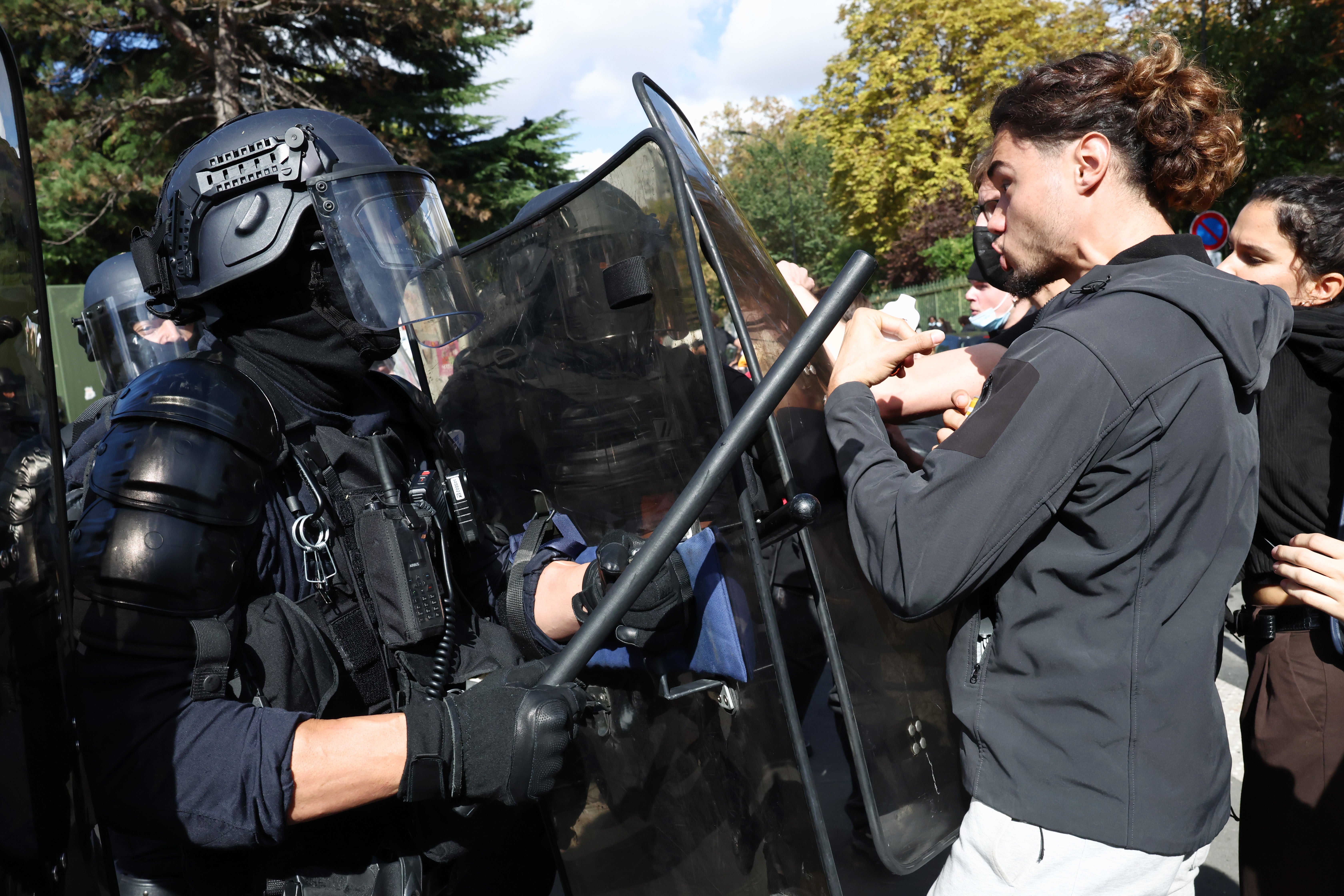
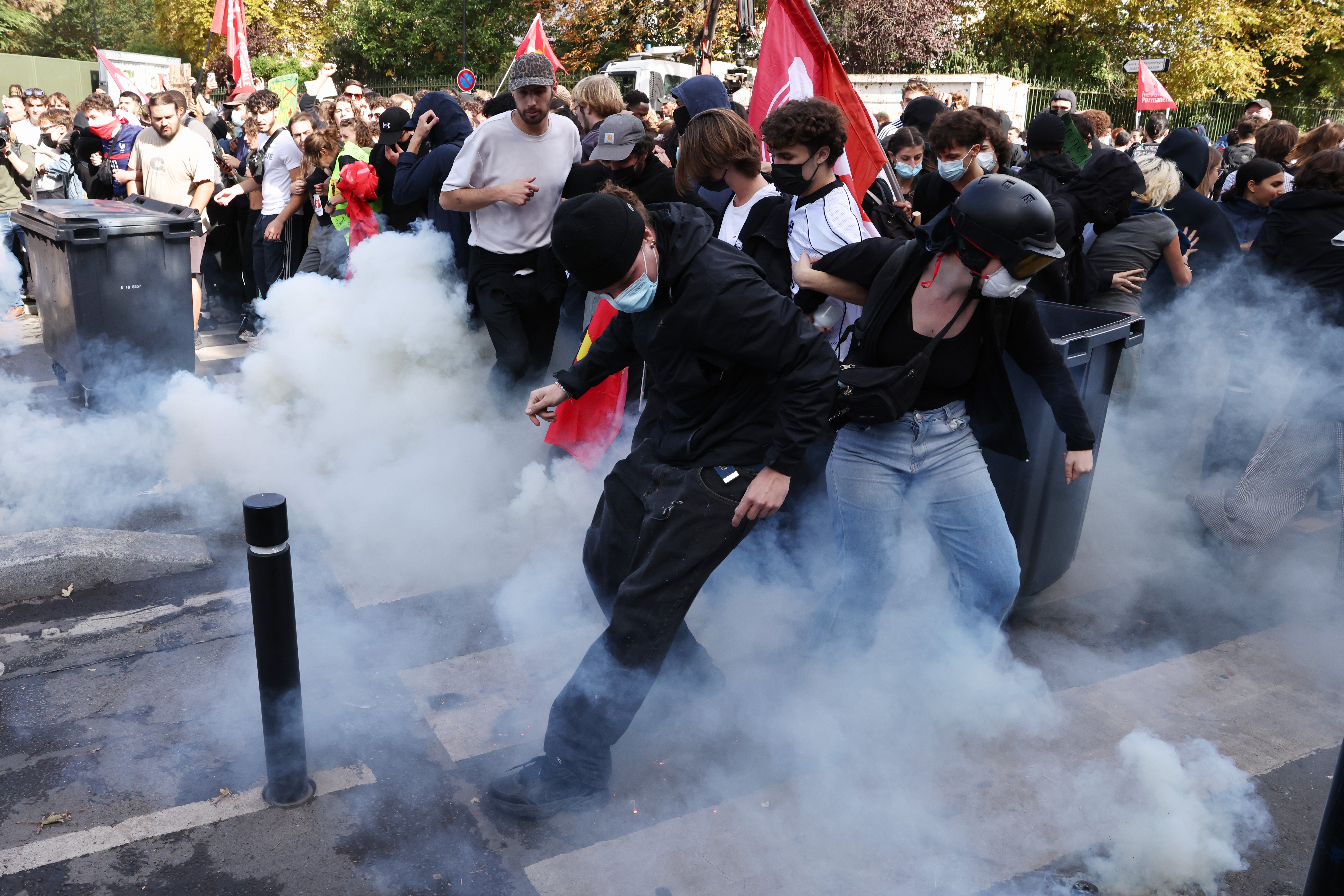
Students claims there has also been police violence against the protestors, with officers in riot gear using batons and tear gas.
In Tours, a city in central France, a 16-year-old student was injured on Wednesday outside his secondary school after being hit in the eye with an LBD-40 – Lanceur de Balles de Défense or Defence Ball Launcher. The controversial riot gun used by French police has caused severe injuries at previous protests.
A 19-year-old university student in Tours and member of the student union Fédération Syndicale Étudiante, Martin, has been taking part in the demonstrations over the last few days. He told The Independent the injured boy was in a “critical state” and that he could be blind for the rest of his life.
“The police have shown an extreme brutality, hitting students and using excessive amounts of tear gas,” Martin (not his real name) claimed.
“Apparently high-schoolers are too young to be listened to but old enough to be repressed.
“The situation shows how the government is scared of the movement, they're struggling to contain the anger of the youth and the working class. Despite their best efforts to scare us we will not stop.”
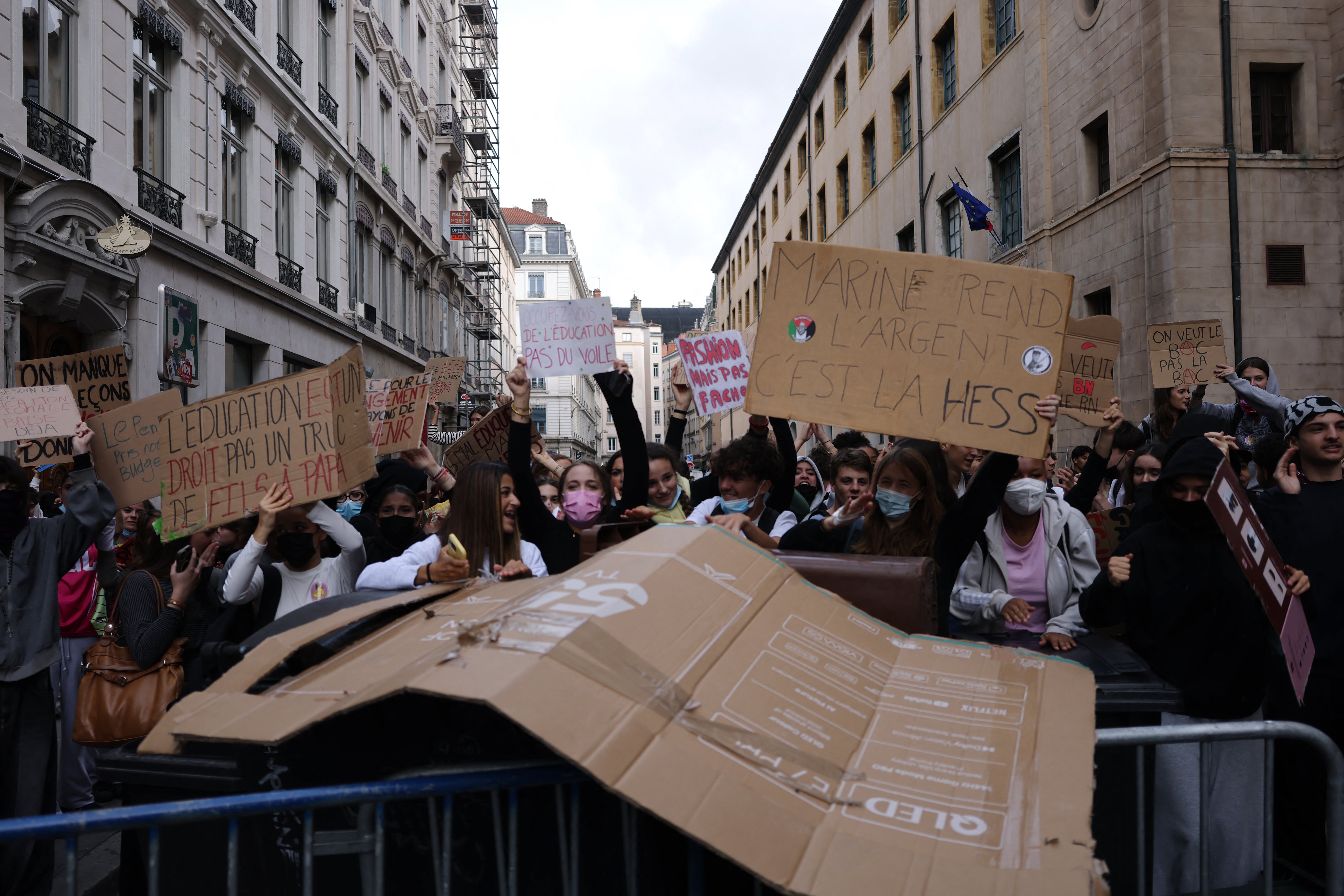
Another student, aged 14, lost multiple teeth and suffered severe facial injuries in Val-d’Oise after being hit in the jaw by a tear gas grenade launcher. His mother told French newspaper Le Parisien that his mouth had been “torn apart”.
French authorities have opened multiple investigations to examine the accusations of police violence.
Amnesty International said the reports of secondary school students being assaulted are “extremely alarming”.
“Many are minors, children. They must be protected, not beaten with batons,” the human rights organisation posted on X on Thursday evening.
“Let's be clear: since the beginning of the blockades, there have also been acts of violence on the part of certain protesters. They are not acceptable. But even in these situations, including in the event of an arrest, the use of force must remain proportionate.”
The mayor of Tours, Emmanuel Denis, appealed for calm on Thursday and said the student movement’s demands are “legitimate”. He also said he was going to meet with their representatives on Friday.
Some parents also support the protests. Vincent Martin joined his daughter outside Helene Boucher high school, in Paris, saying students were ‘fundamentally right to demand ... better learning conditions”.
The Union Syndicale Lycéenne, the student union which orchestrated the blockades, said they want authorities to address the “shortage of teachers and staff, dilapidated high schools, overcrowded classrooms, and overloaded schedules.”
Martin said that one particular policy university students are protesting against is a new measure which will see the end of university fee waivers for non-European students.
“The end goal [of the government] is to the increase the fees for all students, because of the lack of budget for universities. The recent governments have been putting less and less money in public services such as schools and universities and hospitals while investing in the army and big companies,” he said.
Another university student in Tours, 21 year-old Vinnie, said that they are watching their universities “fall apart in real time” due to unrelenting budget cuts.
“What the government should do is very simple,” he said. “Unlock funding. Every year money is being pulled from every public service imaginable, every year everyone in public service is asked to do more with less.”
The education minister claimed on Friday that the student protest movement had been “hijacked” and that teachers had told him that “the people in front of me were not my students.”
A number of schools have been set on fire over the last few days, including the Nelson Mandela high school in Nantes in the west of the country, while staff at Victor Hugo high school in the southern city of Marseille were splashed with petrol as protesters reportedly filled containers.
French Justice Minister Gerald Darmanin has said there is an “active and violent minority” taking part in the protests.
"We're not entirely sure that they are even high school students themselves," he told France's RTL radio.
"We have gone from high-school student demonstrations to a public order disturbance. When people target buses and set schools on fire, it is no longer simply a protest issue," he added.
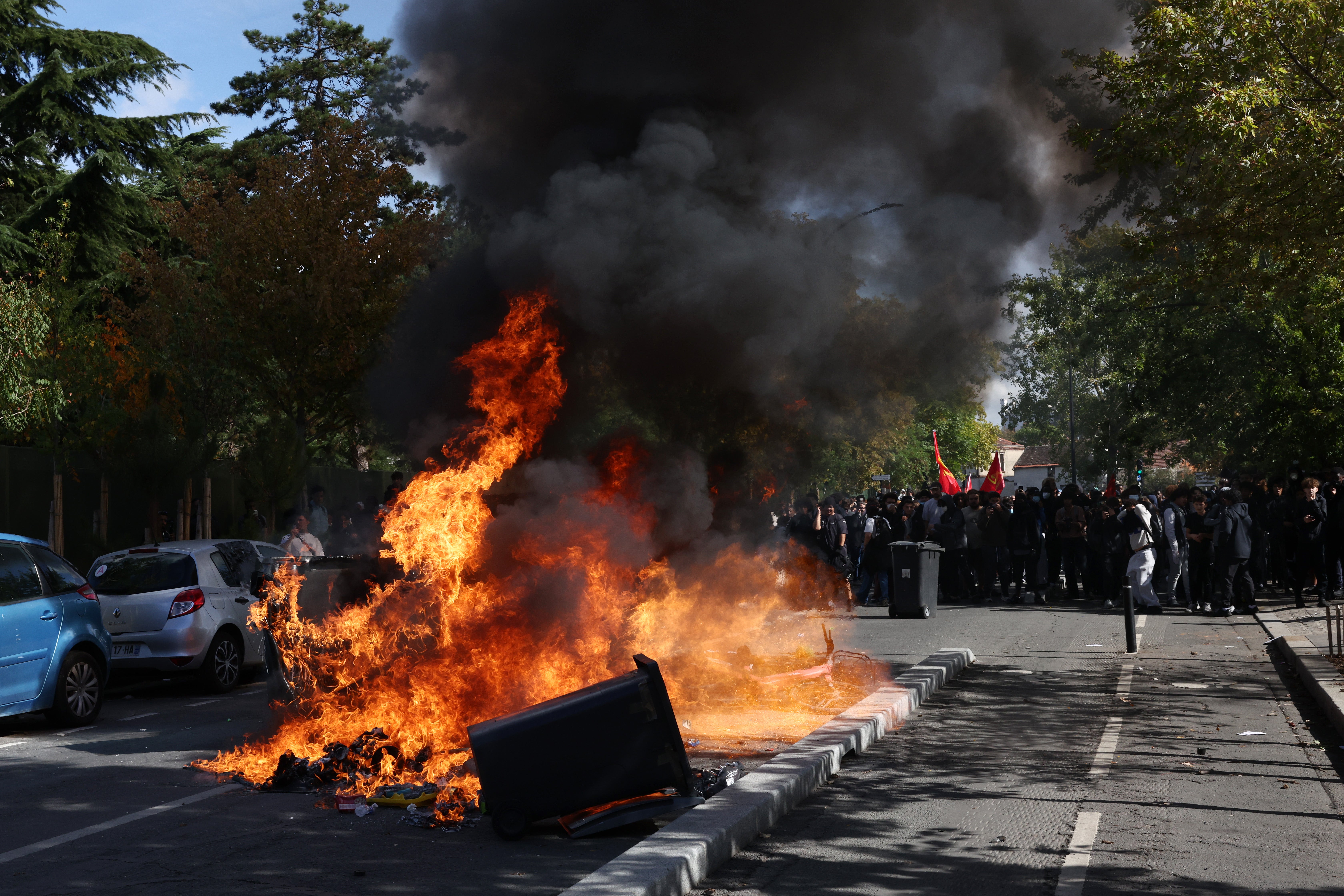
Vinnie says that as with every protest movement there are some casseurs or vandals who try to cause destruction, which the students do not want.
“I have personally witnessed on the first day of the protests a small group of young men who were not students bring cardboard to the front of a blocked high school to light it up.”
“They don't all have the same motivation, some just want to destroy, some think it really is the only way to protest even when the protesters most involved disagree and some are actually opponents of the movements with goals of destabilising it,” he added.
Martin said that he has seen people who aren’t students join the movement “because what we're asking for is much larger than just about universities”.
“We're calling for a large movement uniting high-schoolers, students and workers, because we must stay strong together, especially against police violence and repression.”
He said that they have seen solidarity across all generations, notably from the former gilets jaunes protestors. He said he was looking forward to 17 October, when there is a large demonstration planned by the ‘yellow vest’ group.
Before that there is another big student protest planned for Tuesday 6 October. “In the mean time, we'll keep protesting in the university and beyond,” he added.
The demonstrations come at a tense time for the country as next year’s presidential election approaches.
The French prime minister and far-right politicians, like Marine Le Pen, presidential candidate for National Rally, have blamed the hard left for igniting the protests, particularly La France Insoumise (LFI) party.
LFI leader and presidential candidate Jean-Luc Mélenchon, who has attended some of the demonstrations, said he was in favour of non-violent protests, but argued that blaming the left would not solve the issues behind the demonstrations.