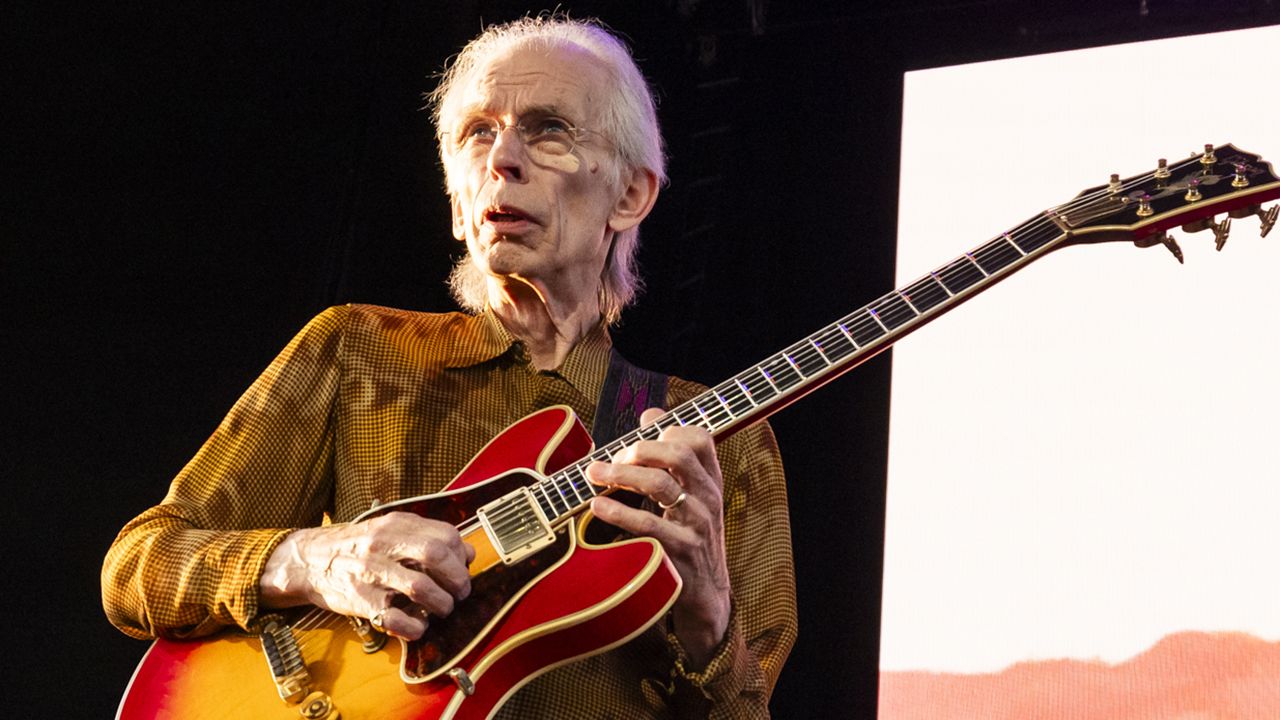
For a man of 78, Steve Howe is remarkable. He recently completed an extensive theatre tour of the USA with Yes, presenting the band’s 1971 classic Fragile in all its glory; and he’s now looking forward to an equally busy 2026, which will see further live work including a jaunt around the UK playing the same set, a trip to Japan and – astonishingly – the third new Yes album in six years.
Furthermore, he has more solo material in the works, following the recent remastered versions of his albums Natural Timbre from 2001 and Portraits Of Bob Dylan from 1999. To accompany the latter, he also put out Signals Crossed, an EP of three unreleased versions of Dylan songs.

You’re working on a new album at the moment. How’s that shaping up so far?
We’re trying to see if we can ascend further with this album. The Quest was very much a foot in the door, but with Mirror To The Sky we sort of exploded creatively, and we were so excited with that album.
Now we’ve got something new coming, and we hope that the combination of Roger Dean’s artwork and these musicians really makes for something special.
Does it help that four of the band are at least partially living in the UK now?
Yes. Geoff Downes and I have always been here, but Jon and Billy have English partners, which is very good. Of course, we still do a lot of file sharing, and I’ve a base that Jon comes to, but we don’t force people to be in the same room all the time just because they live here.
You’ve just remastered two of your solo albums from around 25 years ago with the lovely acoustic and instrumental record Natural Timbre and also Portraits Of Bob Dylan. The two albums couldn’t be more different. How did the re-releases come about?
The original label, Eagle, gave me the rights back, which allowed me to do it. So far, my own label, Howesound, has mainly been a vehicle for things like my Homebrew series. We hadn’t done a lot of re-releasing of my back catalogue, so this was a good opportunity to establish where my solo career is going.
I like to review my own back catalogue periodically. I’m amazed that many musicians say they never listen to their own recordings. Why not revisit them? Maybe they sound different now, or maybe you can see different virtues. Perhaps you don’t like some things about them – but at least you’ll learn by listening to them again.
Hearing your lovely arrangement of To Be Over – originally from Relayer – on the Natural Timbre re-release, is a reminder of how beautiful it is. Have you ever considered adding it to the Yes live repertoire?
It’s one of a few Yes pieces where I’m not totally sure how we’d pull that off onstage. It has a studio dynamic, with Alan White playing very softly and in a laid-back way.
But it also has some dramatic moments. I’d wonder how to get the pedal steel loud enough in the mix, which is a key thing I did on the record that I love very much. But to capture the dynamics of the song would be extremely challenging.
It’s a bit like Turn Of The Century [from Going For The One]. It’s incredibly hard to play very understated things live. But on Natural Timbre it was a nice deviation – I really loved the arrangement I put together, which obviously took various vocal sections out; but I kept it instrumental in the style of the rest of that album.
Another version of Tales From Topographic Oceans was recently announced, as well as a reissue of the material from the Symphonic Tour in 2001. Do you get directly involved in any of these re-releases?
The official Warners ones I do, yes, as part of their gradual long-form re-release of the back catalogue. I’ve got a credit on the new version of Topographic Oceans. Often, they don’t give me enough time to submit my input, but with this particular version, they did.
My analysis usually tells me the original is generally better, provided there weren’t any mistakes on it, which stand out a mile
These reissues are massive, and while I don’t want to undermine people’s desire to get them, if you want a lot of a particular album, you certainly get it, and some of the differences in versions are marginal.
But I’d say – with no disrespect to anybody who wants to improve the albums fundamentally – that my analysis usually tells me the original is generally better, provided there weren’t any mistakes on it, which stand out a mile when they happen. And there are some with Yes, so if we can smooth things over without changing anything except improving the dynamics, that can be a very useful thing.
Signals Crossed is on sale now.