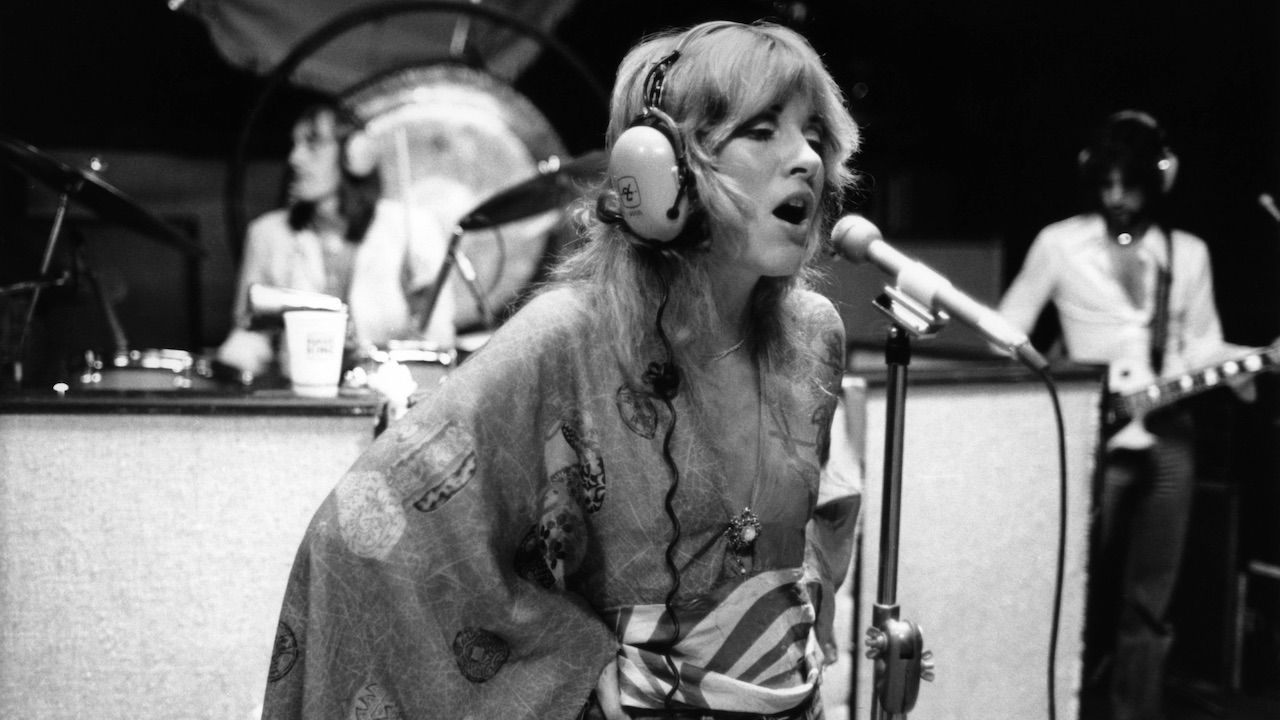
In February 1976, Fleetwood Mac began work on what would be their eleventh studio album at the Record Planet in Sausalito, California.
The Anglo-American quintet's self-titled tenth album, the first to feature vocalist Stevie Nicks and guitarist/vocalist Lindsey Buckingham, had been a huge success in the US, reaching number one on the Billboard 200 chart, and spawning three top 20 singles. But if the group were in great shape in the eyes of the industry as they began work on album number eleven, behind closed doors the group were in turmoil.
Keyboardist/vocalist Christine McVie had already revealed that she was leaving her husband John, the band's bassist, and starting a relationship with the group's lighting director, Curry Grant. Boyfriend and girlfriend when they joined the band, Buckingham and Nicks too were having relationship problems as was bandleader Mick Fleetwood, who had discovered that his wife Jenny was having an affair with his best friend.