For a long time, skilled migration helped keep Germany’s labour market running.
But a new Labour Ministry study suggests a growing numbers of EU workers who moved for better jobs and pay no longer want to stay long term — raising fresh questions over whether Germany can plug its chronic labour shortages.

"We cannot afford to lose a third of EU citizens due to poor conditions," Natalie Pawlik the Federal Government Commissioner for Integration, said in Berlin on Tuesday.
Pawlik presented the study by the EU Equal Treatment Office examining why EU citizens leave Germany. Despite high immigration inflows of around 400,000 to 700,000 people a year, Germany also records high emigration, or leaving figures, among EU nationals.
The study found that a significant share of EU migrants leave within the first four years after arriving, suggesting that work and living conditions are not attractive enough to persuade many — including those from neighbouring countries — to stay long term.
Weak pull factor
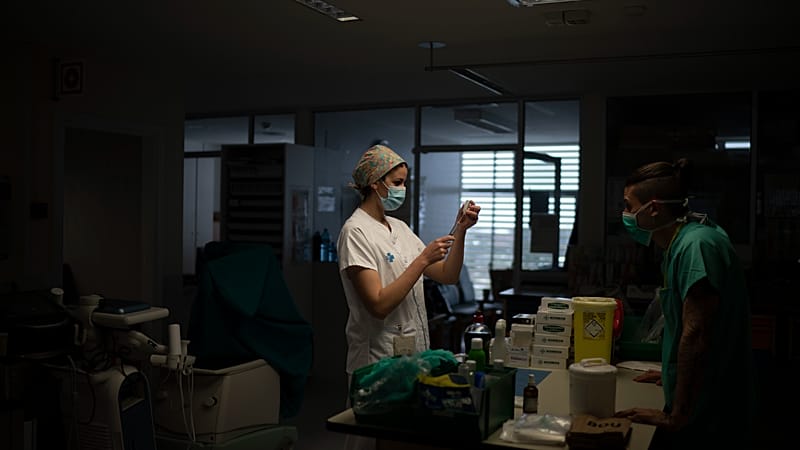
Germany’s labour market no longer seems to offer a compelling reason for many EU migrants to stay, despite persistent shortages of skilled workers — particularly in healthcare, construction and public administration — according to findings from the German Economic Institute (IW) from November 2025.
In the ten sectors facing the most acute shortages, the IW estimated that more than 260,000 positions could not be filled with suitably qualified workers.
In healthcare alone, the shortfall was around 46,000 vacancies.
“Bottlenecks in the healthcare sector are leading to long waiting times for appointments, while a lack of staff in the construction industry is slowing down residential construction,” said IW expert Valeria Quispe.
“The shortage of skilled workers has recently eased due to the weak economy — but that does not mean the all-clear for the labour market,” she added.
Targeted recruitment of skilled workers is therefore essential.
This includes attracting employees without formal vocational qualifications into training and further education, creating stronger incentives for people to remain in the workforce longer, and promoting the immigration of qualified skilled workers.
Intra-EU migrants
EU citizens mainly move to Germany for economic reasons such as better job and earning prospects, legal security, and opportunities for their families and children.
Many also arrive for specific jobs or training programmes.
Romania remains the largest country of origin among EU movers to Germany, according to the Federal Office for Migration and Refugees’ annual report.
Poland and Bulgaria follow at some distance, ahead of Italy, Hungary and Spain.
As in previous years, almost three quarters of EU immigrants came from countries that have only enjoyed full freedom of movement to Germany for around 10 to 15 years.
Romanian, Polish and Bulgarian nationals made up 80% of this group.
In 2024, immigration to Germany fell to its lowest level since 2011, though trends varied by nationality.
Among the countries with declining inflows were four of the most significant sources: Romania, Poland, Bulgaria and Croatia. The drop was steepest for Croatian, Polish and Bulgarian nationals, down 30%, 21% and 19% respectively.
Net migration from other EU countries in 2024 totalled just 38,735 people — a fall of 66.8% compared with the previous year, when net migration was around 117,000.
Why migrants want to leave Germany again
A significant share of migrants consider returning to their country of origin, often citing the high cost of living and a lack of belonging.
Qualitative interviews analysed by the EU Equal Treatment Centre found that many migrants experience Germany as an “unstable place to live”.
More than a third of respondents (38.8%) said they did not feel comfortable in Germany, while around half (49.4%) reported experiencing discrimination at work.
Inflexible working conditions, unrecognised qualifications and limited opportunities to work and progress in their trained profession were also cited as demotivating factors, undermining migrants’ willingness to stay.
Many respondents also pointed to bureaucracy, particularly around recognising qualifications and navigating administrative processes, as a major burden.
The study said weak or insufficient support in work, social and everyday life can make it harder to settle, increasing the likelihood of onward migration.
The EU equality body concluded that better integration in the labour and housing markets, alongside a more inclusive welcoming culture, could improve migrants’ chances of staying.
Recent employment growth in Germany has been driven solely by nationals from outside the EU, according to Andrea Nahles, head of the Federal Employment Agency.
“Employment among German nationals is falling sharply, primarily due to age,” Nahles said.
“This is simply because the baby boomers are now actually retiring.”