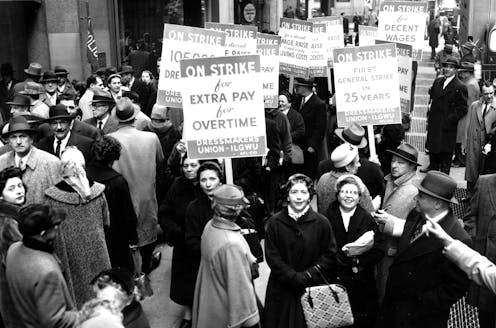
More than 323,000 workers – including nurses, actors, screenwriters, hotel cleaners and restaurant servers – walked off their jobs during the first eight months of 2023. Hundreds of thousands of the employees of delivery giant UPS would have gone on strike, too, had they not reached a last-minute agreement. And nearly 150,000 autoworkers may go on a strike of historic proportions in mid-September if the United Autoworkers Union and General Motors, Ford and Stellantis – the company that includes Chrysler – don’t agree on a new contract soon.
This crescendo of labor actions follows a relative lull in U.S. strikes and a decline in union membership that began in the 1970s. Today’s strikes may seem unprecedented, especially if you’re under 50. While this wave constitutes a significant change following decades of unions’ losing ground, it’s far from unprecedented.